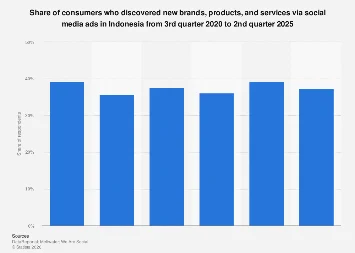
As the second quarter of 2025 approaches, a significant majority of Indonesian consumers are poised to discover new brands, products, and services through the pervasive influence of social media advertising. This trend underscores a fundamental shift in consumer behavior, transforming social platforms from mere communication channels into potent engines of commerce and brand introduction within Southeast Asia’s largest economy. Projections indicate that a substantial percentage of the Indonesian populace, specifically those who are active internet users aged 16 and above, will actively engage with and be influenced by advertisements encountered on platforms like Instagram, Facebook, TikTok, and others. This phenomenon is not merely a local trend but reflects a global recalibration of marketing strategies, where digital presence and targeted advertising are becoming paramount for brand visibility and growth.
The Indonesian digital landscape is characterized by its rapid expansion and a young, digitally-native population. With an estimated internet penetration rate steadily climbing, social media has become an integral part of daily life for millions. This creates a fertile ground for advertisers seeking to capture consumer attention. The effectiveness of social media advertising in Indonesia can be attributed to several factors. Firstly, the highly visual nature of these platforms lends itself well to showcasing products and services in an engaging manner. Secondly, the sophisticated targeting capabilities offered by social media advertising tools allow brands to reach specific demographic and psychographic segments with unprecedented precision, thereby maximizing return on investment. This granular targeting ensures that marketing messages resonate with consumers most likely to be interested, reducing wastage and increasing conversion rates.
This increasing reliance on social media for brand discovery has profound implications for businesses operating in or targeting the Indonesian market. Traditional advertising channels, while still relevant, are being overshadowed by the agility and direct consumer engagement offered by social platforms. For nascent brands, social media presents a relatively lower barrier to entry compared to traditional media, allowing them to build awareness and customer bases without the substantial upfront costs associated with television or print advertising. However, the crowded digital space also demands a sophisticated and creative approach to cut through the noise. Brands must not only be present but also compelling, offering authentic value and engaging content to capture and retain consumer interest.
The projected figures for social media-driven brand discovery in Indonesia are likely to surpass those observed in many developed economies, highlighting the country’s unique digital trajectory. While Western markets may have a more mature and diversified media consumption pattern, Indonesia’s rapid adoption of digital technologies, coupled with a strong propensity for social engagement, positions it as a leading market for digital advertising innovation. This rapid evolution necessitates continuous adaptation from marketers, who must stay abreast of emerging platforms, algorithm changes, and evolving consumer preferences. The rise of short-form video content, live shopping, and influencer collaborations are all testament to this dynamic environment.
Furthermore, the economic impact of this trend is substantial. Increased brand discovery through social media translates into greater consumer spending, boosting domestic consumption and contributing to overall economic growth. It also fosters a more competitive marketplace, encouraging businesses to innovate and improve their offerings to stand out. The data suggests that by the middle of 2025, social media will not just be a supplementary marketing tool but a primary driver of commercial interaction for a significant portion of the Indonesian consumer base. This shift is prompting substantial investment in digital marketing infrastructure, including analytics tools, content creation agencies, and social media management platforms, creating a ripple effect across various sectors of the economy.
The specific percentage of Indonesian consumers discovering new brands via social media ads by Q2 2025 will be a critical indicator of the digital advertising industry’s maturity and effectiveness in the region. While the exact figure requires access to detailed market data, the trend points towards a dominant role for social media. This dominance signifies a move away from passive consumption of advertisements to a more interactive and personalized advertising experience, where consumers are exposed to brands that align with their interests and online behavior. For brands looking to thrive in this environment, a robust, data-driven social media strategy is no longer optional but a fundamental requirement for success. The ability to leverage user-generated content, engage in community building, and harness the power of micro-influencers will be key differentiators.
The implications extend beyond marketing departments. Product development teams will need to consider how their offerings can be best presented and experienced through digital channels. Customer service models will also need to integrate social media as a primary point of contact for inquiries and feedback. As social media platforms continue to evolve, incorporating e-commerce functionalities and immersive experiences, the lines between social networking and online shopping will blur further. This integration is already evident with features like in-app purchasing and shoppable posts, which streamline the customer journey from discovery to transaction. Indonesia’s embracing of these features positions it at the forefront of digital commerce innovation.
Looking ahead, the ongoing growth of e-commerce in Indonesia, driven by increasing smartphone penetration and a burgeoning middle class, will further amplify the impact of social media advertising. As more consumers become comfortable making purchases online, the influence of social media platforms as curated marketplaces will only intensify. Brands that can effectively navigate this evolving digital ecosystem, build authentic connections with their audience, and deliver compelling value propositions will be best positioned to capture market share and achieve sustainable growth in the years to come. The ability to analyze vast amounts of data generated on these platforms will be crucial for understanding consumer sentiment, identifying emerging trends, and refining marketing strategies for optimal performance. The dynamic nature of social media demands a proactive and adaptive approach, making continuous learning and experimentation essential for long-term success in the Indonesian market.