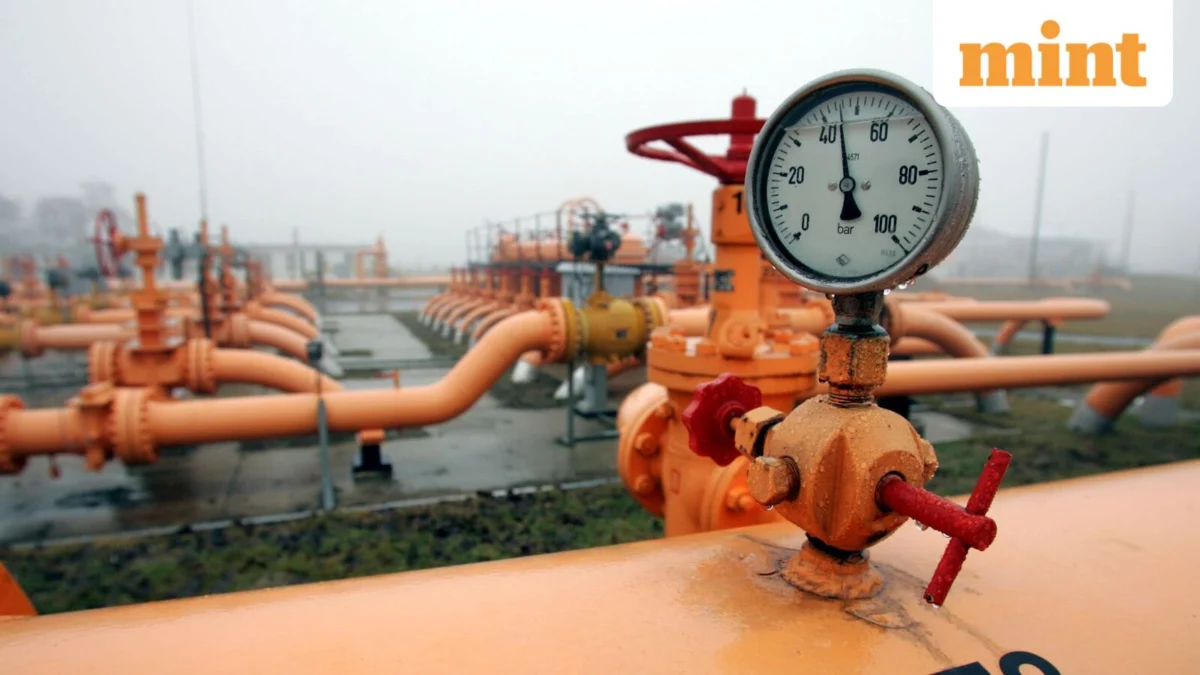
The Indian government is advancing a critical initiative to bolster the efficiency and resilience of its burgeoning natural gas transmission infrastructure, proposing the adoption of an internationally recognized quality standard for friction-reduction coatings applied to the interior of steel gas pipelines. This strategic move aligns with India’s ambitious goal to significantly elevate natural gas’s contribution to its primary energy mix, targeting 15% by 2030, a substantial increase from the current approximately 6.5%. The drive is underpinned by escalating domestic demand across industrial, commercial, and residential sectors, coupled with heightened energy security concerns amidst a volatile global geopolitical landscape.
Natural gas is envisioned as a pivotal transition fuel in India’s journey towards a greener economy, offering a cleaner alternative to traditional fossil fuels and playing a crucial role in decarbonizing various sectors. The expansion of the national gas grid is therefore paramount, connecting indigenous gas fields, liquefied natural gas (LNG) import terminals, and cross-border supply points to a vast network of city gas distribution (CGD) systems, power generation units, fertilizer plants, refineries, and diverse industrial consumers. According to the Petroleum and Natural Gas Regulatory Board (PNGRB), India currently boasts an operational gas transmission pipeline network spanning 25,923 kilometers, with an additional 9,954 kilometers under various stages of construction, bringing the total authorized network to over 34,000 kilometers. Such an extensive network demands peak operational efficiency and longevity to support the nation’s energy transition.
The efficacy of this vast pipeline system is profoundly impacted by internal factors, particularly the friction encountered as gas traverses long distances. Compressor stations strategically placed along the network expend significant energy to maintain the requisite pressure, overcoming this internal resistance. This is where internal friction-reduction coatings become indispensable. These specialized coatings are engineered to minimize the roughness of the pipe’s internal surface, thereby substantially reducing pressure losses and enhancing transportation efficiency. Industry data suggests that optimizing internal pipeline surfaces can lead to a reduction in pumping energy consumption by 8-15%, translating into significant operational cost savings and a lower carbon footprint associated with gas transportation.
Beyond their primary role in reducing friction and improving gas flow, these coatings offer a crucial secondary benefit: temporary corrosion protection. During the storage and transportation phases of pipeline segments before installation, and even during initial operation, the internal surfaces are vulnerable to environmental degradation. The coatings provide a protective barrier, safeguarding the steel infrastructure from corrosive elements and thereby extending the operational lifespan of these critical assets. This dual functionality contributes significantly to the overall integrity management and economic viability of the pipeline network, ensuring reliable and sustained energy supply.
To standardize and elevate the quality of these vital components, the Bureau of Indian Standards (BIS) has formally proposed the adoption of ISO 15741:2016 as an Indian Standard. This international benchmark, titled "Petroleum and natural gas industries — Internal coatings for onshore pipelines for non-corrosive gas transmission," provides a comprehensive framework for the technical requirements, testing methods, application procedures, and performance criteria for internal coatings used in steel gas transmission pipelines. By aligning with ISO 15741:2016, India seeks to harmonize its national practices with globally accepted best practices, fostering consistency, reliability, and safety across its pipeline ecosystem.

The draft standard was made public on July 24 for a two-month stakeholder consultation period, inviting feedback from manufacturers, pipeline operators, research institutions, and other relevant entities. This consultative approach is designed to ensure that the final standard is robust, practical, and reflective of the diverse needs and capabilities within the Indian energy sector. Following the public comment phase, BIS’s sectional committee for paints, varnishes, and related products (CHD 20) will meticulously review the submissions before finalizing the standard. While the implementation of this standard will initially be voluntary, the government retains the option to subsequently notify it under a Quality Control Order (QCO), which would then make compliance mandatory for all relevant stakeholders, ensuring widespread adherence to the elevated quality benchmarks.
The economic implications of adopting such a standard are multifaceted. For organizations involved in manufacturing and applying these coatings, compliance may necessitate investments in new technologies, process upgrades, and enhanced quality assurance measures. These initial implementation costs, however, are expected to be outweighed by substantial long-term benefits. Pipeline operators stand to gain from improved operational efficiency through reduced pressure losses and lower energy consumption for compression. The enhanced durability and extended lifespan of the pipelines will translate into reduced maintenance expenditures and deferred capital costs for replacements. Moreover, standardized quality will foster greater predictability and reliability in the supply chain, reducing risks associated with premature infrastructure failure and service disruptions. The move also positions India to attract greater foreign investment in its energy sector, as international players often prefer markets with clear, globally aligned regulatory and technical standards.
Expert opinion underscores the critical need for a holistic perspective in standardizing pipeline infrastructure. Anil Bhardwaj, a distinguished fellow at the Association for Materials Protection and Performance (AMPP) and a renowned internal corrosion expert, emphasizes that international standards should be viewed as integral components of an overarching system covering the entire pipeline lifecycle, rather than isolated technical documents. He advocates for India to not merely adopt but adapt international standards, tailoring them to the unique complexities of its operating environment. This includes considering India’s vast climatic diversity, the varying organizational capabilities of its pipeline operators, the presence of both aging assets and newly laid networks, the challenges posed by densely populated areas through which pipelines often traverse, and the specific issues related to non-piggable pipelines which are difficult to inspect internally using conventional methods.
Bhardwaj further highlights that pipeline failures, particularly those related to corrosion, are often not due to unknown phenomena but rather systemic issues: "warning signs are missed, responsibilities are fragmented, data are not integrated, or timely corrective action is deferred." This insight underscores that technical standards, while crucial, must be complemented by robust operational protocols, comprehensive integrity management systems, effective data analytics, and clear lines of accountability. The standardization of internal coatings is a foundational step, but it must be integrated into a broader strategy for pipeline safety and reliability that addresses the human, organizational, and environmental factors specific to India.
Globally, leading energy economies like the United States, Canada, and European nations have long established rigorous standards and robust integrity management programs for their extensive pipeline networks, often predating India’s rapid expansion. These regions typically employ a combination of national regulations, industry standards (e.g., API, NACE), and operator-specific best practices to ensure pipeline safety, efficiency, and environmental protection. India’s move to embrace a globally recognized ISO standard signifies its commitment to aligning with these advanced practices, positioning it as a responsible and technologically forward-thinking player in the international energy landscape. This alignment is also vital for fostering technology transfer and attracting global expertise in pipeline construction and maintenance.
In conclusion, the proposed adoption of an international standard for internal pipeline coatings is far more than a technical adjustment; it is a strategic imperative for India’s energy future. It represents a foundational pillar in the country’s ambitious drive to expand its natural gas infrastructure, enhance energy security, and transition towards a more sustainable energy mix. By ensuring the highest quality and efficiency of its pipeline network, India not only reduces operational costs and environmental impact but also strengthens the reliability of its energy supply, laying a robust groundwork for industrial growth and improved quality of life for its citizens. The successful implementation and continuous adaptation of these standards, alongside comprehensive integrity management, will be critical in realizing India’s vision of a resilient and energy-secure future.