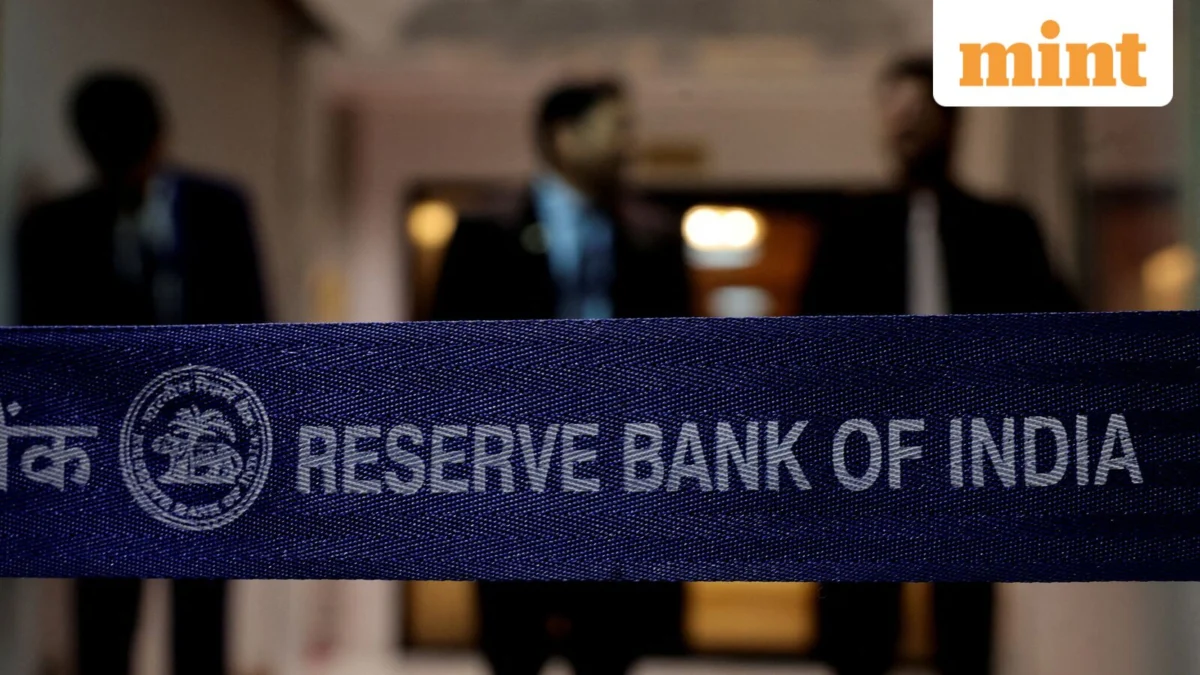
The Reserve Bank of India (RBI) has initiated a significant regulatory update, proposing to integrate the latest refinements to the Basel III leverage ratio framework into its capital adequacy directives for commercial banks. This move, outlined in a recent draft circular, aims to bolster the resilience of India’s banking sector by ensuring stricter adherence to international prudential standards. Stakeholders have been invited to submit their feedback by August 28th, with the finalized amendments slated for implementation from April 1, 2027. This proactive step underscores the central bank’s commitment to maintaining financial stability and fostering a robust banking ecosystem capable of weathering domestic and global economic fluctuations.
At its core, the leverage ratio serves as a vital backstop to the more complex, risk-weighted capital requirements. Unlike traditional capital adequacy measures that adjust for the perceived riskiness of a bank’s assets, the leverage ratio imposes a simple, non-risk-based constraint on a bank’s overall exposure relative to its Tier 1 capital. This unweighted measure prevents banks from accumulating excessive leverage on their balance sheets, irrespective of the underlying risk profile of their assets, thereby mitigating the risk of systemic crises. A higher leverage ratio signifies that a bank possesses a larger capital buffer to absorb potential losses, enhancing its capacity to withstand adverse economic shocks and maintain public confidence.
The proposed framework details a differentiated minimum leverage ratio requirement across various categories of banks within India. Domestic Systemically Important Banks (D-SIBs), institutions whose failure could trigger significant disruption to the financial system and broader economy, will be mandated to maintain a minimum leverage ratio of 4%. For all other commercial banks operating in India, the minimum threshold will be set at 3.5%. Furthermore, branches of Global Systemically Important Banks (G-SIBs) operating within India will be required to uphold a leverage ratio of 3.5%, augmented by an additional applicable leverage ratio buffer, aligning with the international standards set for these globally interconnected entities. This tiered approach acknowledges the varying systemic importance and risk profiles within the Indian banking landscape.
A key operational shift outlined in the draft circular is the expectation for banks to consistently meet the stipulated minimum leverage ratio requirements at all times. While the capital and exposure measures for calculating this ratio will generally be based on quarter-end figures, the RBI has indicated flexibility, allowing banks, with prior approval, to adopt more frequent calculation methodologies, such as daily or monthly averaging. This continuous monitoring mechanism is designed to prevent temporary fluctuations or "window dressing" at reporting dates, ensuring a sustained state of prudential financial health. The central bank also emphasized its intent to closely scrutinize transactions potentially designed to artificially reduce reported leverage, reserving the right to take supervisory action against practices that could lead to destabilizing deleveraging processes or inadequately capture true exposure.

The updated framework introduces substantial revisions to the treatment of specific exposure categories, notably derivative exposures, securities financing transactions (SFTs), and off-balance-sheet (OBS) items. These amendments are in direct alignment with the 2017 Basel Committee on Banking Supervision (BCBS) standards, reflecting a global consensus on enhancing transparency and robustness in these complex financial instruments. For derivative exposures, banks will now be required to measure their exposure using a combination of replacement cost and potential future exposure (PFE), a methodology designed to capture both current and prospective credit risk. Securities financing transactions, which include repurchase agreements and securities lending, will be subject to detailed gross accounting and counterparty credit risk rules, moving away from previous netting arrangements unless explicitly permitted. Off-balance-sheet commitments, such as loan commitments and guarantees, will be converted into credit exposures using prescribed credit conversion factors, ensuring that these contingent liabilities are adequately reflected in the leverage ratio denominator.
One of the foundational principles underpinning these revisions is the general prohibition against reducing the leverage ratio exposure measure through physical or financial collateral, guarantees, or other credit risk mitigation techniques, unless specifically authorized. The exposure measure will primarily adhere to gross accounting values, a deliberate choice to ensure simplicity and comparability, thereby preventing the complexity that risk-weighted frameworks can sometimes introduce. This "gross" approach underscores the leverage ratio’s role as a simple, non-risk-sensitive measure that complements, rather than replaces, risk-weighted capital requirements. It ensures that the absolute volume of a bank’s assets and off-balance-sheet commitments is adequately capitalized, irrespective of risk perceptions that can sometimes prove fallible, especially during periods of market stress.
The impetus behind these comprehensive revisions stems from the lessons learned during the 2008 global financial crisis, where excessive leverage and the intricate web of off-balance-sheet exposures played a significant role in destabilizing major financial institutions. The Basel III framework, developed in response to this crisis, aimed to strengthen global capital and liquidity standards. The leverage ratio, specifically introduced as part of Basel III, was conceived as a critical supplement to address vulnerabilities that risk-weighted assets alone might not capture. By aligning its norms with the latest BCBS standards, the RBI is not only enhancing the resilience of its domestic banking sector but also reinforcing India’s position within the global financial architecture. This convergence with international best practices fosters greater confidence among international investors and counterparties, potentially lowering the cost of capital for Indian banks and facilitating their integration into global financial markets.
The implementation of these tighter leverage norms is expected to have several implications for Indian commercial banks. Operationally, banks will need to review and potentially adjust their capital planning strategies, internal risk management frameworks, and data reporting systems to comply with the updated calculation methodologies and disclosure requirements. The enhanced scrutiny of derivative and off-balance-sheet exposures will necessitate more robust internal controls and valuation processes. From a strategic perspective, some banks might need to re-evaluate their business models, particularly those with significant exposure to low-risk-weighted but high-volume assets or extensive off-balance-sheet activities. While the immediate impact on profitability could be a concern for some, as increased capital requirements might constrain return on equity, the long-term benefits of enhanced stability and reduced systemic risk are expected to outweigh these initial adjustments.
Economically, a more resilient banking sector, underpinned by stringent leverage requirements, translates into greater financial stability for the broader economy. It reduces the likelihood of bank failures, protects depositors, and ensures the continuous flow of credit, which is vital for economic growth and development. While some economists might argue about a potential trade-off between financial stability and credit growth, especially if banks become overly cautious in their lending, the RBI’s differentiated approach and phased implementation suggest a calibrated strategy. The consultation period provides an opportunity for banks and other stakeholders to voice their concerns and contribute to a framework that balances prudential regulation with the imperative for economic expansion. Ultimately, these measures are designed to ensure that India’s banking sector remains a strong pillar of economic progress, capable of supporting the nation’s ambitious growth trajectory while safeguarding against future financial upheavals. The forthcoming guidelines, once finalized, will mark another significant step in India’s journey towards building a world-class, prudentially regulated financial system.