India is poised at the cusp of a transformative era in road transportation, embarking on an ambitious journey to integrate advanced digital technologies for enhanced safety and operational efficiency. The Ministry of Road Transport and Highways (MoRTH) has unveiled a seminal proposal to progressively mandate vehicle-to-vehicle (V2V) communication systems, signaling a profound shift in the nation’s approach to intelligent transportation systems. Through amendments to the venerable Central Motor Vehicles Rules, 1989, a draft notification stipulates that all new two-wheelers, passenger vehicles, and commercial vehicles manufactured from October 1, 2028, will be required to incorporate V2V communication systems adhering to the new Automotive Industry Standard (AIS)-230. This initiative represents one of the most significant technology-driven road safety interventions in recent Indian history, promising to redefine the future of mobility across the subcontinent.
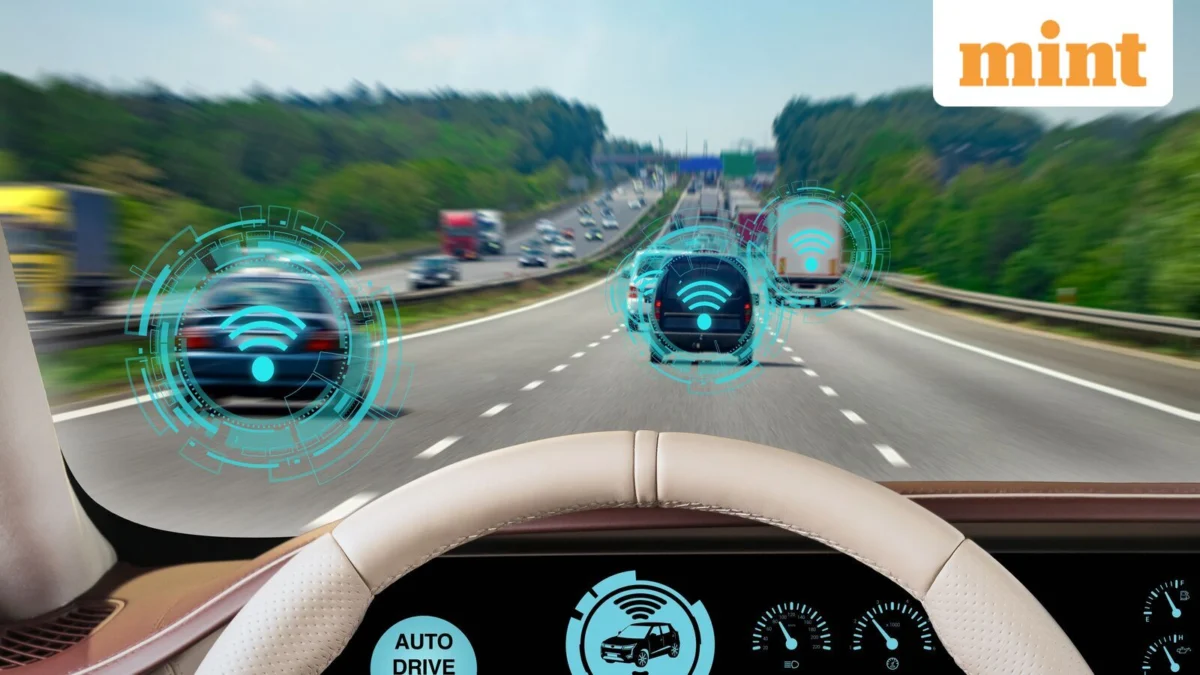
At its core, V2V communication is a sophisticated wireless technology enabling vehicles to exchange critical safety information multiple times per second. Unlike traditional safety systems, which predominantly rely on onboard sensors like cameras, radar, and lidar to detect immediate surroundings, V2V systems allow vehicles to transmit data such as speed, precise location, direction of travel, braking status, and acceleration to other equipped vehicles in their vicinity. This constant, real-time data exchange empowers vehicles to warn drivers about potential collisions even when hazards are obscured from direct line of sight – be it by a blind curve, a large commercial truck, adverse weather conditions, or buildings at an intersection. The chosen technology for India’s mandate is Cellular Vehicle-to-Everything (C-V2X), operating within the 5.875-5.925 GHz frequency band, a spectrum recently exempted from licensing requirements by the Department of Telecommunications, thereby clearing a significant regulatory hurdle for large-scale deployment.
The imperative for such a radical technological leap is starkly evident in India’s unenviable road safety record. The nation consistently registers one of the highest numbers of road accident fatalities globally. According to recent data, over 1.5 lakh people perish annually in road accidents, with hundreds of thousands more sustaining severe injuries. The economic cost of these accidents is staggering, estimated to be between 3-5% of India’s GDP – a substantial drag on national productivity and public health resources. Many of these incidents are attributed to human error, delayed reactions, or lack of situational awareness. V2V technology directly addresses these vulnerabilities by offering a proactive layer of protection. For instance, if a vehicle brakes abruptly in heavy traffic, surrounding V2V-equipped vehicles receive an instantaneous alert, allowing drivers to react faster or for vehicle safety systems to pre-emptively intervene, significantly reducing the likelihood of multi-vehicle pile-ups. Similarly, vehicles approaching concealed intersections can exchange data to warn drivers of cross-traffic, preventing side-impact collisions. The initial applications supported by AIS-230 include emergency brake alerts, forward collision warnings, wrong-way driving alerts, and emergency vehicle alerts – all designed to mitigate common crash scenarios.
The phased implementation strategy underscores a pragmatic approach to integrate this complex technology into the vast and diverse Indian automotive landscape. The framework extends to L (two-wheelers), M (passenger vehicles), and N (commercial vehicles) categories. The first phase, commencing October 1, 2027, mandates that any vehicle voluntarily fitted with a V2V system must comply with AIS-230. This allows early adopters and premium segment vehicles to begin integration. The second, more comprehensive phase, effective October 1, 2028, makes V2V communication systems standard equipment for all newly manufactured vehicles in these categories. This staggered rollout provides manufacturers, component suppliers, and testing agencies ample time to develop, refine, and scale production while ensuring a unified technical standard across the industry, crucial for seamless interoperability.

Implementing V2V technology carries significant economic implications for the automotive ecosystem. Automobile manufacturers will need to invest substantially in integrating communication modules, robust antennas, Global Navigation Satellite System (GNSS) positioning capabilities, advanced cybersecurity software, and dedicated onboard electronics into their vehicle architectures. AIS-230 specifies rigorous standards covering radio performance, receiver sensitivity, positioning accuracy, electromagnetic compatibility, and electrical performance. Meeting these benchmarks will necessitate increased expenditure in research and development, stringent testing, and certification processes. While this upfront investment may initially elevate manufacturing costs, industry experts anticipate that economies of scale, coupled with technological advancements and common hardware platforms, will lead to a gradual reduction in unit costs. For consumers, the additional cost is projected to be relatively modest, especially considering the enhanced safety benefits and the fact that many premium vehicles already feature advanced driver-assistance systems (ADAS) hardware that can be leveraged or complemented by V2V. The long-term economic benefits, including reduced insurance premiums, lower healthcare costs associated with accident recovery, and increased productivity from fewer traffic disruptions, are expected to outweigh these initial expenses.
Despite the profound benefits, India’s V2V mandate faces several intricate challenges. Foremost among these is ensuring absolute interoperability across vehicles from diverse manufacturers. A cohesive communication standard is paramount to guarantee that safety messages are universally understood and acted upon, irrespective of the vehicle brand. The choice of C-V2X technology, which leverages cellular network infrastructure, provides a degree of inherent scalability and future-proofing compared to older Dedicated Short Range Communications (DSRC) standards. However, rigorous testing and adherence to global and national protocols will be vital. Cybersecurity poses another critical concern. As vehicles constantly exchange sensitive wireless data, robust encryption, authentication mechanisms, and a resilient public key infrastructure will be essential to protect these systems from hacking, data breaches, or malicious interference that could compromise vehicle safety and driver privacy. Furthermore, India requires a comprehensive testing and certification ecosystem to validate compliance with technical standards before vehicles reach the market. Perhaps the most significant hurdle is the "chicken and egg" problem of adoption. The full safety efficacy of V2V technology will only materialize as a substantial proportion of the vehicle fleet becomes equipped. During the initial years, roads will still be populated by millions of older, non-V2V-enabled vehicles, meaning the complete benefits will accrue over an extended period. This necessitates a long-term vision and sustained governmental and industry commitment.
The V2V mandate is more than just a safety upgrade; it is a foundational step towards a broader vision of connected mobility in India. Over time, V2V is expected to evolve into Vehicle-to-Everything (V2X) communication, allowing vehicles to interact not only with each other but also with traffic signals, roadside infrastructure (V2I), pedestrians and cyclists (V2P), and the cloud (V2N). Such pervasive connectivity promises to revolutionize traffic management, enabling dynamic route optimization, reducing congestion, and improving overall journey times. It forms a crucial technological pillar for the development and safe deployment of higher levels of vehicle automation, eventually paving the way for autonomous vehicles. Beyond safety, V2X could contribute to environmental sustainability by facilitating smoother traffic flow, reducing idling times, and optimizing fuel consumption. For a nation grappling with rapid urbanization and a burgeoning vehicle population, these capabilities are not merely enhancements but necessities for future urban planning and infrastructure development.
Globally, several advanced economies have already embarked on similar journeys, providing valuable precedents and lessons. The European Union has actively promoted V2V through its Cooperative Intelligent Transport Systems (C-ITS) framework, focusing on harmonized standards and cross-border interoperability. China has emerged as a leader in C-V2X deployment, conducting large-scale trials and pilots across numerous smart cities, leveraging its extensive cellular infrastructure. Japan’s ITS Connect system is operational on selected highways, providing critical warnings about emergency vehicles, red-light violations, and other hazards. In the United States, the National Highway Traffic Safety Administration (NHTSA) has championed V2V deployment, with several major automakers integrating connected vehicle technologies into their production models. While nationwide data on effectiveness are still emerging due to the gradual nature of adoption, pilot projects and transport safety studies consistently indicate a substantial potential for V2V to reduce multi-vehicle crashes and enhance overall road safety. India’s adoption of C-V2X, a more contemporary and forward-looking standard compared to some earlier DSRC deployments, positions it advantageously to leverage the latest technological advancements and global best practices.
In conclusion, India’s V2V mandate is a bold, forward-looking policy that transcends mere regulatory compliance; it represents a strategic investment in the nation’s future. By harnessing the power of connected vehicle technology, India is not only addressing its pressing road safety crisis but also laying the groundwork for a smarter, more efficient, and sustainable transportation ecosystem. The successful integration of V2V, and subsequently V2X, will demand sustained collaboration between government agencies, the automotive industry, technology providers, and academic institutions. While challenges related to interoperability, cybersecurity, and mass adoption will need careful navigation, the potential rewards – a dramatic reduction in fatalities, significant economic savings, and a leading role in the global connected mobility landscape – make this technological leap an imperative for India’s journey towards a truly modern and resilient infrastructure.