

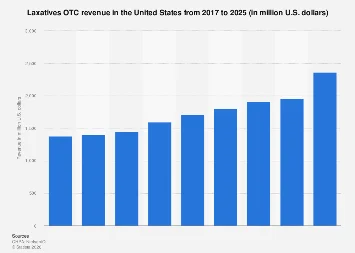
The United States over-the-counter (OTC) laxative market is projected to maintain a steady upward trajectory, with revenue anticipated to reach a significant milestone by 2025. This sustained growth underscores the enduring demand for digestive health solutions within the American consumer landscape. While precise figures are often proprietary and subject to subscription access, industry projections indicate a robust market performance, reflecting underlying demographic and lifestyle factors. The market’s expansion is not merely a statistical blip but a testament to the persistent health concerns and consumer behaviors that drive consistent sales in this essential segment of the pharmaceutical industry.
This analysis delves into the projected revenue trends for OTC laxatives in the U.S. up to 2025, examining the forces shaping this market. It is important to note that these revenue figures generally encompass sales across a broad spectrum of retail channels, including food stores, drugstores, mass merchandisers, select club and dollar stores, convenience stores, and military commissaries. Crucially, these projections typically exclude online sales, representing a significant, albeit unquantified, portion of the broader consumer market. Furthermore, certain product categories within this segment may include a blend of established OTC medicines and related health products not formally classified as drugs by regulatory bodies like the Food and Drug Administration (FDA).
The market’s resilience can be attributed to several interconnected factors. An aging population, for instance, often experiences a higher prevalence of gastrointestinal issues, including constipation, which directly fuels demand for laxative products. As the Baby Boomer generation continues to age, this demographic trend is expected to provide a consistent consumer base for OTC laxatives. Beyond age, modern lifestyles, characterized by sedentary work environments, diets often lacking in fiber, and increased stress levels, also contribute to digestive irregularities for a substantial portion of the population. These pervasive lifestyle challenges create a continuous need for accessible and effective remedies.
From an economic perspective, the OTC laxative market operates within the broader over-the-counter pharmaceutical sector, a segment known for its stability and consistent consumer spending, even during economic downturns. Consumers often view these products as essential health maintenance items rather than discretionary purchases, thereby insulating the market from significant volatility. The accessibility of these products without a prescription further bolsters their market penetration, making them a go-to solution for immediate relief.
Globally, the digestive health market, encompassing laxatives, probiotics, and other related products, is a multi-billion dollar industry. While the U.S. represents a substantial portion of this global market, other regions also exhibit significant growth. Developed economies with similar lifestyle patterns and aging demographics, such as those in Western Europe and parts of Asia, also demonstrate robust demand. Emerging markets, on the other hand, are showing increasing potential as disposable incomes rise and awareness of digestive health issues grows. The U.S. market, however, remains a bellwether due to its size, sophisticated retail infrastructure, and advanced consumer health consciousness.
The competitive landscape within the U.S. OTC laxative market is characterized by a mix of large, established pharmaceutical companies and a growing number of smaller, specialized brands. Key players often compete on brand recognition, product efficacy, formulation diversity (e.g., stimulant, osmotic, bulk-forming laxatives), and price point. Innovation in this sector often focuses on improving palatability, introducing new delivery formats, and developing products with gentler action or specific benefits, such as those targeting occasional constipation versus chronic conditions.
The revenue generated by OTC laxatives is a crucial component for the manufacturers and retailers involved. For manufacturers, it represents a significant revenue stream that supports research and development, marketing efforts, and overall business operations. For retailers, these products contribute to overall store sales and foot traffic, particularly in the health and wellness aisles. The consistent demand ensures predictable sales volumes, making it a reliable category for inventory management and sales forecasting.
Looking ahead, several trends could further influence the market. Increased consumer education around gut health and the microbiome may lead to a greater demand for preventative and proactive digestive solutions, potentially impacting the traditional laxative market. However, for immediate relief of constipation, OTC laxatives are likely to remain a primary choice. Furthermore, the evolving regulatory landscape for OTC products and ongoing shifts in consumer preferences towards natural or plant-based ingredients could also shape product development and market dynamics.
The projected revenue for 2025, while specific figures are reserved, signifies continued consumer reliance on these readily available solutions. This sustained financial performance is a direct reflection of an ongoing societal need and the market’s ability to consistently meet that demand. The U.S. OTC laxative market, therefore, stands as a resilient and important segment within the broader healthcare and retail ecosystem, driven by fundamental human physiological needs and evolving lifestyle patterns. Its continued growth is a clear indicator of its indispensable role in American households’ health management strategies.