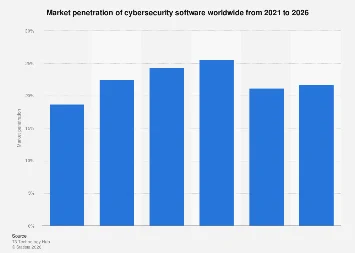
The worldwide market for cybersecurity software is on a trajectory of significant and sustained growth, with projections indicating a substantial expansion in market penetration and revenue through the year 2026. This escalating demand is fueled by a confluence of factors, including the ever-evolving threat landscape, the increasing sophistication of cyberattacks, and the growing digital transformation initiatives across virtually every industry sector. As businesses and governments grapple with an unprecedented volume of sensitive data and critical infrastructure now residing in the digital realm, the imperative to bolster defenses against malicious actors has never been more pronounced.
This burgeoning market is not merely a reflection of heightened awareness but a direct response to tangible economic and operational risks. Data breaches, ransomware attacks, and intellectual property theft can inflict devastating financial losses, erode customer trust, and lead to significant reputational damage. Consequently, organizations are increasingly allocating substantial portions of their IT budgets to cybersecurity solutions, ranging from endpoint protection and network security to identity and access management, data loss prevention, and cloud security. The projected penetration rates suggest a deepening integration of these solutions into the core operational fabric of businesses globally.
Industry analysts forecast that the market’s compound annual growth rate (CAGR) will remain exceptionally strong in the coming years. While precise figures are subject to ongoing market analysis, the consensus points towards a market value that will continue to climb, driven by both new customer acquisition and the expansion of existing deployments. This growth is further amplified by the rise of emerging technologies such as artificial intelligence (AI) and machine learning (ML), which are being increasingly incorporated into cybersecurity software to enable more proactive threat detection, automated response, and predictive analytics. These advanced capabilities are becoming essential for staying ahead of agile and adaptive cyber adversaries.
Geographically, the market’s expansion is expected to be widespread, though certain regions will likely lead the charge. North America and Europe, with their mature digital economies and established regulatory frameworks, have historically been significant markets for cybersecurity software. However, the Asia-Pacific region is emerging as a particularly dynamic growth engine. Rapid digitalization, increasing internet penetration, and a burgeoning number of enterprises adopting cloud-based services are creating fertile ground for cybersecurity solutions in countries like China, India, and Southeast Asian nations. Governments in these regions are also placing a greater emphasis on national cybersecurity strategies, further stimulating market demand.
The competitive landscape within the cybersecurity software market is intensely dynamic. A multitude of players, from established technology giants to specialized cybersecurity firms, are vying for market share. This competition fosters innovation, driving continuous development of more sophisticated and effective security tools. Key market segments experiencing particularly robust growth include cloud security solutions, as more organizations migrate their operations to cloud environments, and endpoint detection and response (EDR) technologies, which offer advanced threat hunting and remediation capabilities for devices. The increasing adoption of remote work models has also placed a premium on solutions that can secure distributed workforces and networks.
Furthermore, the evolving nature of threats necessitates a constant evolution of protective measures. The rise of sophisticated nation-state sponsored attacks, the increasing prevalence of ransomware-as-a-service models, and the exploitation of supply chain vulnerabilities present complex challenges. Cybersecurity software providers are responding by developing integrated platforms that offer comprehensive protection across multiple attack vectors. The trend towards unified security management and Security Orchestration, Automation, and Response (SOAR) platforms reflects the industry’s effort to streamline security operations and improve efficiency in the face of overwhelming threat intelligence.
The economic impact of this growing cybersecurity software market extends beyond the direct revenues generated by vendors. It plays a crucial role in safeguarding national economies by protecting critical infrastructure, financial systems, and intellectual property. A strong cybersecurity posture enables businesses to operate with greater confidence, fostering investment and innovation. Conversely, inadequate cybersecurity can lead to significant economic disruption, including business closures, job losses, and a general decline in economic confidence. Therefore, the continued penetration of cybersecurity software is intrinsically linked to broader economic stability and growth.
Looking ahead, the market’s expansion is not expected to decelerate without significant shifts in the global threat landscape or the regulatory environment. Emerging technologies like quantum computing, while offering potential future benefits, also present new cybersecurity challenges that will require innovative software solutions. The increasing interconnectedness of the Internet of Things (IoT) devices, from smart homes to industrial control systems, opens up a vast new attack surface, demanding specialized security software tailored to these unique environments.
The regulatory push for enhanced data privacy and security, such as the General Data Protection Regulation (GDPR) in Europe and similar legislation emerging worldwide, is also a significant driver. These regulations mandate that organizations implement robust security measures to protect personal data, thereby increasing the demand for compliance-oriented cybersecurity software. Fines for non-compliance can be substantial, incentivizing proactive investment in security solutions.
In conclusion, the cybersecurity software market is a critical and rapidly expanding sector, vital for the resilience and growth of the global digital economy. The projected penetration rates through 2026 underscore a fundamental shift in how organizations perceive and prioritize digital security. As threats continue to evolve and digital adoption accelerates, the demand for advanced, comprehensive, and adaptable cybersecurity software solutions will undoubtedly remain a dominant force in the technology market. The ongoing innovation and investment in this sector are not just about protecting data; they are about securing the future of commerce, governance, and daily life in an increasingly digital world.