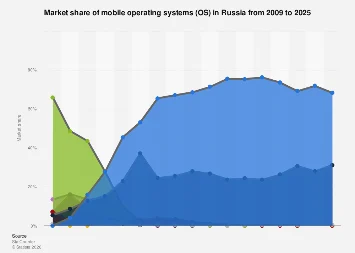
The Russian mobile operating system market is poised for a continuation of its long-standing trend in 2025, with Google’s Android expected to maintain its commanding lead. Projections indicate that Android will capture a significant majority of the market share, underscoring its entrenched popularity among Russian consumers. Following closely behind will be Apple’s iOS, which, while a distant second, still represents a substantial segment of the smartphone user base. This established duopoly has shaped the mobile ecosystem in Russia for over a decade, a stark contrast to the early 2010s when Nokia’s Symbian operating system was a dominant force before its eventual decline.
The robust penetration of smartphones within Russia’s vast population is a key factor underpinning the OS market dynamics. As of 2024, Russia stands as one of the world’s most populous nations, with over 140 million inhabitants. The widespread adoption of mobile technology is evident, with official figures from late 2023 revealing that nearly 80% of the Russian population owned a smartphone. This level of ownership significantly outpaced that of tablets, which registered an ownership rate of approximately 65% during the same period. Furthermore, the data suggests a notable trend of multi-device ownership, with a considerable portion of Russians possessing more than one mobile phone, amplifying the reach and impact of mobile operating systems. This high penetration rate not only signifies a large addressable market for app developers and hardware manufacturers but also highlights the critical role of mobile devices in daily life, from communication and commerce to entertainment and information access.
The global strength of Android is a significant contributing factor to its sustained dominance in Russia. Android’s open-source nature and its availability across a wide spectrum of hardware manufacturers have enabled it to achieve unparalleled global market share. In the United States, for instance, Android held a substantial market share of roughly 40% in early 2024, positioning it as a strong contender against Apple’s iOS. Similarly, in the German market during 2023, Android commanded a significant portion of the smartphone operating system landscape, estimated to be around 35%. These figures, while specific to particular markets, illustrate a broader global pattern of Android’s widespread adoption, driven by factors such as affordability, diverse device options, and extensive app ecosystem. The Russian market, therefore, is not an anomaly but rather reflects a global technological preference that has been cultivated over years of innovation and strategic market penetration by Google.
The economic implications of this OS market structure are multifaceted. For developers, the overwhelming Android user base in Russia presents a primary target for application development, offering the largest potential audience. However, the significant iOS presence also necessitates a dual-platform strategy for many businesses aiming for comprehensive market coverage. The prevalence of Android devices, often at lower price points compared to premium iOS devices, also influences consumer spending patterns and the types of digital services that gain traction. Businesses reliant on mobile platforms for sales, customer service, or internal operations must tailor their strategies to the dominant OS while also considering the nuances of the secondary market. The ongoing evolution of mobile technology, including the rise of 5G, foldable devices, and advancements in artificial intelligence integrated into operating systems, will continue to shape user preferences and market shares in the years to come.
Furthermore, the geopolitical and economic context surrounding Russia can introduce additional layers of complexity to the mobile market. International sanctions and supply chain disruptions can impact the availability and pricing of devices, potentially influencing consumer choices and the market share of specific operating systems or manufacturers. While the core preference for Android is likely to endure, shifts in hardware accessibility or the emergence of alternative domestic or regional operating systems, though currently nascent, could present future challenges or opportunities. Analyzing these external factors alongside internal market dynamics is crucial for a comprehensive understanding of the long-term trajectory of Russia’s mobile OS landscape. The sustained leadership of Android in Russia, therefore, is a testament to its global appeal, but its future will undoubtedly be shaped by a confluence of technological advancements, consumer behavior, and broader economic and political currents. The historical context of Symbian’s decline serves as a reminder that no operating system’s dominance is guaranteed, and adaptability and innovation remain paramount in the ever-evolving world of mobile technology.