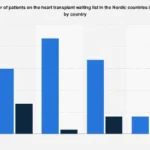
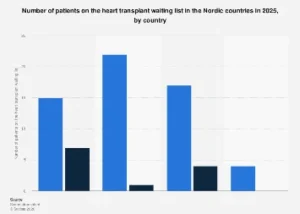

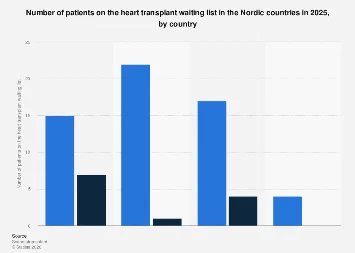
The critical need for heart transplants continues to place a significant burden on healthcare systems across the Nordic region, with preliminary data for 2025 indicating substantial waiting lists in key countries. While precise figures often require specialized access, available indicators suggest that Finland and Sweden are currently experiencing the highest demand, with a considerable number of patients awaiting life-saving cardiac procedures. This situation underscores a complex interplay of demographic shifts, evolving medical practices, and the persistent challenge of organ donation.
The Nordic countries, comprising Denmark, Finland, Iceland, Norway, and Sweden, operate under a coordinated organ exchange system managed by Scandiatransplant. This organization facilitates the allocation of donor organs among participating hospitals, aiming to optimize the use of scarce resources and ensure equitable access to transplantation. However, even within this well-structured framework, the number of individuals requiring heart transplants appears to be outstripping the availability of suitable donor organs.
While exact, publicly disclosed figures for 2025 remain proprietary, the underlying trends paint a concerning picture. Factors contributing to the lengthening waiting lists include an aging population with a higher prevalence of cardiovascular diseases, advancements in medical technology that make more patients eligible for transplants, and unfortunately, a plateau or even decline in deceased organ donation rates in some European nations. The gap between the number of patients in need and the number of organs available is a global challenge, but its manifestation in the affluent and highly developed Nordic countries highlights the systemic nature of the issue.
The implications of extended waiting times for heart transplant candidates are profound. For patients suffering from end-stage heart failure, a transplant offers the only viable path to survival and a significantly improved quality of life. Prolonged waiting periods can lead to deterioration of health, increased reliance on mechanical support devices, and a higher risk of mortality. This not only impacts the individuals and their families but also places a substantial strain on healthcare resources, requiring intensive medical management and psychological support.
Globally, the demand for organ transplants far exceeds supply. According to the World Health Organization (WHO), millions of people worldwide require organ transplants annually, yet only a fraction receive them. This disparity is driven by a multitude of factors, including varying cultural attitudes towards organ donation, the effectiveness of national organ procurement organizations, and the infrastructure in place to support organ donation and transplantation programs. The Nordic countries, generally known for their robust social welfare systems and high public health standards, face similar, albeit often more nuanced, challenges compared to other regions.
Within the Nordic context, the specific numbers for Finland and Sweden, though masked in preliminary data, are understood to be significant. This suggests a higher incidence of heart conditions requiring transplantation or potentially more effective identification and referral of eligible candidates within these national healthcare systems. It is crucial to note that "on hold" statuses, as indicated in the data structure, can represent patients who are temporarily not suitable for transplant due to medical reasons but remain on the waiting list. This adds another layer of complexity to understanding the true demand.
The economic impact of such waiting lists is multifaceted. On one hand, the cost of maintaining patients on long waiting lists, often involving advanced medical interventions and hospitalizations, is substantial. On the other hand, successful transplants represent a significant investment that can lead to long-term cost savings by restoring individuals to a productive life, reducing reliance on expensive palliative care, and improving overall public health outcomes. Therefore, addressing organ donation shortfalls is not just a humanitarian imperative but also an economically prudent strategy.
Expert insights from the medical community consistently point to the need for sustained public awareness campaigns to encourage organ donation. While many individuals express willingness to donate, the actual registration and consent processes can be a barrier. Furthermore, improving organ procurement infrastructure, training medical professionals in effective communication with donor families, and exploring innovative approaches to increase the donor pool, such as utilizing marginal donors or advancing xenotransplantation research, are all critical areas of focus.
The success of Scandiatransplant in coordinating organ sharing across borders is a testament to the collaborative spirit of the Nordic nations. However, the current data suggests that even this cooperative model is being stretched by the rising demand. Future projections will likely depend on a concerted effort to boost organ donation rates, potentially through legislative reforms, increased public education, and technological advancements in organ preservation and transplantation techniques. The health and well-being of citizens in the Nordic region, and indeed globally, hinge on finding sustainable solutions to this ongoing healthcare crisis. The challenge ahead is to translate the willingness of individuals and the expertise of medical professionals into a greater number of life-saving transplants, ensuring that the promise of a new heart is accessible to all who need it.