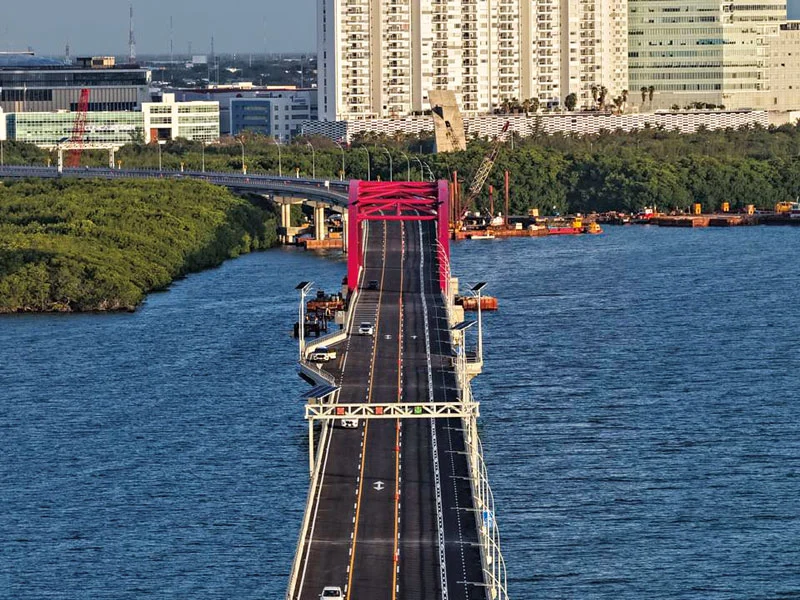
Mexico is standing at a pivotal juncture, poised to redefine its economic landscape. This critical moment is not born from the sudden disappearance of persistent structural challenges, but rather from a confluence of powerful, long-term trends converging simultaneously. These include the global reorganisation of supply chains, a marked fragmentation in international trade, a resurgent emphasis on vital infrastructure investment, and the significant maturation of domestic pension savings into a substantial reservoir of long-term development capital. At the epicentre of this convergence are Mexico’s pension funds, known as the Afores. Once primarily perceived as mere administrators of retirement accounts, they are rapidly evolving into sophisticated institutional investors, possessing both the scale and the necessary long-term perspective to finance the nation’s next phase of economic expansion. The discourse has transcended the traditional confines of pensions; it now centres on the potent capacity of millions of workers’ savings to underpin the very infrastructure required for sustained economic growth.
In an era characterized by global volatility, persistent inflation pressures, and pervasive geopolitical uncertainty, infrastructure has ascended to become one of the most compelling asset classes for long-term investors. For pension funds, the allure is readily apparent. Infrastructure assets—whether spanning transportation, logistics, energy, telecommunications, or water systems—typically generate predictable cash flows over extended durations, offer a degree of protection against inflationary erosion, and exhibit distinct performance characteristics compared to conventional public-market investments. For institutions managing liabilities that extend over decades, these attributes are exceptionally valuable. However, infrastructure provides more than just financial returns; it actively expands productive capacity. Unlike many other asset classes, it directly influences economic competitiveness and fosters long-term growth.
This distinction holds significant weight in the current global economic climate. As supply chains undergo reconfiguration and governments increasingly prioritize economic resilience, institutional investors are systematically augmenting their allocations to real assets. This represents a fundamental, structural shift in capital deployment strategies worldwide, rather than a fleeting tactical manoeuvre. Global statistics underscore this trend: approximately 49 percent of institutional investors globally currently hold infrastructure exposure, a figure projected to approach 60 percent by 2030.
Mexico’s Strategic Advantage in the Nearshoring Era
Mexico emerges as a prominent beneficiary of this global transition. The concept of nearshoring has moved decisively from theoretical discussion to tangible action. Companies across a diverse range of industries are actively relocating manufacturing operations closer to their primary consumer markets, aiming to mitigate logistical risks, shorten delivery times, and enhance operational resilience. Within this overarching shift, the North American region has solidified its position as one of the most strategically vital economic zones globally. The United States-Mexico-Canada Agreement (USMCA) bloc collectively accounts for nearly 30 percent of global GDP and over 24 percent of world trade. Mexico, in particular, occupies an exceptionally advantageous position within this framework, benefiting from its geographic proximity to the United States, deeply integrated industrial ties, an extensive trade network, and a manufacturing base that continues to expand robustly.
Investment flows are already demonstrably reflecting these inherent advantages. In the first quarter of 2026, Mexico attracted approximately $40.8 billion in foreign direct investment, representing a significant 10.8 percent increase compared to the same period in the previous year, marking a new record high. The demand for industrial and logistics facilities continues to surge, placing considerable pressure on existing capacity.
However, the realization of nearshoring’s full potential is contingent upon the availability of robust physical infrastructure. Manufacturing relocation necessitates facilities capable of supporting large-scale industrial activities, including reliable power generation, modern transportation networks comprising efficient highways and ports, extensive rail connectivity, and advanced digital infrastructure. In essence, it demands substantial investment.
The Mexican government has adopted a notably pragmatic approach to infrastructure development. Public investment is not being positioned as a replacement for private capital, but rather as a catalyst to attract and facilitate it. This strategic shift is evident in the scale of planned expenditures. For 2026 alone, the government has outlined infrastructure investments totaling roughly $41.3 billion, equivalent to approximately two percent of GDP. Over the entire tenure of the current administration, cumulative investment is projected to reach approximately $320.5 billion. The allocation of these planned funds clearly delineates national priorities: energy projects account for a substantial 54.1 percent ($52.6 billion), followed by rail infrastructure at 15.6 percent ($14.9 billion), highways at 13.9 percent ($13.5 billion), and ports at 6.5 percent ($6.3 billion). The operational targets are equally ambitious, envisioning the rehabilitation of 4,000 kilometers of roads, the construction of over 3,000 kilometers of new rail lines, the modernization of 11 ports, and the execution of 51 strategic energy projects expected to add more than 22,600 megawatts of capacity.
Crucially, the financing model underpinning these investments is as significant as the spending itself. The current strategy increasingly emphasizes mixed-investment structures, wherein the state provides strategic coordination and long-term direction while simultaneously creating opportunities for institutional private capital. The focus is shifting away from direct state control and towards enhancing project design, mitigating uncertainty, sharing early-stage risks, and establishing regulatory frameworks that offer long-term predictability for investors. This philosophy is embedded in both the National Development Plan and the 2026-2030 Infrastructure Investment Programme, which prioritize structured public-private participation schemes and more sophisticated financing vehicles. Concurrently, regulatory adjustments are gradually facilitating greater participation of long-term institutional capital in productive investment opportunities. This is precisely where the role of the Afores becomes critically important.
The Afores as a Source of Long-Term Development Capital
As of March 2026, Mexico’s Afores managed assets exceeding $480 billion, a sum equivalent to roughly 23.6 percent of the nation’s GDP. This positions the Afore system as one of the largest pools of domestic savings in Latin America, and its growth trajectory is robust. The pension reform enacted in 2020 progressively increases mandatory contributions from 6.5 percent to 15 percent of salary by 2030, significantly amplifying the long-term growth potential of the entire system. Current projections indicate that by 2040, assets managed through the SIEFORES Target Date Funds could reach 56 percent of GDP, a notable increase from an estimated 35 percent without the reform.
More impactful than the sheer size of the system, however, is the evolution of its investment profile. Mexico’s regulatory framework now empowers pension funds with greater exposure to long-duration assets, including infrastructure. The introduction of structured instruments, Fibras (Mexican Real Estate Investment Trusts), simplified issuance processes, and more flexible investment vehicles has broadened the spectrum of opportunities available to institutional investors. Current regulations permit up to a 30 percent allocation in structured instruments like CKDs (Certificados de Capital de Desarrollo) and CERPIs (Certificados de Proyectos de Inversión), and up to a 12.5 percent exposure through Fibras and similar REIT-style vehicles. It is imperative to note that these expanded opportunities do not represent a dilution of investment discipline. Afores remain subject to stringent governance, valuation, and risk-management requirements, and their fiduciary obligations remain paramount.
What has fundamentally changed is the enhanced ability to align long-term retirement savings with long-term productive investments. This strategic shift is already reflected in the data. As of March 2026, Afores had allocated over $57.4 billion to infrastructure-related assets, constituting approximately 12 percent of the total system assets. Investments directly linked to the energy sector alone exceed $17 billion. This is no longer a marginal allocation; it signifies a broader, strategic repositioning of capital.
Critical Conditions for Sustained Success
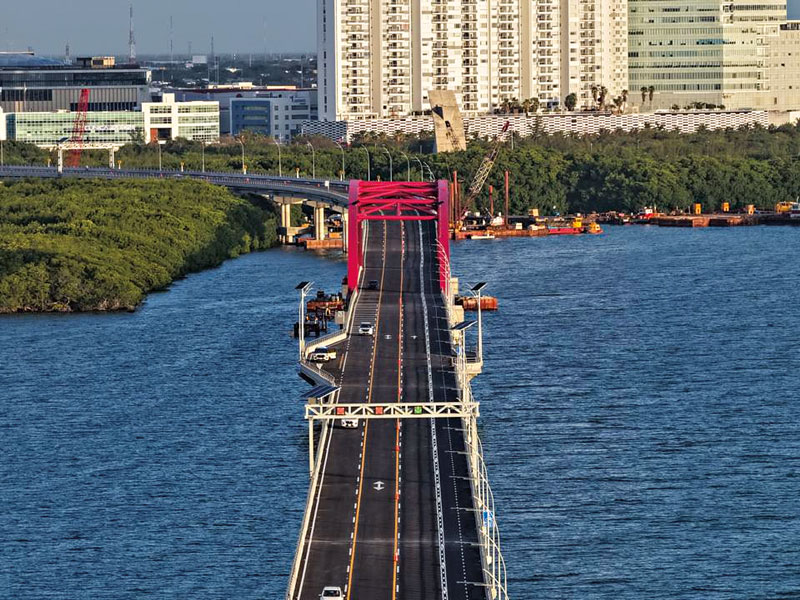
The overarching economic logic is compelling: retirement savings fuel infrastructure development, which in turn bolsters productivity and economic growth, ultimately leading to improved investment returns and enhanced living standards. However, this virtuous cycle is not automatic. Infrastructure investing is inherently complex, often involving protracted execution timelines, numerous stakeholders, political and regulatory uncertainties, and significant technical and financial risks. Not all projects yield commensurate value; some may generate attractive financial returns but offer limited broader economic spillovers, while others may deliver substantial social benefits but struggle to meet purely commercial benchmarks.
Consequently, institutional quality becomes a paramount consideration. The challenge extends beyond merely attracting capital; it involves the meticulous development of projects and robust frameworks capable of harmonizing profitability, public value, and long-term sustainability. This necessitates credible regulatory oversight, unwavering contractual certainty, more developed financial markets, superior project preparation capabilities, and deeper technical expertise across both public and private sectors. In essence, it demands the cultivation of an ecosystem conducive to sustained long-term investment. Nearshoring’s ultimate success may serve as the definitive test of Mexico’s capacity to translate its structural advantages into enduring economic gains. Global manufacturers operate within defined investment windows, and capital is not indefinitely patient.
Should Mexico succeed in providing reliable infrastructure, sufficient energy capacity, and clear regulatory guidance, it has a profound opportunity to establish itself as one of the world’s most significant industrial platforms over the coming decade. Conversely, failure to meet these demands will inevitably lead to capital seeking alternative destinations. This underscores the critical importance of effective coordination between public policy, institutional savings, and private capital. The Afores are uniquely positioned in this environment due to their inherently long-term investment horizon. Unlike short-term capital flows, they are not swayed by quarterly volatility or tactical market adjustments, enabling them to support projects through their entire development cycles. However, long-term capital fundamentally depends on long-term certainty.
Forging a New Economic Framework
For decades, Mexico’s economic discourse has often been confined by familiar dichotomies: state versus market, public versus private investment, regulation versus liberalization. This traditional framework increasingly appears anachronistic. What is emerging instead is a more pragmatic, coordinated model: the state acting as a facilitator, private enterprise as the operational engine, and institutional savings serving as the fundamental long-term financing source. Within this evolving framework, infrastructure ceases to be viewed primarily as a budgetary expenditure or political symbolism and is recognized for what it fundamentally is: a critical platform for enhancing productivity, competitiveness, and sustained economic growth. Government estimates suggest that infrastructure investment alone could contribute as much as a three percent increase to GDP growth. In this transformative process, the Afores are transitioning from peripheral financial institutions to becoming integral components of the nation’s long-term development strategy.
Mexico is not embarking on this journey from a standstill. It possesses significant strategic geographic advantages, deeply integrated industrial sectors, an increasingly sophisticated financial system, and one of the largest domestic savings pools among emerging economies. However, structural advantages alone are insufficient. The true challenge lies in execution: the ability to translate strategic plans into viable projects, convert projects into tangible investments, and ultimately, transform investment into measurable economic growth. The successful realization of these objectives could empower Mexico not only to capitalize fully on the nearshoring trend but to fundamentally reshape its long-term development trajectory. In this profound transformation, the Afores are destined to play a far more significant role than simply managing retirement accounts; they may ultimately serve as the vital financial bridges connecting the nation’s accumulated savings with the essential infrastructure required to secure its future prosperity.