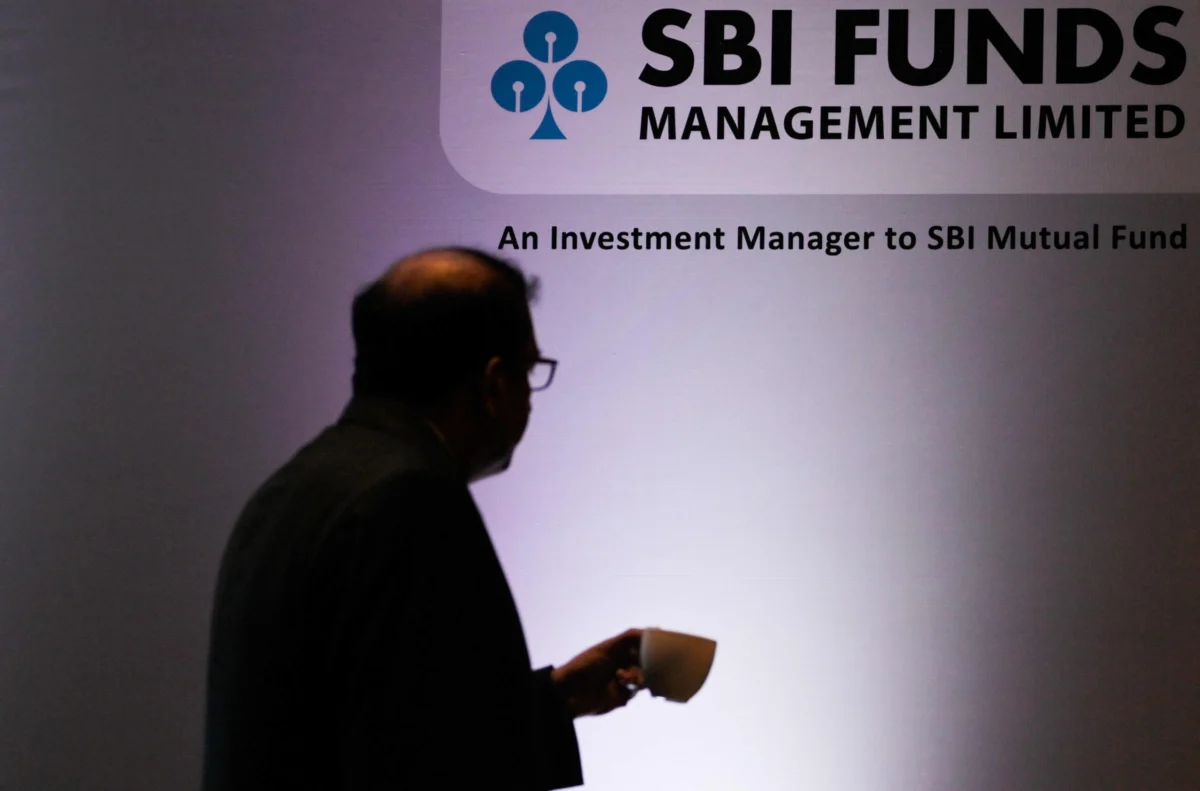
The Indian capital markets have signaled a resounding return to form as the initial public offering (IPO) of SBI Funds Management Limited, the nation’s largest asset manager, concluded with a staggering $30.7 billion (2.97 trillion rupees) in total bids. This massive influx of capital, nearly 31 times the actual capital sought by the firm, represents a pivotal moment for South Asia’s largest economy. As the biggest public offering in India for 2026 thus far, the success of SBI Funds Management is being viewed by economists and market analysts as a bellwether for a broader $50 billion liquidity surge expected to hit the Mumbai exchanges in the coming months.
The offering, a joint venture between the state-owned behemoth State Bank of India and Europe’s leading asset manager, Amundi Group, sought to raise approximately 97.9 billion rupees ($1 billion). By the time the bidding window closed, the issue had been oversubscribed 41.6 times. However, the headline figure masks a significant divergence between different classes of investors, highlighting a sophisticated "institutional frenzy" that suggests professional fund managers are betting heavily on a long-term recovery of the Indian domestic consumption story.
Qualified institutional buyers (QIBs), a category that includes domestic banks, insurance companies, and foreign portfolio investors, led the charge with a subscription rate of 140 times their allotted portion. This level of institutional commitment is rare even in high-growth markets and underscores a deep-seated confidence in the management of SBI Funds, which oversees an astronomical 29.5 trillion rupees ($395 billion) in assets as of the first quarter of 2026. Conversely, retail investor participation remained relatively tempered, with the portion reserved for individual investors subscribed just 3.6 times. This disparity suggests that while professional money is positioning for a rebound, the average Indian household remains cautious following a volatile start to the year.
The timing of this IPO is particularly significant given the turbulent macroeconomic environment that defined the first half of 2026. For much of the year, the Indian equity market struggled to find its footing. The benchmark BSE Sensex and the broader Nifty 50 recorded losses of 9.4% and 7.9%, respectively, making India one of the lagging performers among major global indices. This downturn was largely attributed to external shocks, most notably the escalating conflict involving Iran, which sent global energy prices spiraling. As a country that imports the vast majority of its crude oil requirements, India is uniquely vulnerable to energy price volatility, which stokes inflation and compresses the profit margins of domestic industries.
Furthermore, the Indian market faced stiff competition for capital from a global investment community obsessed with artificial intelligence. As capital flowed toward Silicon Valley and East Asian semiconductor hubs, India—a nation celebrated for its IT services but lacking a dominant "AI champion" in the hardware or large language model space—found itself momentarily sidelined. The "AI vacuum" drained liquidity from emerging markets that were seen as traditional "old economy" plays, focusing instead on the speculative heights of the tech sector in the West.
However, the tide began to turn in June following a diplomatic breakthrough and a subsequent ceasefire between the United States and Iran. As the "war premium" on oil began to evaporate, the Indian domestic story regained its luster. The SBI Funds Management IPO is the first major test of this renewed sentiment. Its success provides a much-needed injection of optimism for other high-profile listings waiting in the wings. Market observers are now looking toward the anticipated debuts of the National Stock Exchange (NSE) and Jio Platforms, the digital and telecommunications arm of Reliance Industries. Both entities are expected to seek valuations that could lead to raises exceeding $3 billion each, dwarfing the SBI Funds issue in size and complexity.
The role of SBI Funds Management within the Indian financial ecosystem cannot be overstated. As the dominant player in the asset management space, the company serves as a conduit for the "financialization" of Indian savings. Historically, Indian households have parked their wealth in physical assets like gold and real estate. Over the last decade, however, there has been a structural shift toward mutual funds and systematic investment plans (SIPs). By listing the country’s premier AMC, the market is essentially putting a price on the future of Indian wealth management. The partnership with Amundi further adds a layer of global best practices and institutional stability, making it an attractive vehicle for foreign investors looking for diversified exposure to the Indian middle class.
From a global perspective, India’s IPO pipeline stands in stark contrast to other major economies. While the United States and Europe have seen a cooling of the IPO market due to sustained high interest rates and regulatory scrutiny, India remains a global leader in the number of new listings. According to data from IPO intelligence firms like Prime Database, the sheer volume of companies seeking public capital in Mumbai is a testament to the country’s entrepreneurial depth. Yet, volume does not always equate to value. The first half of 2026 proved that even a prolific market can be humbled by geopolitical reality. The $50 billion in potential offerings slated for the remainder of the year will depend heavily on the permanence of the current ceasefire and the stabilization of the rupee against the dollar.
Economists also point to the "wealth effect" that a successful SBI Funds listing could generate. If the stock debuts with a significant premium—known in local parlance as a "listing pop"—it will likely draw retail investors back into the fray for upcoming issues. A strong performance would validate the aggressive bidding seen from institutional players and provide the momentum necessary for the National Stock Exchange to move forward with its long-delayed listing. The NSE IPO, in particular, is viewed as a systemic milestone, as it would bring one of the world’s largest derivative exchanges under the scrutiny of public market disclosures.
However, risks remain on the horizon. While the Iran-U.S. ceasefire has provided a window of opportunity, the geopolitical landscape remains brittle. Any resurgence in hostilities would immediately impact the "inflation-sensitive" Indian market. Additionally, the Reserve Bank of India (RBI) continues to walk a tightrope, balancing the need to support growth with the imperative of keeping inflation within its target band. Should the central bank be forced to maintain higher interest rates for longer than the market expects, the valuations of high-growth companies in the IPO pipeline could be called into question.
The institutional frenzy surrounding SBI Funds Management also highlights a shift in the "quality" of demand in the Indian market. In previous years, IPO success was often driven by retail speculation and "gray market" premiums. Today, the dominance of domestic institutional investors (DIIs) suggests a more mature market. These institutions—pension funds, insurance giants, and mutual funds—are managed by professionals who are increasingly looking past short-term volatility toward the structural growth of the 2030s. Their willingness to oversubscribe the SBI Funds issue by 140 times indicates that they view the current price levels as an attractive entry point for a decade-long play on Indian financial services.
As the listing date for SBI Funds Management approaches next week, the eyes of the global financial community will be on the National Stock Exchange in Mumbai. The result will do more than just determine the market capitalization of one company; it will serve as a definitive statement on whether India has successfully navigated the headwinds of 2026. If the $31 billion in bids translates into a sustained trading rally, the $50 billion IPO floodgate will likely swing wide open, cementing India’s position as the primary engine of capital formation in the emerging world. For now, the "institutional frenzy" has provided the spark; the coming months will determine if that spark can ignite a full-scale market conflagration of growth and investment.