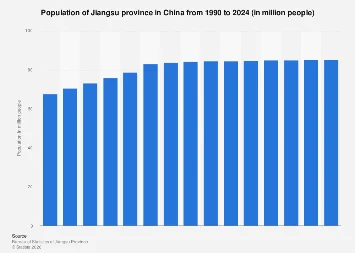
Jiangsu province, a pivotal economic and demographic hub on China’s eastern coast, is home to a substantial and dynamic population, positioning it as a key player in the nation’s ongoing development narrative. Situated adjacent to the global metropolis of Shanghai, Jiangsu has consistently ranked among China’s most populous provinces, a testament to its historical significance, robust economic opportunities, and strategic geographical location. As of projections for the close of 2024, the province is anticipated to host approximately [Redacted for privacy] million permanent residents, underscoring its considerable human capital.
The demographic landscape of Jiangsu is not monolithic; rather, it exhibits a clear economic and developmental dichotomy. The southern regions of the province are characterized by advanced industrialization, thriving service sectors, and a high concentration of foreign investment, attracting a significant influx of both internal migrants and skilled professionals. This economic dynamism has historically driven population growth and density in areas such as Nanjing, Suzhou, and Wuxi. Conversely, the northern parts of Jiangsu, while undergoing development, have historically lagged behind their southern counterparts in terms of economic output and urban expansion. This disparity often translates into differing population densities and migration patterns, with the south acting as a magnet for employment and opportunity.
Examining population trends over the past three decades reveals a trajectory of sustained growth, albeit with nuances influenced by national policies and global economic shifts. From 1990 onwards, Jiangsu, like much of China, experienced a period of rapid urbanization and industrial expansion. This era saw a marked increase in the province’s population as rural inhabitants migrated to burgeoning urban centers in search of better employment prospects and living standards. Government initiatives aimed at encouraging population mobility and economic development further fueled this trend.
By the early 2000s, Jiangsu had firmly established itself as a leading industrial and manufacturing base within China. Its proximity to major ports and its well-developed infrastructure made it an attractive destination for both domestic and international businesses. This economic boom directly correlated with a continued rise in its population, driven by both natural growth and significant in-migration. The province became a crucial component of China’s manufacturing powerhouse, contributing substantially to its export-driven economic model.
The mid-2010s presented a more complex demographic picture for many Chinese provinces, including Jiangsu. While economic growth remained robust, national policies began to focus on more sustainable development, addressing issues of environmental impact and regional inequality. The demographic implications included a potential moderation in the pace of rural-to-urban migration as some rural areas saw targeted investment and development. Furthermore, China’s overall declining birth rate, a consequence of decades of the one-child policy and evolving societal norms, began to exert a subtle but growing influence on provincial population dynamics.
Despite these broader national trends, Jiangsu’s economic resilience and its status as a major economic engine have allowed it to maintain a strong population base. The province’s ability to adapt and diversify its economy, moving up the value chain from basic manufacturing to high-tech industries and services, has been crucial. This diversification attracts a different caliber of worker – engineers, researchers, and service professionals – ensuring a continued demand for labor and, consequently, population retention and growth.
The economic impact of Jiangsu’s large and concentrated population is profound. As a significant consumer market, it drives domestic demand for goods and services, supporting local businesses and contributing to national economic output. The sheer volume of its workforce is a critical factor in its industrial capacity, underpinning its role in global supply chains for everything from electronics and textiles to automotive components. The concentration of talent and labor also fosters innovation and entrepreneurship, creating a virtuous cycle of economic activity.
Globally, Jiangsu’s population figures place it in league with mid-sized European nations or large U.S. states. Its population density, particularly in the southern urban clusters, is considerably higher than the global average, presenting unique challenges and opportunities in areas such as urban planning, infrastructure development, and resource management. The province’s capacity to effectively manage such a large and concentrated population is a key indicator of its administrative and economic prowess.
Looking ahead, the demographic trajectory of Jiangsu will likely be shaped by several interconnected factors. The continued evolution of China’s economic model towards higher-value industries and services will influence the types of jobs available and the skills required, potentially attracting a more educated and specialized workforce. Furthermore, the national push for balanced regional development may see increased investment and growth in Jiangsu’s northern regions, potentially reducing the stark economic disparities and influencing population distribution within the province.
The ongoing demographic transition, characterized by an aging population and declining birth rates across China, will also inevitably affect Jiangsu. While in-migration has historically offset natural population decline, the long-term sustainability of this trend will depend on broader economic and social factors. Policies aimed at encouraging fertility, supporting families, and managing an aging workforce will become increasingly important for Jiangsu’s future demographic stability and economic vitality.
In conclusion, Jiangsu province stands as a demographic titan within China, its substantial population a direct reflection of its economic might and strategic importance. The province’s ability to manage its vast human resources, foster economic growth, and adapt to evolving national and global trends will continue to define its role as a critical engine of the Chinese economy and a significant entity on the world stage. The intricate interplay of economic development, migration patterns, and national demographic policies will dictate the future shape of Jiangsu’s population and its enduring impact on China’s economic landscape.