Indian IT services firms are navigating a formidable two-front war: intensely competing for high-value, large-scale digital transformation contracts while simultaneously grappling with the unprecedented escalation in hardware costs critical for their delivery. This evolving landscape is fundamentally challenging established profitability models, compelling industry leaders to rethink traditional contractual frameworks and strategic investments in a rapidly shifting global technology environment. With the sector poised for continued growth, projected to exceed $250 billion in revenue by 2025, the ability to manage these input costs is paramount for sustaining competitive advantage and protecting shareholder value.
The traditional playbook for Indian IT majors, often built on initial lower profitability for securing large deals, relied heavily on recovering margins over the contract lifecycle through efficient global delivery models and labor arbitrage. However, this strategy is now under severe duress. Senior executives are increasingly vocal about the financial strain; at least two chief executives have indicated close monitoring of hardware expenses, with one explicitly expressing reluctance to grant blanket discounts on IT deals to safeguard operating margins. This disruption is compounded by an market that, paradoxically, demands deeper cost efficiencies on increasingly smaller, agile contracts, even as geopolitical uncertainties compel clients to tighten technology budgets and concentrate on core business operations.
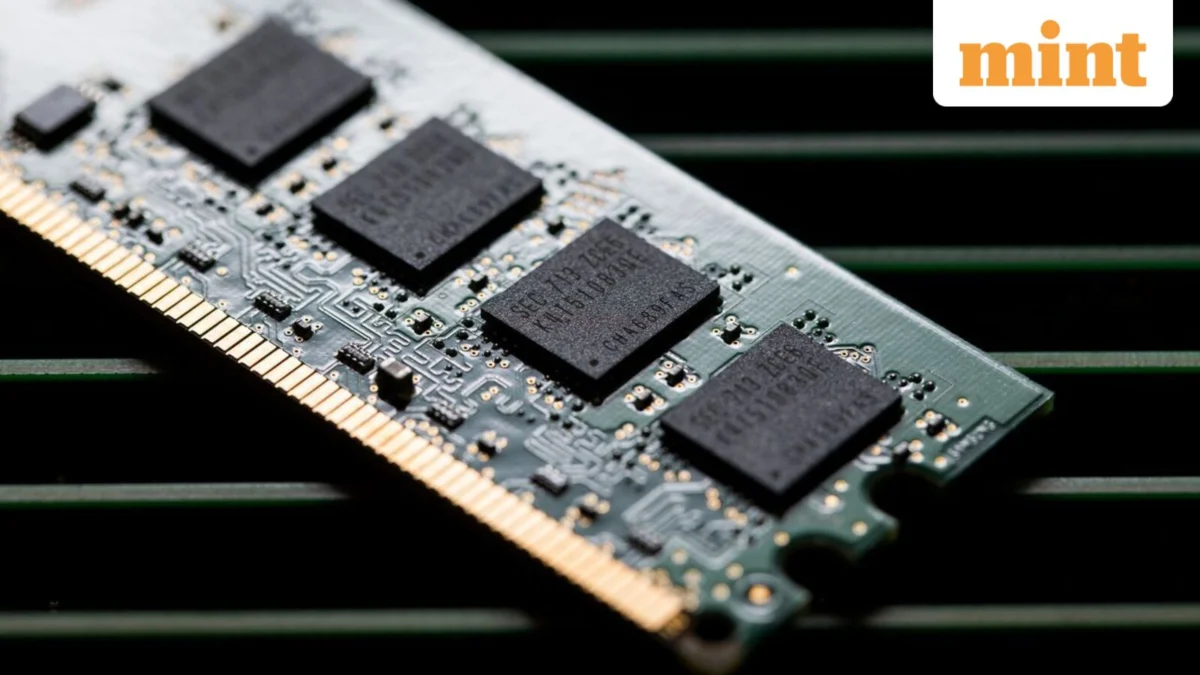
The primary driver behind this hardware inflation is the exponential global demand for Artificial Intelligence (AI) capabilities. Modern AI models, particularly those underpinning generative AI, require immense computational power and memory. Graphics Processing Units (GPUs) serve as the indispensable engines for AI training and inference, while High Bandwidth Memory (HBM) and advanced DDR5 RAM are crucial for rapidly storing and accessing the vast datasets and complex intermediate calculations involved. This insatiable appetite for specialized components, fueled by widespread AI adoption across industries from finance to healthcare, has strained semiconductor supply chains already recovering from pandemic-induced disruptions, sending prices for these critical components soaring by upwards of 20-30% year-on-year in specific segments.
Adding another layer of complexity are persistent global supply chain fragilities and geopolitical tensions. Disruptions, such as those impacting crucial shipping lanes and energy markets, can lead to extended lead times and increased logistics costs for vital components. LTM Ltd.’s experience exemplifies this precarious situation. The company’s $330 million contract with India’s income tax department, aimed at modernizing its software with AI features, has faced delays. LTM CEO Venu Lambu attributed the deferred ramp-up to "memory chip constraints," underscoring how macro-level events can directly impact project timelines and revenue recognition for service providers. Furthermore, aggressive stockpiling by hyperscale data center operators, anticipating future AI infrastructure requirements, has further exacerbated chip shortages and driven up spot market prices.
In response to these unprecedented cost pressures, IT service providers are actively seeking to reconfigure contractual terms. Mohit Joshi, CEO of Tech Mahindra, articulated a firm stance during a post-earnings call, stating, "If you’re seeing a pricing inflation of 20% year-on-year, to tell clients that you will hold the price for a three- or a five-year deal, we think is a forward call, which doesn’t really make sense." This signals a clear shift away from traditional long-term fixed-price agreements for hardware-intensive projects. Firms are now exploring various mechanisms, including the incorporation of inflation-linked clauses, explicit pass-through costs for specific hardware components, or a transition towards more flexible, consumption-based pricing models that reflect real-time market dynamics. However, implementing such changes, particularly with established clients under existing long-term contracts, represents a delicate negotiation.
Industry analysts offer nuanced perspectives on this challenging environment. Namratha Dharshan, Chief Business Leader at IT research and advisory firm ISG, notes that while companies may initially absorb unforeseen cost increases, they must actively mitigate margin damage through enhanced productivity and leveraging AI to deliver greater efficiencies. Crucially, newer contracts are now baking in these anticipated costs from the outset. Phil Fersht, CEO of business research consultancy HFS Research, highlights the intense competitive landscape, asserting that most large IT services firms are not in a strong enough position to unilaterally reopen long-term contracts solely due to rising GPU or memory costs. He predicts short-term margin pressure as providers invest heavily in AI infrastructure, specialized engineering talent, and platform development before these investments translate into fully realized revenue streams. This forces firms to carefully weigh absorbing costs to retain market share against the risks of demanding immediate price adjustments.
Amidst these formidable challenges, some Indian IT giants are identifying and seizing new strategic opportunities. HCL Technologies, India’s third-largest IT services provider, has made a significant commitment, investing $350 million into building and operating data centers with a substantial 50-megawatt capacity. This bold move positions HCL as only the second Indian tech services company, following Tata Consultancy Services (TCS), to directly enter the capital-intensive data center infrastructure space. CEO C. Vijayakumar explained the rationale during an analyst call, acknowledging that the market remains "heavily GPU starved" and that "it’s very lucrative to rent out GPU capacity." This strategy is multi-faceted: it aims to secure reliable access to critical computing resources for HCL’s own projects, create a new high-margin revenue stream by offering GPU-as-a-service to clients, and vertically integrate its service offerings, thereby enhancing control over the entire technology stack.
This strategic pivot by HCL and TCS reflects a broader industry trend where leading IT service providers are moving beyond purely software and services to embrace infrastructure ownership. This not only mitigates supply chain risks but also allows them to capitalize on the burgeoning demand for specialized AI infrastructure, which is projected to grow significantly, reaching hundreds of billions of dollars globally by the end of the decade. By becoming providers of AI compute capacity, these firms can offer a more comprehensive suite of solutions, differentiate themselves in a competitive market, and potentially capture a larger share of the burgeoning AI economy, transforming a cost headache into a strategic advantage and a new avenue for growth.
The evolving hardware cost paradigm carries profound implications for the Indian IT sector, a cornerstone of the nation’s economy and a major global technology hub. The need for increased capital expenditure in specialized AI infrastructure and a rapid re-skilling of the workforce will necessitate careful financial planning and talent development. While the immediate impact includes margin compression and the imperative for more dynamic contract negotiations, this era also accelerates the industry’s strategic pivot towards higher-value, intellectual property-led, and platform-based services. The proactive investments by companies like HCL and TCS underscore the sector’s adaptability and foresight, positioning it to not only navigate current market turbulence but also to emerge stronger, more integrated, and globally competitive in the pervasive age of AI.