Throughout Earth’s 4.5-billion-year history, the planet has experienced at least five major, prolonged periods of extensive glaciation, commonly referred to as ice ages. These profound climatic shifts, characterized by the formation and expansion of massive ice sheets, are primarily driven by intricate atmospheric changes that alter the planet’s thermal equilibrium. The fundamental process involves temperatures consistently remaining low enough to prevent snowmelt, leading to the gradual compaction of accumulated snowfall into vast, dense ice sheets over millennia. This phenomenon not only reshapes landscapes through glacial erosion, carving out valleys and fjords, but also has a dramatic effect on global sea levels, which recede significantly as water is locked away in ice. Evidence of these past epochs can be found on the ocean floor, where submerged terrains once supported vibrant ecosystems, now lying dormant beneath centuries of accumulated sediment and water.
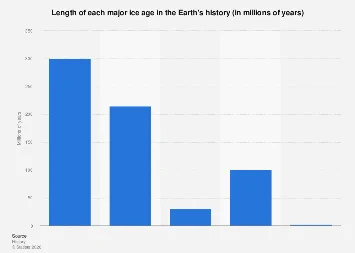
The earliest documented ice age, the Huronian Glaciation, commenced approximately 2.4 billion years ago and persisted until around 2.1 billion years ago. This ancient event, first identified near Lake Huron, was intricately linked to the Great Oxygenation Event, a pivotal moment in Earth’s biological evolution. The rise of oxygen in the atmosphere led to a significant reduction in atmospheric methane, a potent greenhouse gas. Methane’s replacement by carbon dioxide and water vapor, which are less effective at trapping solar radiation, triggered a dramatic global cooling. This was the oldest and longest-lasting glacial period, occurring when life on Earth was predominantly simple, single-celled organisms, many of which were unable to adapt to the drastic temperature drop and faced extinction. The subsequent major ice age, known as the Cryogenian Glaciation, remains a subject of considerable scientific debate regarding its duration and extent. Some estimates place its duration at around 130 million years, while others suggest it lasted for over 215 million years. A key point of contention is whether the entire planet was encased in ice, a scenario dubbed "Snowball Earth," or if liquid water persisted around the equator, a condition termed "Slushball Earth." The limited geological evidence from this period makes definitive conclusions challenging.
In the last half-billion years, Earth has witnessed three more significant ice ages. The Andean-Saharan ice age, the oldest of this more recent group, spanned across a vast geographical area, from the Arabian Peninsula to South America, with particularly intense glaciation observed in parts of Western Africa and Brazil. During this period, Earth’s continents were joined together in the supercontinent known as Pangaea, influencing the distribution and impact of the ice sheets. Following this was the Late Paleozoic Icehouse, also known as the Karoo ice age, which occurred approximately 360 million years ago. The emergence and proliferation of plant life played a crucial role in this cooling phase. As plants evolved, they absorbed significant amounts of carbon dioxide from the atmosphere through photosynthesis, leading to a reduction in its concentration and a subsequent drop in global temperatures. The increase in atmospheric oxygen levels during this period also contributed to more frequent and widespread wildfires and facilitated the evolution of termites. These factors, in turn, helped to regulate plant biomass and influence carbon dioxide levels, creating a dynamic interplay that shaped the climate.
The most recent ice age commenced around 2.6 million years ago and continues to exert its influence today, albeit in a modified form. During its peak, approximately 18,000 years ago, ice sheets reached astonishing heights, with some estimated to be nearly 4,000 meters thick. Today, the remnants of this glacial epoch are primarily found in the ice sheets of Greenland and Antarctica. While Homo sapiens have existed for hundreds of thousands of years, the natural progression of this ice age has been significantly altered and arguably accelerated over the past two centuries. This acceleration is largely attributed to rapid global population growth and widespread industrialization, leading to unprecedented levels of anthropogenic greenhouse gas emissions. Many climate scientists now consider this human-induced climate change to be irreversible, with projections from institutions like NASA suggesting that the Greenland ice sheet could completely melt within the next thousand years. The potential consequences of such a scenario are profound, including substantial sea-level rise, which threatens coastal communities and ecosystems worldwide. Furthermore, the influx of freshwater from melting glaciers could disrupt the delicate balance of salinity in the oceans, impacting marine life and global ocean currents. This, in turn, is predicted to lead to an increase in Earth’s surface temperature, a heightened frequency and intensity of natural disasters such as extreme weather events, and widespread food shortages due to agricultural disruption. The intricate relationship between atmospheric composition, solar radiation, and Earth’s geological processes underscores the planet’s susceptibility to significant climatic shifts, with the echoes of past ice ages serving as a stark reminder of the forces that shape our world. The current trajectory of warming, driven by human activity, presents a new and urgent chapter in Earth’s long climatic narrative, demanding global cooperation and innovative solutions to mitigate its far-reaching effects.