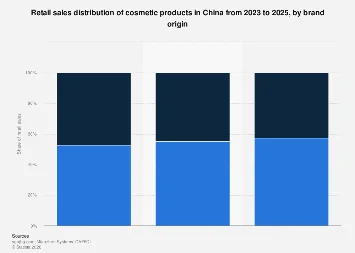
The Chinese cosmetics market, a colossal and dynamic sector within the global beauty industry, is undergoing a significant transformation, marked by the burgeoning influence and increasing market share of domestic brands. While international players have long dominated consumer perception and sales channels, a discernible shift is underway, driven by evolving consumer preferences, enhanced product innovation, and a growing sense of national pride. Understanding the intricate distribution of cosmetics retail sales by brand origin in China is crucial for stakeholders seeking to navigate this complex and rapidly growing marketplace.
Historically, Western and Korean beauty brands have enjoyed a preeminent position in China, leveraging established reputations for quality, sophisticated formulations, and aspirational marketing. However, the narrative is rapidly changing. Chinese consumers, particularly younger demographics, are increasingly embracing homegrown labels that resonate with their cultural identity, offer tailored solutions for local skin types, and are often more accessible in terms of price point. This trend is not merely anecdotal; it is reflected in the changing dynamics of retail sales, where the provenance of a brand is becoming a more critical purchasing factor.
The Chinese cosmetics market is characterized by its sheer scale and rapid growth trajectory. In recent years, it has consistently ranked among the top global markets, driven by a burgeoning middle class, increasing disposable incomes, and a heightened focus on personal grooming and wellness. According to various market research reports, the market is projected to continue its upward trajectory, presenting substantial opportunities for both established and emerging brands. However, capturing a significant share of this market requires a nuanced understanding of consumer behavior and the competitive landscape, where brand origin plays an increasingly pivotal role.
The rise of domestic Chinese beauty brands can be attributed to several key factors. Firstly, there has been a significant investment in research and development by Chinese companies, leading to improved product quality and efficacy that rivals international competitors. Many domestic brands are now offering sophisticated formulations, advanced skincare technologies, and innovative makeup products that appeal to discerning consumers. Secondly, digital transformation has been a game-changer. Chinese brands have adeptly utilized e-commerce platforms, social media marketing, and influencer collaborations to build brand awareness, foster community engagement, and drive sales. Platforms like Tmall, JD.com, and Douyin (TikTok) have become crucial battlegrounds where brands can directly connect with consumers and showcase their offerings.
Furthermore, the concept of "Guochao" or "national trend" has gained considerable traction in China. This cultural movement celebrates Chinese heritage, craftsmanship, and innovation, fostering a sense of pride and loyalty towards domestic products. Consumers are increasingly seeking out brands that embody this ethos, viewing them not just as products but as symbols of cultural identity. This nationalistic sentiment, coupled with genuine product appeal, is a powerful driver for the growth of Chinese beauty brands.
The distribution of cosmetics retail sales by brand origin in China can be segmented into several broad categories:
Domestic Chinese Brands: These brands, ranging from established heritage names to agile digital-native startups, are witnessing a significant surge in popularity. They often excel in understanding local consumer needs, catering to specific skin types prevalent in China, and developing products that align with prevailing beauty trends. Their marketing strategies are often deeply integrated with local cultural nuances and digital ecosystems, allowing for highly effective consumer engagement. Recent data indicates a growing market share for these brands, particularly in skincare and makeup segments.
International Brands (Western & Asian): This category historically dominated the market and still holds a substantial presence. It includes global giants from the United States, Europe (France, Germany, UK), and other Asian countries like South Korea and Japan. These brands often benefit from established global brand equity, perceived premium quality, and extensive distribution networks. However, they are increasingly facing intense competition from their domestic counterparts and must adapt their strategies to remain relevant and competitive. While still strong in certain premium segments and prestige categories, their unchallenged dominance is being challenged.
Emerging Market Brands: While not as prominent as domestic or major international players, brands from other emerging economies are also making inroads into the Chinese market, often through niche product offerings or specific distribution channels.
Analyzing the sales distribution reveals a complex interplay of factors. In the skincare segment, domestic brands have made significant inroads, particularly in mass-market and mid-range categories, often outperforming international brands in terms of volume and growth. This is driven by their ability to offer effective solutions for common Chinese skin concerns, such as hyperpigmentation and oil control, at competitive price points. Brands that have successfully leveraged social media and influencer marketing to build trust and authenticity have seen remarkable success.
In the color cosmetics or makeup segment, international brands have traditionally held a stronger position due to their historical association with fashion and trends. However, domestic brands are rapidly catching up, introducing innovative product formulations, vibrant color palettes, and trendy packaging that appeal to a younger, fashion-conscious demographic. The influence of social media influencers and beauty KOLs (Key Opinion Leaders) is particularly potent in this segment, shaping trends and driving purchasing decisions for both domestic and international brands.
The luxury cosmetics segment remains a stronghold for established international brands, which benefit from their heritage, perceived exclusivity, and premium positioning. However, even here, discerning Chinese consumers are becoming more sophisticated, seeking out unique formulations and brands that offer a distinct narrative, creating opportunities for niche international players and potentially for high-end domestic brands in the future.
Geographically, the distribution also varies. Tier 1 and Tier 2 cities in China, with their more affluent and cosmopolitan populations, tend to have a higher consumption of both international and domestic premium brands. In lower-tier cities and rural areas, domestic brands often have a stronger presence due to their affordability and wider accessibility through traditional retail channels and rapidly expanding e-commerce networks.
The economic impact of this shift is multifaceted. For the Chinese economy, the growth of domestic beauty brands signifies a move up the value chain, fostering innovation, creating high-skilled jobs, and contributing to export potential. It also bolsters national industrial competitiveness and reduces reliance on foreign imports in a significant consumer sector. For international brands, it necessitates a strategic re-evaluation of their market entry and expansion plans, focusing on deeper localization, enhanced consumer engagement, and a clearer articulation of their unique value proposition.
Expert analysis suggests that the trend of domestic brands gaining market share is likely to continue. Companies that can effectively blend cultural relevance with cutting-edge product development, coupled with a strong digital presence, are best positioned for success. The Chinese government’s continued support for indigenous innovation and consumption further underpins this growth. As Chinese consumers become more discerning and confident in their purchasing power, their embrace of domestically produced beauty products is not just a trend but a fundamental reshaping of one of the world’s most vital consumer markets. The battle for the Chinese beauty consumer is far from over, but the lines of engagement have irrevocably shifted, with domestic brands now firmly in the ascendancy.