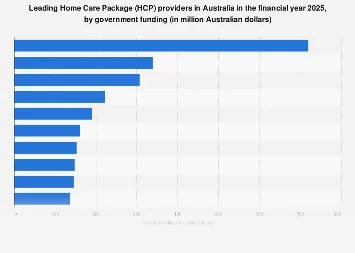
The landscape of aged care in Australia is undergoing significant transformation, with Home Care Package (HCP) providers playing a pivotal role in supporting the nation’s aging population. As the financial year 2025 unfolds, new data reveals the leading entities in this crucial sector, measured by the volume of government funding they receive. This funding is instrumental in enabling these organizations to deliver essential services, allowing older Australians to remain in their homes with dignity and independence. The insights gleaned from this financial data offer a window into the operational scale and strategic importance of these key players within the broader healthcare ecosystem.
At the forefront of government-backed HCP provision for the financial year 2025 is Australian Unity, a diversified financial services and healthcare organization. Australian Unity has secured the largest share of government funding, a testament to its extensive reach and comprehensive service offerings in the home care sector. While precise figures remain proprietary for detailed public disclosure, available indicators suggest this funding is substantial, enabling the organization to support a significant number of care recipients across the country. This leadership position underscores Australian Unity’s established presence and its capacity to manage and deliver complex care packages at scale, aligning with government objectives for an aging population.
Following closely behind Australian Unity is Trilogy Care Pty Ltd, another prominent provider that has garnered considerable government financial backing. Trilogy Care’s strong performance highlights its growing influence and commitment to the home care market. The organization’s ability to attract significant funding indicates robust operational capabilities and a strategic focus on meeting the escalating demand for in-home aged care services. The competition among providers for government funding reflects a dynamic market where efficiency, quality of care, and responsiveness to client needs are paramount.
The Home Care Package program, a cornerstone of Australia’s aged care policy, is designed to provide personalized support services to older individuals who are assessed as needing assistance to live independently at home. These packages are funded by the Australian Government and are allocated based on an individual’s assessed care needs, ranging from basic support to complex care requirements. The financial year in Australia runs from July 1st to June 30th, meaning FY2025 encompasses the period from mid-2024 to mid-2025. This program is a critical component of the national strategy to manage the demographic shift towards an older population, a trend observed globally.
The economic impact of the HCP program extends far beyond the direct funding allocated to providers. It stimulates job creation within the care sector, fostering employment opportunities for nurses, care workers, allied health professionals, and administrative staff. Furthermore, by enabling older adults to remain in their homes, the program alleviates pressure on residential aged care facilities, which often face capacity constraints and higher operational costs. This shift towards home-based care also contributes to the broader economy through increased consumer spending by care recipients and their families.
Globally, many developed nations are grappling with similar demographic challenges and are investing heavily in home-based care solutions. Countries like the United Kingdom, Canada, and parts of Europe are implementing and expanding programs that mirror Australia’s HCP model, emphasizing community-based support and aging in place. The success of these initiatives is often contingent on effective government funding mechanisms and the ability of service providers to adapt to evolving care needs and technological advancements.
The competitive nature of the HCP market, as evidenced by the leading providers in FY2025, drives innovation and a focus on service quality. Providers are increasingly investing in technology to improve care coordination, enhance communication with clients and families, and streamline administrative processes. Digital platforms for rostering, client management, and telehealth are becoming standard tools, aiming to boost efficiency and provide more responsive care. This technological integration is crucial for managing the complexities of delivering care across diverse geographical areas and client needs.
Moreover, the regulatory environment surrounding aged care in Australia is subject to ongoing review and reform. Following significant Royal Commissions and public inquiries into the aged care sector, there is a continuous push for greater transparency, accountability, and improved quality standards. Providers who can demonstrate a commitment to these principles, alongside their operational and financial performance, are likely to be better positioned for sustained success and continued government support. The funding figures for FY2025 serve as an indicator of which organizations are currently best equipped to navigate this evolving landscape.
The data on government funding for HCP providers is a crucial metric for understanding the market dynamics within Australia’s aged care sector. It reflects not only the scale of operations but also the trust placed by the government in these organizations to deliver essential services to a vulnerable population. As the demand for home-based aged care continues to grow, driven by an aging demographic and a preference for aging in place, the role of these leading providers will become even more critical. Their ability to innovate, adapt, and maintain high standards of care will be paramount in shaping the future of aged care in Australia and serving the needs of its citizens effectively. The financial performance of entities like Australian Unity and Trilogy Care Pty Ltd in FY2025 offers valuable insights into the strategic direction and operational priorities within this vital sector.