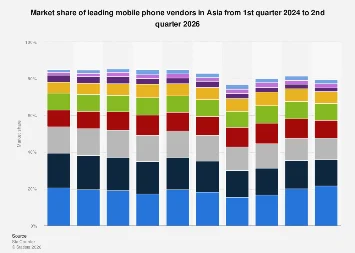
The Asian smartphone market, a colossal engine of global technology consumption, is poised for a dynamic evolution in the coming years. Projections indicate significant shifts in market share among leading vendors by 2026, driven by a complex interplay of innovation, consumer demand, economic factors, and the accelerating rollout of advanced mobile technologies like 5G. While specific figures often require commercial access, the underlying trends paint a vivid picture of a highly competitive landscape where established giants and ambitious challengers will vie for dominance across diverse regional economies.
The sheer scale of the Asian market cannot be overstated. It represents a substantial portion of global smartphone sales, with hundreds of millions of units shipped annually. Countries like China, India, South Korea, Japan, and the rapidly growing Southeast Asian nations form the core of this demand. This vast consumer base, characterized by varying income levels, technological adoption rates, and brand loyalties, presents both immense opportunities and significant challenges for handset manufacturers. The 2026 outlook suggests a continued concentration of market power, but with potential for new entrants to disrupt established hierarchies, particularly in emerging economies where affordability and feature sets are key differentiators.
One of the primary catalysts for these projected shifts is the ongoing 5G revolution. While 5G adoption rates vary across the continent, the infrastructure build-out is accelerating, particularly in developed markets like South Korea, Japan, and China. This transition necessitates upgrades to compatible devices, creating a powerful upgrade cycle for manufacturers capable of delivering compelling 5G experiences. Vendors that can offer a diverse portfolio of 5G-enabled smartphones, ranging from premium flagships to more accessible mid-range options, are expected to gain a significant advantage. The economic impact of 5G extends beyond device sales, fostering new applications and services that further entrench the importance of the smartphone as the central hub of digital life. Analysts anticipate that the total addressable market for 5G devices in Asia will expand considerably by 2026, becoming a non-negotiable feature for a growing segment of consumers.
In the highly competitive Chinese market, the dynamics are particularly fierce. Historically dominated by local giants, the landscape has seen periods of intense rivalry and consolidation. While Apple maintains a strong presence in the premium segment, domestic players like Huawei, Xiaomi, OPPO, and Vivo have consistently innovated and expanded their market reach through aggressive pricing, extensive distribution networks, and a keen understanding of local consumer preferences. Projections for 2026 suggest that these Chinese brands will continue to command a significant majority of their home market share, with ongoing advancements in their proprietary technologies and ecosystems. Huawei, despite geopolitical challenges, continues to demonstrate resilience and technological prowess, particularly in its ability to develop and integrate advanced chipsets. Xiaomi, known for its value-for-money offerings and diversified product ecosystem, remains a formidable competitor. OPPO and Vivo, part of the same parent company, have also carved out substantial market segments through strategic product segmentation and marketing.
Beyond China, the Indian market presents a uniquely attractive growth frontier. With a massive population and a rapidly expanding middle class, India is a critical battleground for smartphone vendors. Currently, Indian consumers exhibit a strong preference for affordable yet feature-rich devices, making brands that can deliver on this balance highly successful. The market share in India is characterized by intense competition between Chinese manufacturers and Samsung, which has historically held a strong position. By 2026, it is anticipated that the dominance of Chinese brands will likely persist, driven by their aggressive pricing strategies and continuous innovation in the sub-$200 segment. However, Samsung’s ability to adapt its product offerings and leverage its brand recognition will be crucial in maintaining its market standing. The growth of 5G in India, though perhaps at a slightly slower pace than in some East Asian nations, will also play a pivotal role in shaping vendor fortunes.
The Southeast Asian region, encompassing countries like Indonesia, Vietnam, the Philippines, and Thailand, represents another area of significant growth and evolving market share. This diverse region is characterized by a burgeoning youth population, increasing disposable incomes, and a high propensity for digital adoption. Similar to India, affordability remains a key consideration for many consumers. Chinese brands have made substantial inroads into these markets, often outcompeting rivals through competitive pricing and feature-rich devices. Samsung also holds a significant share, particularly in countries with a longer history of smartphone adoption. Projections for 2026 suggest a continued strong performance from Chinese vendors, with potential for increased market penetration by brands that can effectively tailor their offerings to the specific needs and preferences of individual Southeast Asian nations. The rise of e-commerce and digital payments further empowers these brands to reach a wider consumer base.
In more developed markets like South Korea and Japan, the competitive landscape is shaped by different factors. South Korea, a global leader in 5G deployment and technological innovation, is dominated by Samsung, which benefits from strong brand loyalty and a deep understanding of local consumer demands. Apple also commands a significant share, particularly in the premium segment. By 2026, it is expected that Samsung will likely maintain its leadership position, bolstered by its advanced foldable device technology and robust 5G offerings. Japan, on the other hand, has a more nuanced market, with Apple holding a substantial share alongside domestic players like Sony and Sharp, as well as strong competition from Samsung and other international brands. The emphasis in Japan often lies on brand reputation, design, and specific technological features that cater to a discerning consumer base. The transition to 5G is well underway, and vendors that can offer compelling integrated experiences will likely see success.
Looking at global comparisons, Asia’s smartphone market trends often mirror and influence global dynamics. The rise of Chinese brands, for instance, has had a profound impact on the international stage, challenging the long-standing duopoly of Samsung and Apple in many regions. The focus on 5G innovation originating from Asian markets is also setting the pace for global adoption. As vendors navigate the complexities of the Asian market, their strategies will inevitably shape the broader smartphone industry. Factors such as supply chain resilience, component sourcing, and geopolitical considerations will continue to play a crucial role in determining market share.
The economic implications of these market shifts are far-reaching. Increased smartphone penetration and upgrade cycles fuel significant revenue for manufacturers, component suppliers, and related industries. The demand for advanced mobile infrastructure, driven by 5G, stimulates investment in telecommunications networks and related services. Furthermore, the widespread availability of sophisticated smartphones empowers small businesses, facilitates digital commerce, and contributes to the overall digital transformation of Asian economies. As the continent continues its rapid economic development, the smartphone will remain an indispensable tool, and the vendors that can best capture the evolving needs and aspirations of Asian consumers by 2026 will undoubtedly be the ones to lead the market. The competition promises to be intense, driven by a relentless pursuit of innovation, affordability, and a deep understanding of the diverse consumer segments across this vibrant and expansive region.