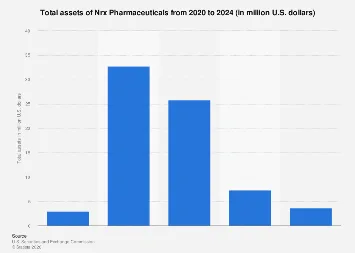
Nrx Pharmaceuticals, a clinical-stage biopharmaceutical company focused on developing treatments for critically ill patients, is currently navigating a complex financial environment as it seeks to advance its pipeline and bring novel therapies to market. While specific, up-to-the-minute total asset figures for publicly traded companies are typically disclosed in their quarterly and annual financial reports, the general trajectory of a company like Nrx Pharmaceuticals is shaped by its research and development expenditures, clinical trial progress, and strategic partnerships. Understanding the composition and evolution of a biopharmaceutical company’s assets is crucial for investors, analysts, and industry observers seeking to gauge its financial health and future potential.
The asset base of a biopharmaceutical firm is multifaceted, encompassing both tangible and intangible elements. Tangible assets typically include property, plant, and equipment (PPE) such as laboratory facilities, research equipment, and administrative offices. These are essential for conducting research, developing drug candidates, and managing operations. However, in the biopharmaceutical sector, the most significant assets are often intangible. These include intellectual property (IP) such as patents protecting novel drug compounds and formulations, as well as the value inherent in ongoing clinical trials and the data generated from them. The company’s drug pipeline itself, representing potential future revenue streams, is arguably its most valuable asset, though it is often not carried at its full potential market value on the balance sheet until regulatory approval and commercialization.
For Nrx Pharmaceuticals, a key area influencing its asset valuation is its ongoing work in areas such as critical care and central nervous system disorders. The company has been particularly focused on treatments for conditions like COVID-19 and neurological diseases. The success of its Phase 3 clinical trials for remdesivir in combination with other therapies for severe COVID-19, and its efforts in developing treatments for depression and other neurological conditions, directly impacts the perceived value of its IP and the potential future economic benefits derived from these assets. Positive trial results can significantly enhance the company’s asset profile, attracting further investment and potentially leading to lucrative licensing or acquisition opportunities. Conversely, setbacks in clinical development can lead to write-downs of intangible assets, impacting the overall balance sheet.
The financial strategy of companies like Nrx Pharmaceuticals often involves a delicate balance between investing heavily in R&D to build its asset base and managing cash flow to sustain operations. Research and development expenses are typically the largest expenditure for biopharmaceutical firms, representing a significant investment in future assets. These investments are aimed at discovering and developing new drug candidates, conducting preclinical studies, and running costly clinical trials. The allocation of capital towards these endeavors directly shapes the company’s growth trajectory and its ability to generate future revenue.
In the broader context of the biopharmaceutical industry, asset growth is often driven by innovation and strategic M&A activity. Companies that successfully bring novel therapies to market can command premium valuations. However, the path to market is fraught with risk and requires substantial capital. Many biopharmaceutical companies, especially those in the clinical-stage, rely on external funding through equity offerings, debt financing, or strategic partnerships to fuel their asset development. The ability to secure such funding is often contingent on the perceived strength of their existing asset base and the potential of their pipeline.
Comparatively, established pharmaceutical giants often have diversified asset portfolios, including a mature portfolio of marketed drugs, significant R&D infrastructure, and substantial cash reserves. This allows them to weather the inherent risks of drug development more effectively. However, smaller, more focused companies like Nrx Pharmaceuticals, while potentially offering higher growth prospects, carry a different risk profile. Their asset base is more concentrated in their pipeline, making them more susceptible to the success or failure of individual drug candidates.
The current economic climate also plays a significant role in shaping the asset landscape for biopharmaceutical companies. Factors such as interest rates, inflation, and investor sentiment towards the healthcare sector can influence the cost of capital and the availability of funding. In periods of economic uncertainty, companies with strong balance sheets and diversified revenue streams are generally better positioned. For companies like Nrx Pharmaceuticals, demonstrating a clear path to revenue generation and a robust pipeline becomes even more critical in securing necessary investments.
While specific figures for Nrx Pharmaceuticals’ total assets in 2024 are not readily available without consulting their official financial disclosures, the narrative surrounding the company’s financial position is intrinsically linked to its progress in advancing its therapeutic programs. The value of its intellectual property, the successful progression of its clinical trials, and its ability to forge strategic alliances are the primary drivers that will shape its asset growth and, consequently, its market standing. Investors will be closely monitoring its financial reports for detailed breakdowns of its cash position, investments in R&D, and the carrying value of its intangible assets, all of which offer crucial insights into the company’s current financial health and its prospects for future value creation. The journey of a biopharmaceutical company is a testament to the significant capital investment required to transform scientific innovation into tangible assets that can ultimately address unmet medical needs and generate substantial economic returns.