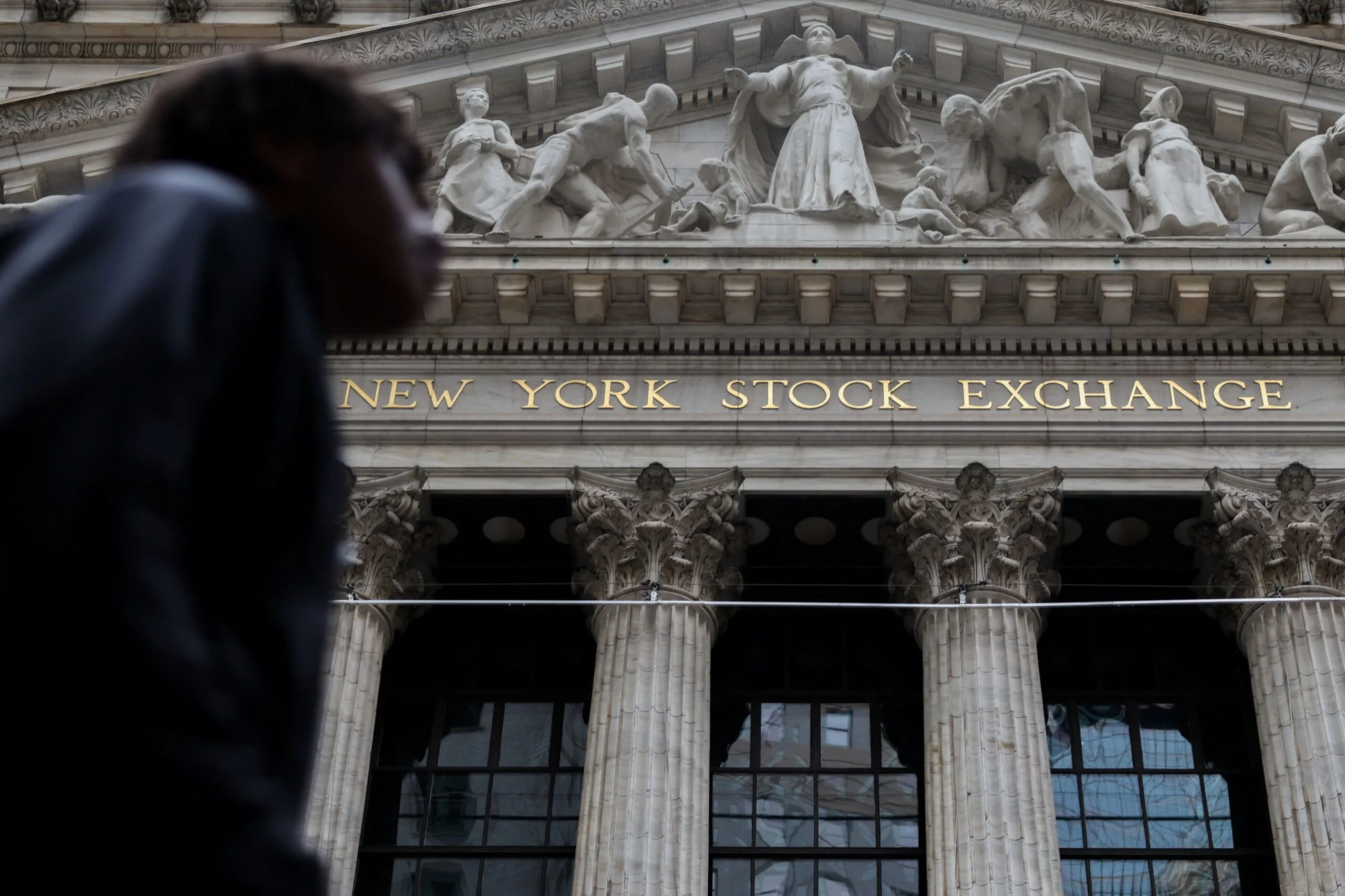
The traditional architectural blueprint of the modern investment portfolio is undergoing its most significant renovation in nearly half a century. For decades, the "60/40" split—allocating 60% of capital to equities for growth and 40% to sovereign bonds for safety—served as the bedrock of wealth management. The logic was elegant in its simplicity: when the "animal spirits" of the stock market faltered, the steady, counter-cyclical nature of fixed income would provide a reliable cushion. However, the post-pandemic economic landscape, characterized by stubborn inflation, aggressive monetary tightening, and heightening geopolitical friction, has shattered this historical correlation. In this new regime, stocks and bonds have increasingly moved in lockstep, leaving investors exposed to simultaneous drawdowns in both asset classes.
Recognizing this fundamental shift in market dynamics, BlackRock, the world’s largest asset manager, is pivoting its strategy. The firm is increasingly looking toward its sophisticated hedge fund division to breathe new life into its exchange-traded fund (ETF) ecosystem. By integrating "liquid alternatives"—strategies once reserved for institutional titans and ultra-high-net-worth individuals—into the accessible framework of an ETF, BlackRock is attempting to democratize complex alpha-seeking tools. This evolution marks a departure from the "beta-heavy" era of passive indexing toward a future defined by active, systematic, and market-neutral positioning.
The primary catalyst for this shift is the erosion of the diversification benefit traditionally offered by fixed income. Jeffrey Rosenberg, a senior portfolio manager on BlackRock’s systematic fixed income team, has been vocal about the limitations of the classic portfolio. He notes that the "bedrock principle" that bonds rise when stocks fall has been repeatedly challenged in the current macro environment. The 2022 market rout, which saw the S&P 500 drop nearly 20% while the Bloomberg U.S. Aggregate Bond Index suffered its worst year on record, served as a wake-up call. More recently, spikes in geopolitical risk, such as the volatility surrounding global conflicts, have further demonstrated that traditional hedges can fail precisely when they are needed most.
To address this "diversification gap," BlackRock is deploying strategies that prioritize "market neutrality." Unlike traditional ETFs that track the upward or downward trajectory of an index—a concept known as beta—liquid alternatives seek to extract returns from price inefficiencies regardless of which way the broader market is moving. This is often achieved through long-short strategies: buying assets expected to outperform while simultaneously selling short those expected to underperform. By balancing these positions, the fund aims to isolate the manager’s skill (alpha) from the market’s general directionality.
This strategic migration is best exemplified by two of the firm’s recent offerings: the iShares Systematic Alternatives Active ETF (IALT) and the iShares Managed Futures Active ETF (ISMF). These vehicles represent a bridge between the high-octane world of hedge funds and the transparency and liquidity of the ETF market. As of early April, these funds have shown resilience in a choppy market, with IALT posting gains of nearly 8% year-to-date and ISMF climbing by approximately 5%. These figures are particularly notable given the sideways movement of many traditional fixed-income instruments during the same period.

The rise of liquid alternatives also addresses a growing structural risk within equity markets: extreme concentration. The global stock market has become increasingly top-heavy, dominated by a handful of mega-cap technology companies often referred to as the "Magnificent Seven." While these tech giants have driven the lion’s share of market gains over the past decade, their sheer size means that a standard "diversified" equity ETF is now highly sensitive to the fortunes of a single sector. If an investor owns a broad-market index fund, they are inadvertently taking a massive, concentrated bet on Silicon Valley. Liquid alternatives provide an "escape hatch" from this concentration, offering returns derived from factors such as interest rate differentials, commodity price trends, and currency fluctuations—factors that have little to do with the quarterly earnings of a software company.
Economic analysts view this move as part of a broader trend toward the "institutionalization" of the retail portfolio. For years, the high fees and "lock-up" periods associated with traditional hedge funds—often requiring a 2% management fee and 20% of profits—kept them out of reach for the average investor. By wrapping these strategies in an ETF, BlackRock is providing daily liquidity and significantly lower fee structures. This democratization is forcing a re-evaluation of the "alternatives" category. What was once considered a fringe or exotic investment is now being repositioned as a core component of a modern, resilient portfolio.
However, the transition to liquid alternatives is not without its challenges. Todd Rosenbluth, head of research at VettaFi, points out that while interest is surging, the category remains relatively small when compared to the trillions of dollars parked in traditional equity and bond funds. The complexity of these strategies also requires a higher degree of investor education. Unlike a simple S&P 500 tracker, a managed futures fund or a systematic long-short fund operates on complex algorithms and mathematical models that can be difficult for the layperson to parse. Financial advisors are increasingly being tasked with explaining how these funds "zag when the market zigs," a role that requires moving beyond the "set it and forget it" mentality of the last decade.
The global economic implications of this shift are profound. As more capital flows into systematic and market-neutral strategies, it could alter the very nature of market volatility. Hedge fund strategies often rely on mean reversion or trend following; if these strategies become a staple of the retail market through ETFs, they could theoretically dampen or exacerbate certain market moves. Furthermore, the move toward active ETFs signals a maturing of the industry. With fee compression making it difficult for firms to compete on basic index funds alone, the "alpha" generated by active management is becoming the new frontier for profitability in the asset management industry.
Looking ahead, the success of BlackRock’s initiative will likely depend on the persistence of the current inflationary and high-interest-rate regime. If the world returns to a "Goldilocks" economy of low inflation and steady growth, the urgency for alternatives may fade. However, most macroeconomists suggest that we have entered a period of "higher for longer" volatility, driven by de-globalization, the green energy transition, and shifting demographics. In such an environment, the ability to generate returns that are uncorrelated with the S&P 500 or the 10-year Treasury note is no longer a luxury—it is a necessity for capital preservation.
The "a-ha moment" for the modern investor, as Jeffrey Rosenberg suggests, is the realization that traditional diversification is no longer a passive exercise. It requires an active search for different sources of return. By raiding the hedge fund playbook, BlackRock is not just launching new products; it is attempting to redefine the very concept of safety in an unpredictable world. As the boundaries between institutional and retail investing continue to blur, the ETF—once a humble tool for tracking indices—is evolving into a sophisticated instrument capable of navigating the most turbulent economic waters. For the global financial markets, this marks the beginning of an era where "active" is no longer a dirty word, and "alternative" is no longer an optional extra.