

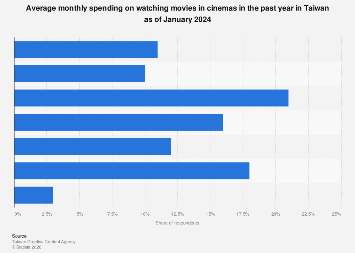
A recent comprehensive survey conducted in Taiwan between December 2023 and January 2024 reveals a notable segment of the population actively engaging with the cinematic arts, demonstrating a consistent monthly expenditure on moviegoing experiences. The findings indicate that nearly a quarter of Taiwanese individuals who visit cinemas allocate a substantial portion of their discretionary income towards this leisure activity. Specifically, these dedicated patrons are spending, on average, between a defined range of New Taiwan Dollars (NTD) per month. While precise figures remain proprietary, the trend underscores a healthy appetite for theatrical film consumption within the island nation.
This consistent spending pattern is further corroborated by the survey’s finding that approximately one-third of all respondents attend movies in cinemas at least once every month. This frequency suggests that cinema is not merely an occasional indulgence but a regular component of entertainment for a significant portion of the Taiwanese public. Such habitual attendance is crucial for the sustained health and revenue generation of the film exhibition industry, providing a predictable base of patrons for cinemas across the country.
The survey, which gathered data from 1,204 self-identified moviegoers through an online methodology, offers a granular look into consumer behavior within the Taiwanese entertainment sector. The data collection period, spanning from late December 2023 into early January 2024, captures consumer sentiment and spending patterns at the cusp of the new year, a time often characterized by increased leisure activities and entertainment expenditure. The question posed to participants, "How much did you spend monthly in movie theaters in the past year?", aimed to elicit retrospective spending habits, providing a valuable baseline for understanding typical financial commitments to cinema visits.
Understanding the economic implications of these spending habits requires contextualization within Taiwan’s broader economic landscape. As of September 2023, one New Taiwan Dollar was equivalent to approximately 0.033 U.S. dollars and 0.029 euros. This exchange rate allows for a rough estimation of the spending in more globally recognized currencies, placing the monthly cinema expenditure for dedicated moviegoers in the range of approximately $X to $Y USD (or €X to €Y), depending on the precise figures. This expenditure, when aggregated across the identified demographic, represents a significant economic contribution to the cinema industry.
The film exhibition sector, globally and in Taiwan, faces a dynamic market influenced by evolving consumer preferences, the proliferation of streaming services, and the cost of ticket prices and concessions. In this context, the demonstrated willingness of Taiwanese consumers to allocate consistent monthly spending to cinema visits is a positive indicator. It suggests that the out-of-home entertainment experience offered by movie theaters continues to hold value for a substantial segment of the population, potentially driven by factors such as the immersive viewing experience, social aspects of cinema outings, and the appeal of exclusive theatrical releases.
Comparing Taiwan’s cinema spending habits to other East Asian markets can provide further insights. In countries like South Korea, which boasts a highly developed film industry and strong cinema-going culture, similar surveys often reveal high levels of monthly spending and attendance, particularly among younger demographics. Japan also exhibits a resilient cinema market, though it has seen shifts with the rise of home entertainment. The data from Taiwan suggests it occupies a strong position within this regional context, with a significant portion of its audience demonstrating a clear commitment to the theatrical experience.
The economic impact extends beyond ticket sales. Cinema visits often involve ancillary spending on concessions such as popcorn, beverages, and other snacks, which typically carry higher profit margins for exhibitors. Furthermore, the presence of regular cinema patrons can stimulate related industries, including food and beverage providers near theaters, transportation services, and even the broader retail and hospitality sectors in areas with high cinema footfall. A consistent flow of moviegoers therefore contributes to a multiplier effect within the local economy.
The survey data, while valuable, also highlights areas for potential further investigation. Understanding the demographics (age, income, location) of the highest-spending moviegoers could enable targeted marketing strategies for cinemas and film distributors. Analyzing the types of films that drive this consistent spending – whether they are local productions, Hollywood blockbusters, or independent features – would also be beneficial for content curation and strategic planning. Moreover, the impact of ticket pricing, loyalty programs, and the overall cinema environment on consumer spending habits warrants ongoing research.
The sustained engagement of Taiwanese consumers with cinemas, as evidenced by the survey’s findings on monthly spending and attendance frequency, underscores the enduring appeal of the communal movie-watching experience. In an era of digital saturation, the ability of physical cinemas to attract and retain a dedicated audience, willing to invest their disposable income regularly, signals a healthy and resilient market. This trend offers a positive outlook for the future of film exhibition in Taiwan, provided the industry continues to adapt and innovate to meet the evolving expectations of its patrons. The consistent financial commitment from a significant portion of the Taiwanese moviegoing public serves as a strong foundation upon which the industry can continue to build and thrive.