The intersection of aggressive fiscal policy and volatile geopolitical realities has created a precarious moment for the American economy. As the "One Big Beautiful Bill Act"—the centerpiece of President Donald Trump’s second-term legislative agenda—begins to funnel billions of dollars into the pockets of American taxpayers, a countervailing force has emerged in the global energy markets. The sudden and sharp escalation of the U.S.-Iran conflict has sent crude oil prices on a vertical trajectory, threatening to siphon away the very discretionary income the administration’s tax cuts were designed to bolster.
For months, the narrative surrounding the 2025 economic outlook was one of managed acceleration. The individual tax cuts embedded in the administration’s signature legislation were projected to provide a significant fiscal tailwind, particularly through reduced withholdings and enhanced tax refunds. However, the economic math is shifting rapidly. Market analysts are now warning that the "energy tax" imposed by higher gasoline prices could effectively zero out the benefits of the tax law, leaving the American consumer in a state of financial stasis rather than growth.
The scale of this offset is rooted in the sheer volume of U.S. energy consumption. According to data from Raymond James, the economic benefit of the individual tax cuts—estimated by the Tax Foundation to be approximately $129 billion for 2025—is now standing directly in the path of a massive surge in energy costs. Tavis McCourt, a leading strategist at Raymond James, notes that a sustained $20 increase in the price of a barrel of oil could result in consumers spending an additional $150 billion at the pump over the course of the year. With oil prices having climbed more than $25 in a single week following the outbreak of hostilities, the fiscal stimulus intended to ignite the domestic economy is being redirected to global energy markets.
The timing of this price shock is particularly problematic. We are currently entering the peak of the tax filing season, a period when the "Big Beautiful Bill" was expected to manifest most visibly in the form of larger-than-average refunds. Data from Citadel Securities indicates that as of early March, only about 30% of these refunds had been distributed. The remaining 70%, expected to hit bank accounts by May, was widely seen as a catalyst for a springtime surge in consumer spending. Instead, this liquidity is being met with a sharp rise in the cost of living. When consumers receive a $1,000 refund but find their monthly gasoline and heating bills have increased by $150, the stimulative effect of that refund is functionally neutralized.
This phenomenon is often referred to by economists as the "regressive energy tax." Unlike income tax cuts, which can be graduated, a spike in oil prices hits lower- and middle-income households with disproportionate force, as energy costs represent a larger share of their total expenditures. This creates a psychological and practical barrier to the "reacceleration" of growth that many Wall Street analysts had predicted for late 2025 and 2026. If the cash meant for a new appliance, a family vacation, or retail spending is instead used to fill a fuel tank, the broader retail and service sectors of the economy will fail to see the anticipated "Trump bump."
Historically, oil price shocks associated with conflict have followed a somewhat predictable, if painful, arc. During the 1990 Gulf War and the 2022 Russian invasion of Ukraine, it took approximately six months for energy markets to stabilize and return to pre-conflict levels. However, the current situation carries unique risks. While President Trump has characterized the current conflict as "very complete," the lag between the cessation of hostilities and the normalization of supply chains is often longer than political rhetoric suggests. Market participants remain wary of the potential for lingering disruptions in the Strait of Hormuz or damage to regional infrastructure that could keep a "war premium" baked into the price of a barrel for the foreseeable future.

The divergence in expert opinion highlights the complexity of the current moment. Stephanie Roth, chief economist at Wolfe Research, argues that for the tax benefits to be truly "wiped out," oil prices would likely need to sustain a level above $100 per barrel for an extended period. While Brent and WTI have flirted with these levels in recent trading sessions, the durability of the rally remains the primary question. Roth points out that the impact on gasoline prices has thus far been relatively modest compared to the worst-case scenarios, but she cautions that the economic backdrop today is vastly different from the 2022 shock.
In 2022, the U.S. economy was grappling with core inflation of 5.5% and a labor market that was adding half a million jobs a month. Today, core inflation has cooled to approximately 3%, but job growth has also decelerated significantly, with recent figures showing an addition of only 37,000 jobs per month. This "cooler" environment means the economy has less of a buffer to absorb price shocks. While lower inflation is generally positive, the sluggishness in hiring suggests that the American consumer may be more sensitive to energy costs now than they were four years ago.
Conversely, some market veterans see the tax refunds not as a lost opportunity, but as a critical defensive shield. Dan Niles, portfolio manager at Niles Investment Management, suggests that the timing of the tax bill might actually be a stroke of luck. In his view, the refunds provide the liquidity necessary for the economy to weather $100 oil without falling into a recession. He points to the resilience of the U.S. consumer in 2022 and 2023, when oil prices were similarly elevated and interest rates were rising, yet a recession was avoided. From this perspective, the "Big Beautiful Bill" isn’t being erased; it is being repurposed as an insurance policy against an energy-driven downturn.
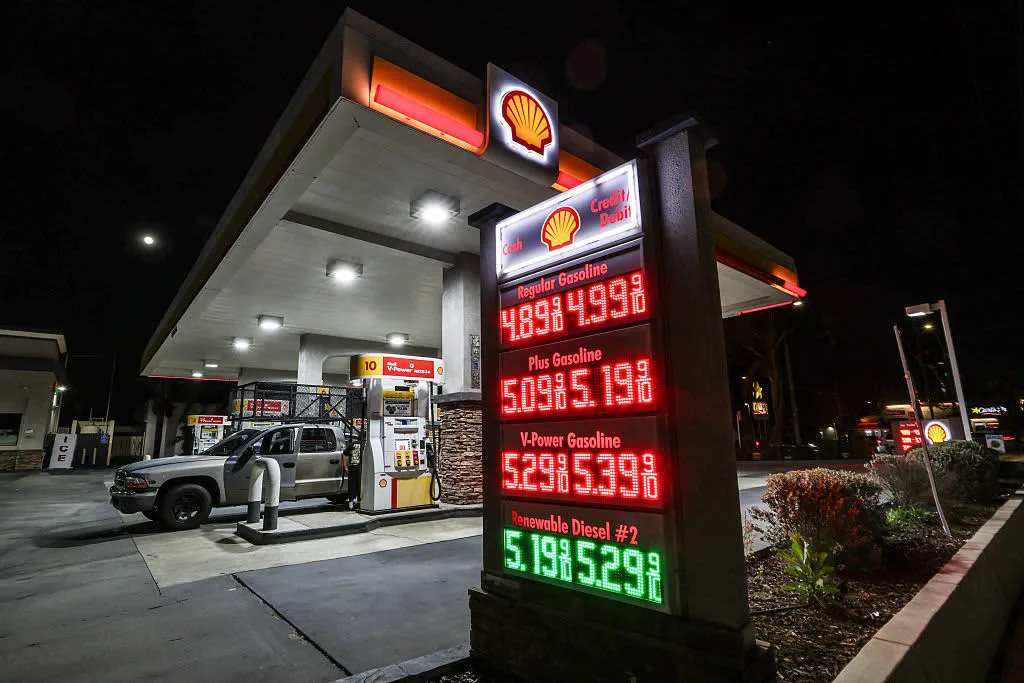
The equity markets have already begun to price in this reality. Consumer discretionary stocks, which typically thrive when taxpayers have extra cash, have notably underperformed the broader S&P 500 in the early months of 2026. This suggests that investors were never fully convinced of a massive spending spree and are now pivoting toward sectors that can better withstand a period of high energy costs. The underperformance of retail and leisure stocks serves as a real-time indicator that the "fiscal boost" narrative is being tempered by the reality of the gas station marquee.
Ultimately, the fate of the administration’s economic legacy for this term may hinge on the labor market. As long as unemployment remains low and the workforce remains intact, consumer spending tends to be resilient, even if it shifts from "wants" to "needs." The danger arises if high energy costs begin to eat into corporate margins to the point where businesses curtail hiring or begin layoffs. If the "energy tax" leads to job losses, no amount of tax refunds will be sufficient to prevent a contraction.
As the second quarter of 2025 unfolds, the tug-of-war between Washington’s fiscal policy and the Middle East’s geopolitical volatility will remain the dominant theme for global markets. The "Big Beautiful Bill" was intended to be a monument to domestic prosperity, but in a globalized economy, even the most robust national policy can be held hostage by the price of a single commodity. Whether the tax cuts will ultimately be remembered as a successful stimulus or a missed opportunity swallowed by the tides of war remains to be seen, but for now, the American consumer is caught in the middle, watching their tax savings flow directly into their gas tanks.