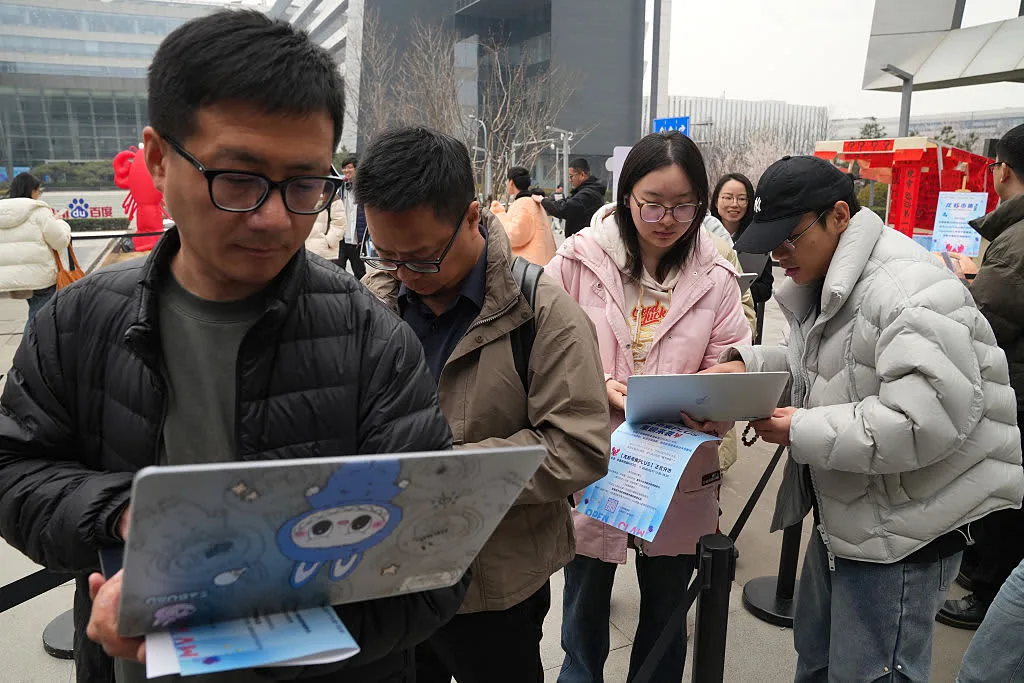
The rapid proliferation of OpenClaw, an advanced autonomous artificial intelligence agent, has ignited a transformative shift in China’s consumer electronics landscape, decoupling traditional seasonal pricing trends from market realities. In an unusual convergence of software innovation and hardware scarcity, the demand for high-performance computing to run these AI agents has sent the prices of secondhand MacBooks surging across mainland China. This phenomenon is reshaping the "circular economy" for electronics, as consumers prioritize silicon efficiency and hardware isolation to navigate the nascent era of agentic AI.
At the center of this market disruption is ATRenew, China’s leading platform for the trade-in and resale of used electronics. According to Jeremy Ji, the company’s Chief Strategy Officer and General Manager of International Business, the typical spring price correction for Apple products has failed to materialize this year. Normally, the period between March and May sees a notable cooling in the secondary market as the initial excitement of the autumn iPhone and Mac releases wanes. However, the current cycle is mirroring the peak demand typically reserved for the fourth quarter. Ji notes that the price gap between new and preowned MacBooks has narrowed significantly, with new units now commanding only a 15% premium over their used counterparts—a razor-thin margin in the world of depreciating tech assets.
The catalyst for this market tightening is OpenClaw, an open-source AI agent developed by Austrian technologist Peter Steinberger. Unlike traditional large language models (LLMs) like ChatGPT, which primarily generate text or code in response to prompts, OpenClaw belongs to a class of "agentic" AI. These tools are designed to execute complex, multi-step tasks autonomously, such as managing professional correspondence, executing e-commerce transactions, or organizing travel itineraries. Since its launch in late 2025, OpenClaw has seen an adoption rate in China that significantly outpaces the United States, fueled by a tech-savvy population and aggressive integration efforts by domestic giants like Tencent and Baidu.
The rush to adopt OpenClaw has created a unique hardware bottleneck. While the software is free to download, its operational requirements and the inherent risks of autonomous agents have driven users toward a specific hardware strategy: the acquisition of secondary, high-performance "burner" machines. Because OpenClaw requires deep integration into a system to perform its functions—often needing access to file systems, browsers, and even payment gateways—security experts have warned of the potential for catastrophic data breaches or autonomous errors. If an agent is compromised or malfunctions, it could theoretically drain a bank account or leak sensitive corporate data.

In response, Chinese users are increasingly opting to run OpenClaw on dedicated secondary devices, keeping the AI isolated from their primary personal or professional data. This "air-gapping" strategy has turned the used MacBook market into a primary source for "AI workstations." Specifically, Apple’s transition to proprietary M-series silicon has proven to be a decisive factor. The M1 through M5 chips feature highly efficient Neural Engines and a unified memory architecture that is uniquely suited for the heavy, sustained workloads required by AI agents. Furthermore, the power efficiency of these chips allows them to run intensive background tasks without the thermal throttling or high electricity costs associated with many Windows-based counterparts.
Ji observed that while the Mac Mini has become a favorite for those setting up stationary AI servers at home, the MacBook remains the dominant choice for those seeking a portable agentic workflow. ATRenew, which processes approximately 100,000 devices daily across its vast network, has seen the share of laptops and personal computers in its business mix climb from 15% to a projected 20%. This shift is characterized by a "trade-up" culture; users are increasingly trading in older M1 and M2 models to subsidize the purchase of M4 and M5-equipped machines, which offer the higher TOPS (Trillions of Operations Per Second) performance necessary for the latest iterations of OpenClaw.
The economic implications of this trend extend beyond the resale value of aluminum-clad laptops. The broader semiconductor market is feeling the ripple effects. A global spike in the price of memory chips—driven by the insatiable demand for HBM (High Bandwidth Memory) in data centers—has pushed the cost of new high-end smartphones and PCs upward. In China, this has led to a strategic pivot among consumers. Rather than purchasing flagship Android devices, which often see rapid depreciation and are currently subject to component-driven price hikes, buyers are flocking to the used iPhone and Mac markets. The perceived longevity of Apple hardware, combined with its superior performance in AI tasks, has turned these devices into a form of "hard currency" in the tech world.
The endorsement of OpenClaw by global industry leaders has only added fuel to the fire. Jensen Huang, CEO of Nvidia, recently characterized OpenClaw as "the next ChatGPT," describing it as the most successful and popular open-source project in human history. Such high-level validation has encouraged Chinese tech conglomerates to pivot their ecosystems around the tool. In early March, Tencent and other major players began leveraging OpenClaw compatibility as a core feature to attract users to their cloud and software suites. This corporate embrace has validated the software for the masses, moving it from a niche developer tool to a mainstream consumer necessity.
However, the supply side of the secondary market is struggling to keep pace. To maintain a functional inventory, ATRenew has had to aggressively increase its "buy-back" prices—the amount it pays to consumers who trade in their devices. This creates a feedback loop: higher buy-back prices encourage more people to trade in their old gear, but the intense demand for those same devices keeps the resale prices high. For the first time since the COVID-19 pandemic, when a sudden shift to remote work created a global shortage of computing hardware, the market is seeing a "perpetual peak" season. Ji anticipates that this heightened demand and the resulting price stability will persist throughout the remainder of the year.

The phenomenon also highlights a significant divergence in how AI is being consumed globally. While the Western market has focused heavily on enterprise-level AI and integrated "Copilots" within existing software ecosystems, the Chinese market is exhibiting a more grassroots, decentralized adoption of autonomous agents. The preference for open-source solutions like OpenClaw over proprietary, locked-down systems reflects a desire for customization and local control. This "bottom-up" AI revolution is placing the power—and the hardware requirements—directly in the hands of the individual consumer, rather than centralizing it in the cloud.
The security concerns driving the "secondary device" trend also point to a future where personal computing may become increasingly bifurcated. We may be entering an era where users maintain a "clean" device for sensitive tasks—banking, private communications, and identity management—and an "agentic" device dedicated to AI-driven automation and experimentation. If this behavioral shift becomes permanent, the demand for high-quality, preowned hardware will likely remain a structural feature of the global economy, rather than a temporary spike.
As the year progresses, the focus will shift to whether Apple and other hardware manufacturers can adjust their supply chains to account for this secondary market pressure. For now, the "OpenClaw effect" serves as a potent reminder of how a single breakthrough in software can fundamentally alter the economics of hardware. In the streets of Beijing and the digital marketplaces of Shanghai, the humble used MacBook is no longer just a budget-friendly alternative to a new computer; it is the essential engine for the next generation of artificial intelligence. The traditional spring slump in tech prices has been silenced by the hum of Neural Engines, as China bets its digital future on the power of autonomous agents.