The escalating conflict in the Middle East has transformed the Strait of Hormuz into a volatile geopolitical chessboard, forcing a high-stakes confrontation between the world’s two largest economies over global energy security. As the war involving Iran chokes the flow of crude through the world’s most vital maritime artery, Beijing is projecting a posture of "energy fortress" resilience, countering demands from the United States to intervene in the crisis. This friction comes at a delicate moment for international diplomacy, with the White House explicitly linking the restoration of oil flows to the success of upcoming bilateral summits, effectively utilizing energy transit as a primary lever in its foreign policy toward China.
The National Bureau of Statistics in Beijing recently offered a robust defense of the country’s domestic energy position, seeking to calm international markets and signal to Washington that China is not as vulnerable to Middle Eastern disruptions as Western intelligence might suggest. Fu Linghui, a spokesperson for the bureau, characterized the nation’s energy supply as "relatively strong," asserting that the internal infrastructure and resource management systems provide a "relatively good" foundation for weathering the current external market volatility. This rhetoric is backed by recent industrial data showing that China’s domestic crude oil production rose by 1.9% year-on-year to 35.73 million metric tons during the January-to-February period. This incremental growth reflects a long-term strategic pivot by Beijing to maximize internal extraction and reduce its reliance on the "Malacca Dilemma" and other vulnerable maritime chokepoints.
However, the calm coming out of Beijing stands in stark contrast to the urgency radiating from Washington. U.S. President Donald Trump has increased pressure on the Chinese leadership to utilize its unique diplomatic and economic relationship with Tehran to secure the Hormuz waterway. With crude oil prices surging past the $100-per-barrel mark—reaching levels not seen in nearly four years—the global economy is reeling from the inflationary shock of stalled flows. In a series of public statements, the U.S. administration has suggested that the President’s planned visit to Beijing at the end of this month is contingent upon China taking a more active role in stabilizing the region. The threat of delaying the summit serves as a significant diplomatic gambit, aimed at forcing China to choose between its "no-limits" partnership style and the stability of the global energy markets upon which its manufacturing sector depends.

The mathematical reality of China’s energy dependence remains a point of intense debate. The White House has claimed that Beijing relies on the Strait of Hormuz for approximately 90% of its oil, an assertion used to justify the demand for Chinese intervention. Yet, independent energy analysts and market data providers offer a more nuanced perspective. While China is the world’s largest importer of crude, it has spent the last decade diversifying its energy mix and its geographical sources. Current estimates suggest that China relies on the Strait of Hormuz for roughly 40% to 50% of its seaborne oil imports. When viewed through the lens of total national energy consumption—which includes massive domestic coal production, a rapidly expanding nuclear fleet, and the world’s largest renewable energy capacity—oil shipments passing through Hormuz account for only about 6.6% of China’s total energy footprint.
This discrepancy in data highlights a strategic misunderstanding of China’s "all-of-the-above" energy policy. Beyond seaborne imports, Beijing has secured significant overland supply lines. The Power of Siberia pipeline and various Central Asian routes provide a steady flow of hydrocarbons that are immune to maritime blockades or naval skirmishes in the Persian Gulf. Furthermore, China’s aggressive push into electric vehicle (EV) adoption and high-speed rail has begun to decouple its economic growth from the immediate fluctuations of the global oil price, providing a buffer that many Western economies currently lack.
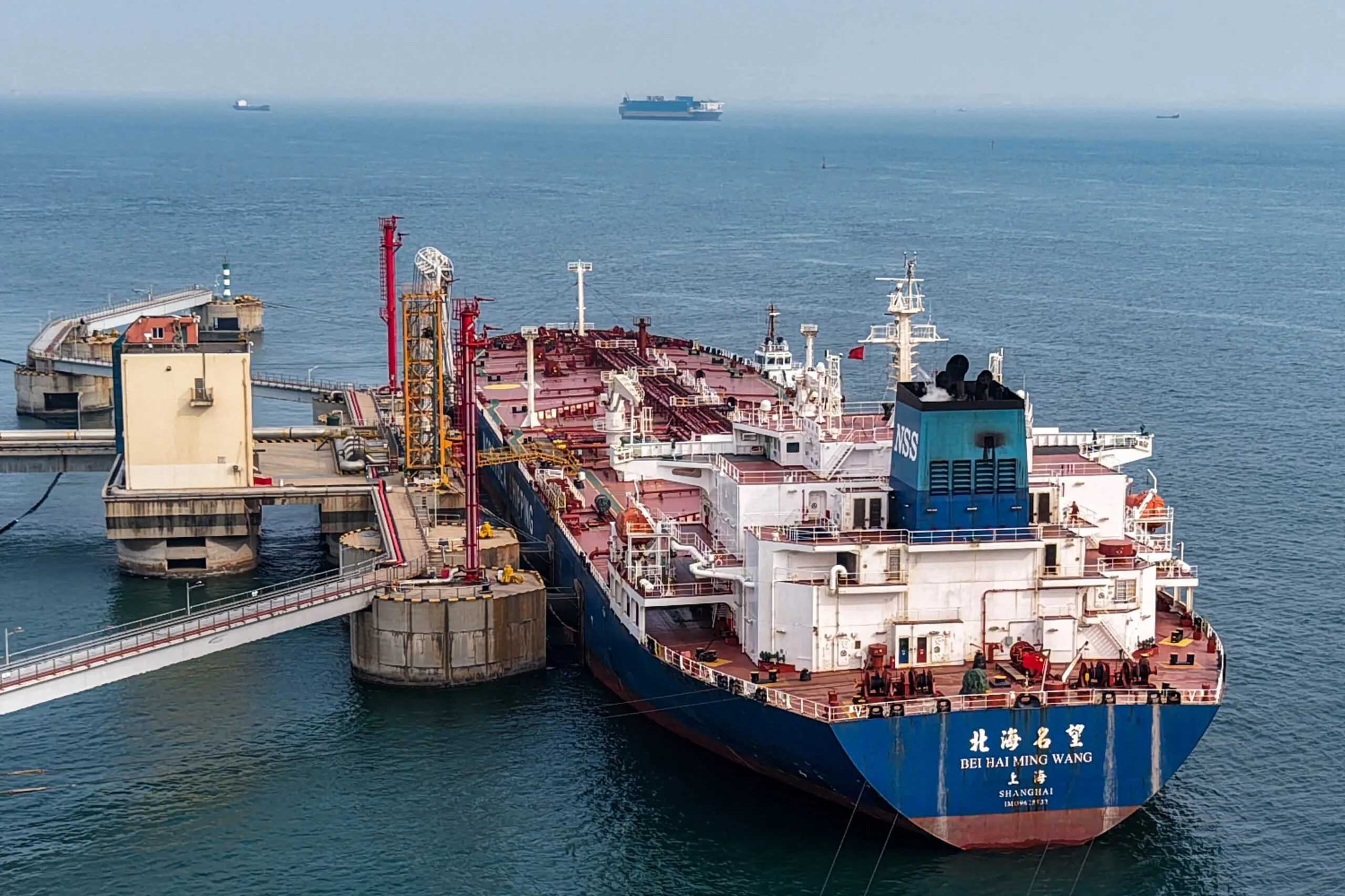
Despite the general closure of the Strait to most international shipping since the outbreak of hostilities two weeks ago, China appears to be benefiting from a "special channel" with Iran. Reports indicate that Iran has successfully delivered more than 11 million barrels of oil to China through the strait even as other nations find their tankers blocked or redirected. This continued flow suggests a level of coordination between Tehran and Beijing that complicates the U.S. strategy of total maritime isolation. For Iran, China represents a vital economic lifeline; for China, the discounted Iranian crude provides a competitive advantage for its refineries during a period of global price spikes.
Beijing’s confidence is further bolstered by its massive Strategic Petroleum Reserve (SPR). As of early 2026, China is estimated to hold approximately 1.2 billion barrels of onshore crude stockpiles. This reserve, among the largest in the world, is sufficient to meet the country’s demand for three to four months even in the event of a total cessation of imports. This "onshore ocean" of oil allows the Chinese government to play a long game, resisting U.S. pressure to act as a maritime policeman in the Middle East while waiting for market conditions to stabilize or for more favorable diplomatic terms to emerge.

The economic impact of $100 oil, however, cannot be entirely ignored by the Chinese leadership. While the energy mix is diversified, the manufacturing sector remains sensitive to input costs. High energy prices threaten to squeeze the margins of Chinese exporters, who are already navigating a complex landscape of tariffs and slowing global demand. Economists note that if the Hormuz crisis persists for several more months, the resulting global recession would inevitably hit China’s export-oriented economy, regardless of how much oil it has in storage. The National Bureau of Statistics’ emphasis on "sufficiency" is therefore as much a message to its own domestic industrial base as it is to the international community.
Global markets are watching the standoff with bated breath, as the price of Brent crude reflects the high "geopolitical risk premium" associated with the Hormuz blockage. If the U.S. follows through on its threat to delay the Beijing summit, it could signal a deeper fracturing of the G2 relationship, with energy security becoming the latest front in a broader cold war. Conversely, if China were to intervene and successfully broker a "safe passage" agreement for tankers, it would mark a significant shift in the global order, establishing Beijing as a primary security guarantor in a region traditionally dominated by Western naval power.
The current crisis also underscores the accelerating divergence in global energy strategies. While the U.S. focuses on maritime security and traditional alliances to maintain the flow of oil, China is doubling down on domestic production and strategic stockpiling. The 1.9% rise in domestic production, while seemingly small, represents a significant reversal of a decades-long trend of declining internal output, achieved through massive investments in enhanced oil recovery and unconventional shale plays in the Ordos and Tarim basins.
As the end-of-month deadline for the Beijing summit approaches, the international community faces a period of profound uncertainty. The Strait of Hormuz remains a bottleneck that could either stifle the global recovery or serve as the catalyst for a new era of energy diplomacy. Beijing’s insistence on its own self-sufficiency suggests it is prepared to wait out the storm, betting that its diversified portfolio and massive reserves will allow it to emerge from the crisis with its strategic interests intact. For the rest of the world, the hope remains that a diplomatic breakthrough can be reached before the economic toll of triple-digit oil prices becomes permanent, reshaping the global financial landscape for years to come.