The landscape of American consumer finance underwent a tectonic shift this week as JPMorgan Chase and Goldman Sachs finalized a definitive agreement to transfer the Apple Card program to the nation’s largest lender. This strategic realignment marks the formal conclusion of Goldman Sachs’ ambitious but ultimately fraught foray into retail banking, while simultaneously cementing JPMorgan’s position as the undisputed titan of the credit card industry. Under the terms of the deal, which followed nearly a year of high-stakes negotiations, JPMorgan will assume responsibility for a credit portfolio exceeding $20 billion in outstanding loans, further integrating the financial powerhouse with the world’s most valuable technology ecosystem.
The transition represents a significant pivot for all three parties involved. For Goldman Sachs, the exit provides a necessary off-ramp from a consumer strategy that had become a source of internal friction and investor skepticism. For Apple, the partnership with JPMorgan offers the stability and scale of a veteran retail operator capable of supporting its long-term fintech ambitions. For JPMorgan, the acquisition is a calculated expansion that brings millions of tech-savvy consumers into its orbit, albeit at a price that reflects the inherent risks of the existing loan book.
The financial mechanics of the transaction underscore the leverage JPMorgan maintained throughout the bidding process. According to analysts and sources familiar with the deal, the bank secured the portfolio at a discount of more than $1 billion. This haircut was a critical sticking point in negotiations, as the Apple Card portfolio historically included a higher percentage of subprime and lower-credit-score borrowers than JPMorgan’s traditional flagship products, such as the Chase Sapphire line. To mitigate the potential for future defaults, JPMorgan announced it will book a $2.2 billion provision for credit losses when it reports its fourth-quarter 2025 earnings. While this move will temporarily weigh on the bank’s bottom line, it serves as a "fortress balance sheet" maneuver to insulate the institution from macroeconomic volatility.
The dissolution of the Apple-Goldman partnership will be remembered as a cautionary tale of cultural and strategic misalignment. When the Apple Card launched in 2019, it was heralded as a disruptive force that would marry Silicon Valley’s user experience with Wall Street’s capital. However, the partnership was reportedly strained by Apple’s insistence on "customer-first" policies—such as the absence of late fees and a push for high approval rates—which clashed with Goldman Sachs’ need for profitability in a capital-intensive business. Goldman’s consumer division, Marcus, struggled to achieve the necessary scale to offset rising operational costs and regulatory scrutiny, eventually leading CEO David Solomon to pivot back to the bank’s core strengths in investment banking and asset management.
In a statement following the announcement, Solomon noted that the transaction substantially completes the narrowing of Goldman’s consumer focus. The bank expects the deal to provide a modest boost of 46 cents per share to its upcoming quarterly earnings, primarily due to the release of capital previously tied up in the card’s reserves. This "de-risking" strategy has been welcomed by Goldman shareholders, who have urged the firm to abandon its retail aspirations in favor of higher-margin institutional services.
Conversely, JPMorgan Chase is approaching the deal from a position of overwhelming strength. Already the top credit card issuer in the United States by purchase volume, the bank views the Apple Card not merely as a loan portfolio, but as a gateway to a massive, loyal demographic. By taking over the issuer role, JPMorgan gains access to Apple’s highly integrated digital wallet, which features the Daily Cash reward system and a high-yield savings account. JPMorgan has confirmed it will continue to offer the savings account component, ensuring that the transition is as seamless as possible for the estimated 12 million existing cardholders.
The integration process is expected to span approximately 24 months, a timeline that reflects the immense technical and regulatory complexity of migrating millions of accounts without disrupting service. During this period, the card will continue to operate on the Mastercard network, and users will retain their existing benefits. Jennifer Bailey, Apple’s Vice President of Apple Pay and Apple Wallet, emphasized that the tech giant chose JPMorgan for its shared commitment to innovation. For Apple, the priority remains the "stickiness" of its ecosystem; the more financial services a user accesses through their iPhone, the less likely they are to switch to a competitor’s device.
From a broader economic perspective, the deal highlights the increasing consolidation within the American banking sector. As mid-sized and regional banks face tightening margins and increased regulatory costs, "Too Big to Fail" institutions like JPMorgan are uniquely positioned to absorb large-scale portfolios. This consolidation has sparked debate among policymakers regarding competition in the credit market. However, proponents of the deal argue that JPMorgan’s sophisticated risk-management infrastructure and vast capital reserves make it a safer custodian for the $20 billion portfolio than a smaller, more vulnerable issuer.
Market analysts are also closely watching how JPMorgan will manage the "subprime" element of the Apple Card. Unlike traditional cards that target specific credit tiers, Apple sought to democratize access to credit for its user base. This resulted in a diverse pool of borrowers, some of whom may be more sensitive to inflationary pressures and rising interest rates. By acquiring the portfolio at a significant discount, JPMorgan has built in a buffer, but the bank’s ability to use its proprietary data analytics to manage these risks will be a key test of the deal’s long-term success.
The global context of this agreement cannot be ignored. Around the world, the lines between Big Tech and Big Finance are blurring. In markets like China, platforms such as Alipay and WeChat Pay have long dominated the financial lives of consumers. In the West, however, regulatory hurdles and the entrenched power of traditional banks have slowed this convergence. The Apple-JPMorgan alliance represents a hybrid model: a tech company providing the interface and brand, while a traditional bank provides the balance sheet and regulatory compliance. This "Banking-as-a-Service" (BaaS) evolution is likely to accelerate as other tech firms seek to deepen their financial footprints without the burden of obtaining their own banking charters.
The economic impact of this transition extends to the labor market and operational infrastructure as well. JPMorgan is expected to integrate the Apple Card operations into its existing customer service and fraud detection centers, potentially leading to significant cost synergies. For Goldman Sachs employees previously dedicated to the Apple partnership, the transition period will involve a winding down of operations, though many may find roles within JPMorgan or Apple to facilitate the data migration.
As the financial sector prepares for the 2026 completion of the transfer, the industry is left to reflect on the shifting priorities of Wall Street’s elite. The era of investment banks trying to become retail giants appears to be over, replaced by a period of specialization and strategic partnership. JPMorgan’s willingness to absorb the Apple Card—and the $2.2 billion provision that comes with it—is a bold bet on the future of digital payments. If successful, it will not only increase the bank’s market share but also redefine the relationship between consumer hardware and consumer credit.
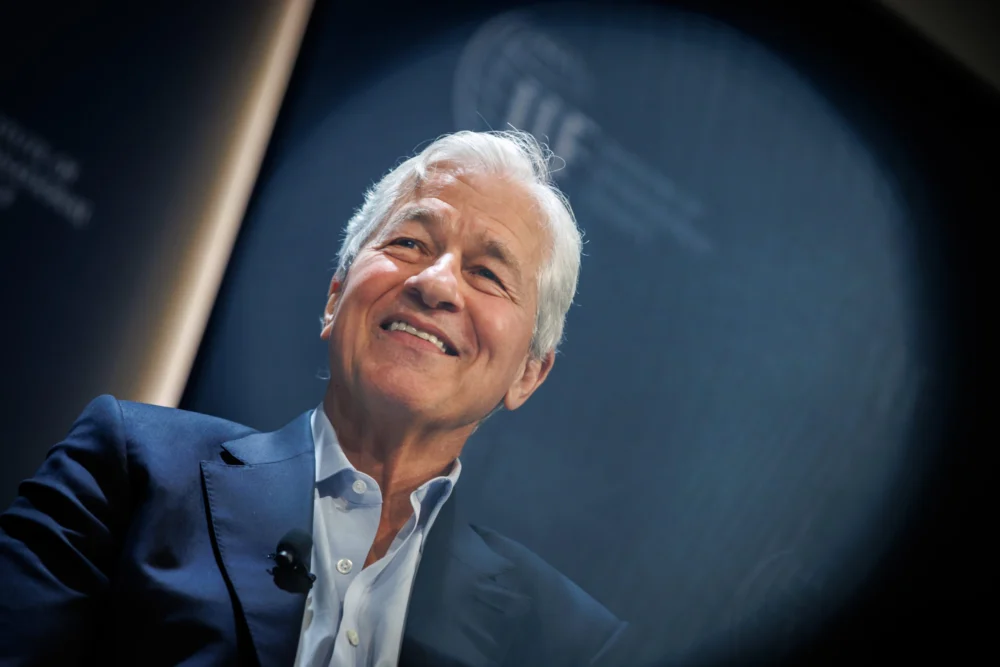
Ultimately, the deal serves as a definitive victory for JPMorgan CEO Jamie Dimon’s strategy of aggressive expansion through technology investment. While other banks hesitated at the risks associated with Apple’s requirements, JPMorgan utilized its scale to negotiate a deal that fits its long-term vision. For the millions of Americans with an Apple Card in their digital wallets, the change in the logo on their monthly statement may be subtle, but the institutional power shift behind it is nothing short of historic. The coming two years will determine if this marriage of a tech icon and a banking behemoth can deliver the "best-in-class experience" promised by its architects, or if the inherent tensions between Silicon Valley’s disruption and Wall Street’s risk aversion will persist under a new roof.