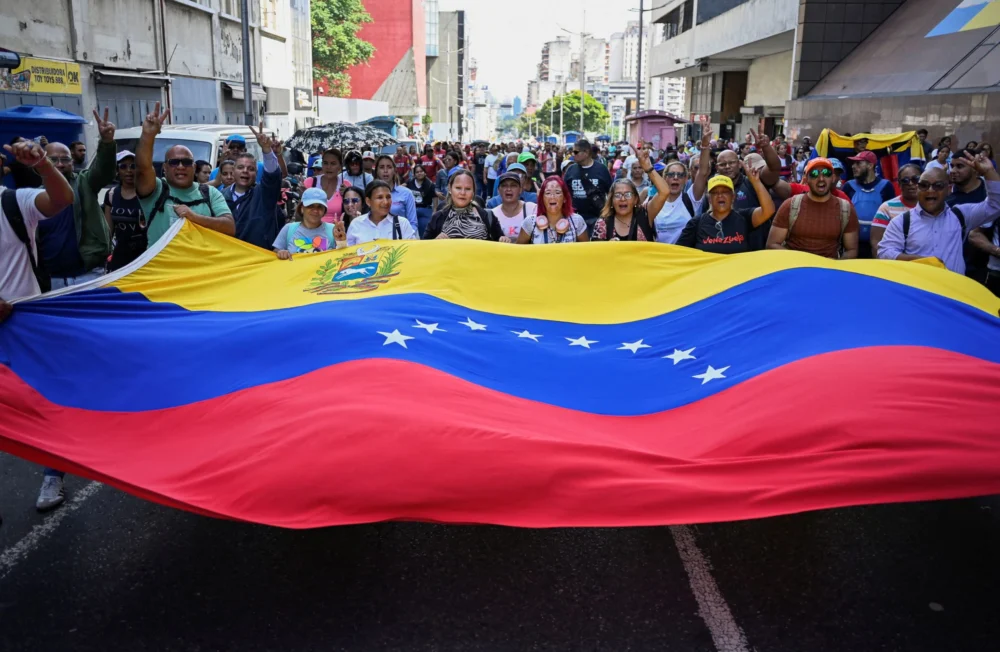
The frozen landscape of Venezuelan sovereign debt is undergoing a seismic shift, transforming what was once considered "dead paper" into the most aggressive trade on Wall Street. For nearly a decade, the South American nation’s bonds were the pariahs of the emerging market universe, trapped in a cycle of default, draconian sanctions, and political paralysis. However, the sudden and dramatic removal of President Nicolas Maduro has ignited a speculative frenzy, sending bond prices to heights not seen since the country first spiraled into default in late 2017. As traders scramble to price in a post-Maduro reality, the benchmark notes due in October 2026 have surged to approximately 43 cents on the dollar—a staggering appreciation that has more than doubled their value since August.
This rally is not merely a technical correction but a fundamental reassessment of Venezuela’s recovery value under a radically different political architecture. The installation of Vice President Delcy Rodriguez as interim president, following a weekend military operation that saw Maduro taken into U.S. custody to face criminal charges, has signaled to the markets that the "status quo" of isolation is over. For institutional investors who have sat on these distressed assets for years, the calculus has shifted from "if" a restructuring will happen to "when" and "under what terms."
The institutional appetite for this risk is being led by some of the most prominent names in global finance. Heavyweights such as Fidelity Investments and T. Rowe Price remain significant holders of these defaulted securities, having navigated the long years of illiquidity. Their patience is now being tested by a market that is pricing in a rapid, U.S.-backed transition. The logic driving the current "buy" sentiment is centered on the belief that a government aligned with Washington will prioritize the restoration of its standing in international capital markets to unlock the massive investment required to rebuild its decimated infrastructure.
However, the euphoria is tempered by the sheer scale of the economic wreckage left behind. The Venezuelan economy has contracted by approximately 30% over the last eight years, and its lifeblood—the oil industry—is a shadow of its former self. Once a powerhouse producing over 3 million barrels per day, PDVSA, the state-owned oil titan, has seen production more than halved due to mismanagement, lack of investment, and the biting edge of international sanctions. For bondholders, the ultimate recovery value is inextricably linked to the "black gold" beneath the Venezuelan soil.
Donato Guarino, an emerging-market strategist at Citi, notes that the Trump administration’s involvement introduces a unique variable into the economic equation. The administration’s stated intent to "run" Venezuela and its focus on extracting the nation’s vast oil reserves—the largest proven reserves in the world—suggests a policy aimed at maximizing GDP growth through energy exports. In theory, a more robust GDP enhances the sovereign’s capacity to service debt. Yet, Guarino warns of the "big gamble" inherent in this strategy. The political loyalty of the new interim administration toward Washington remains a wildcard, and any friction in this relationship could quickly stall the restructuring process.
The complexity of the debt overhang is perhaps the most significant headwind facing the rally. According to data from Barclays, which recently upgraded Venezuelan bonds to "market weight," the nation and PDVSA together carry an estimated $56.5 billion in unsecured eurobonds. When past-due interest is factored in, the total claims held by bondholders swell to a staggering $98.3 billion. To put this in perspective, that figure represents roughly 119% of Venezuela’s projected 2025 GDP. This debt-to-GDP ratio is significantly higher than that of many other nations that have successfully navigated sovereign restructurings, suggesting that bondholders may still face substantial "haircuts" during negotiations.

The road to a formal restructuring is further complicated by the legal and geopolitical theater surrounding the transition. President Trump’s recent remarks regarding the U.S. role in the region, coupled with his renewed interest in acquiring Greenland and his public threats toward neighbors like Colombia and Cuba, have added a layer of volatility to the trade. For debt investors, the lack of a clear, constitutionally mandated path to elections in Caracas creates a "governance premium" that may cap the upside of the bonds. Jeffrey Sherman, deputy chief investment officer at DoubleLine, has voiced a cautious perspective, suggesting that the current rally may be outstripping the reality on the ground. He emphasizes that while the leadership transition is underway, the lack of a formalized democratic process makes it "way too early" for long-term debt investors to declare victory.
Despite these warnings, the "vulture fund" playbook is being executed with precision by firms like Elliott Investment Management. Founded by billionaire Paul Singer, Elliott has a storied history of extracting value from distressed sovereign debt, most notably in its decade-long legal battle with Argentina. The firm’s recent $6 billion bid for Citgo Petroleum—the U.S.-based refining arm of PDVSA—was recently approved by U.S. courts, positioning Singer’s firm as a central player in the reorganization of Venezuelan assets. The Citgo sale is a critical piece of the puzzle, as it represents one of the few tangible, offshore assets that can be used to satisfy creditor claims.
The broader economic impact of a successful Venezuelan turnaround would be felt across the hemisphere. A stabilized Venezuela could stem the tide of regional migration and provide a new, reliable source of energy for global markets at a time of heightened geopolitical tension in the Middle East and Eastern Europe. However, the "Marshall Plan" required for such a recovery would likely necessitate the involvement of the International Monetary Fund (IMF) and the World Bank. An IMF-led program usually requires a degree of transparency and fiscal discipline that Venezuela has not seen in decades. It also requires a consensus among "official" creditors, including China and Russia, who have provided billions in loans-for-oil deals to the Maduro regime. How these bilateral debts are treated in relation to the eurobonds held by Wall Street will be a primary point of contention in any future Paris Club negotiations.
As the current week’s trading data suggests, the market is currently willing to overlook these structural hurdles in favor of the immediate momentum generated by the political shift. The 43-cent price point reflects a "hope premium"—the belief that the worst of the isolation is over. If the interim government can successfully stabilize the currency, rein in what remains of hyperinflation, and provide a clear timeline for the resumption of oil exports to the United States, the bonds could potentially see further gains toward the 50- or 60-cent mark.
Conversely, if the political transition stumbles into civil unrest, or if the U.S. administration’s "running" of the country leads to protracted legal challenges over sovereign immunity and international law, the rally could evaporate as quickly as it began. The military strike that removed Maduro, conducted without congressional authorization, remains a point of domestic and international debate that could complicate the legitimacy of any new debt agreements.
For now, the Venezuela trade remains a high-octane game of geopolitical chess. It is a market where fundamental economic analysis meets raw political theater. For the institutional giants holding the bags of the 2017 default, the current surge is a welcome reprieve. For the speculators entering the fray today, it is a bet on a "New Venezuela" that is yet to be fully defined. As the dust settles in Caracas, the financial world remains fixated on whether this rally is the beginning of a historic recovery or merely a final, volatile spike before the reality of a $98 billion debt burden sets in.