The global financial landscape faced a seismic shift this week as the United States initiated an extraordinary military and diplomatic intervention in Venezuela, culminating in the capture of President Nicolas Maduro. Yet, in a display of what many analysts are calling "geopolitical desensitization," U.S. equity markets remained remarkably buoyant. Rather than retreating into defensive postures, investors appear to be pricing in a "bull case" scenario, betting that the disruption will remain localized and that the eventual stabilization of the nation with the world’s largest proven oil reserves will provide a long-term boon to the global energy sector and American multinational corporations.
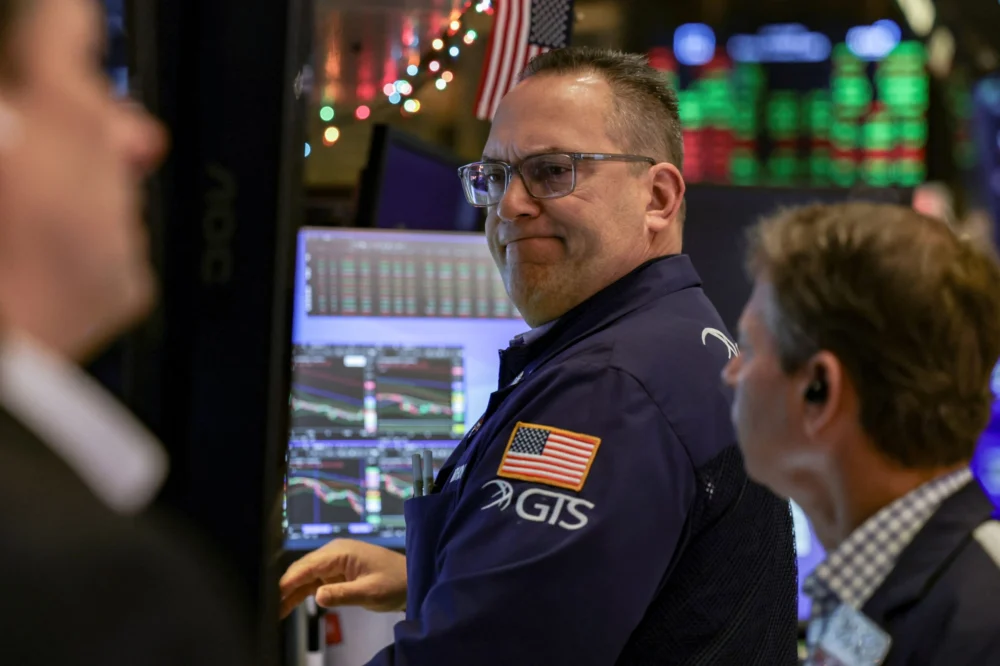
In the early hours of Monday’s trading session, the resilience of the New York Stock Exchange was palpable. Premarket activity saw S&P 500 futures climbing by 0.3%, while the tech-heavy Nasdaq 100 futures surged by a more robust 0.8%. Even the Dow Jones Industrial Average, often more sensitive to immediate international instability, edged higher by 35 points. This collective shrug from the investment community suggests a prevailing belief that the ouster of the Maduro administration will not spiral into a broader regional or global conflagration. Instead, the focus has shifted toward the potential for a massive reopening of the Venezuelan economy, which has been largely sidelined from global capital markets for nearly a decade.
The energy sector emerged as the primary beneficiary of the weekend’s events. While global oil prices saw only a modest uptick—reflecting a market that is currently well-supplied—shares of major American energy titans saw significant rallies. Chevron, which has maintained a precarious but persistent presence in Venezuela through joint ventures with the state-owned PDVSA, saw its stock price jump by more than 7%. Exxon Mobil followed suit, gaining over 4%. For these companies, the prospect of a more business-friendly administration in Caracas represents a generational opportunity. Venezuela sits atop an estimated 300 billion barrels of proven oil reserves, yet its production has cratered from over 3 million barrels per day in the late 1990s to less than 800,000 barrels per day in recent years due to mismanagement, lack of investment, and heavy sanctions.
Market strategists note that the current reaction follows a well-documented historical pattern. According to a comprehensive analysis by UBS, geopolitical shocks rarely result in prolonged market downturns. Examining eleven major geopolitical crises over the last several decades, the firm found that the S&P 500 typically declines by an average of only 0.3% in the week following the event. More tellingly, the index has historically been 7.7% higher twelve months later. From the U.S. bombing of Iran to previous incursions in the Middle East, the data suggests that unless a conflict directly threatens the fundamental plumbing of the global financial system or triggers a massive inflationary spike in energy, Wall Street tends to look through the immediate fog of war.
Jay Woods, the chief market strategist at Freedom Capital Markets, emphasized that the speed of the operation in Venezuela has played a critical role in calming nerves. "While volatility is expected as the Venezuelan headlines will dominate the landscape, the overall market seems relatively unfazed by events so far," Woods observed. He noted that the perception of a "quick resolution" with a low threat of escalation has prevented the kind of panic selling that often accompanies sudden international crises. For many traders, the narrative is not one of impending war, but of a decisive shift that could eliminate a long-standing point of friction in the Western Hemisphere.
However, the international community remains on high alert, and the ripple effects of the U.S. action are being felt far beyond Caracas. In Northern Europe, Denmark has reportedly entered "full crisis mode." This heightened state of alarm follows rhetoric from the Trump administration suggesting that Greenland—a self-governing territory under the Danish Crown—could be the next focus of U.S. strategic interest. This "Greenland gambit," combined with the decisive action in Venezuela, has signaled to global leaders that the U.S. is adopting an increasingly assertive and transactional foreign policy. Russia, a long-time ally of the Maduro regime with significant financial stakes in Venezuelan oil, has maintained a uncharacteristically cautious stance, likely weighing its options as it assesses the permanence of the new status quo.
From an economic perspective, some analysts remain skeptical that the Venezuelan intervention will serve as a major market mover in the long term. Matthew Aks, a strategist at Evercore ISI, suggested that the market’s calm stems from a belief that the administration’s rhetoric is a sophisticated form of "coercive diplomacy." Aks argued that the capture of Maduro and the stated intent to oversee the country’s transition are being interpreted by sophisticated investors as negotiating tactics designed to force the remaining elements of the old regime to cede power without a protracted military engagement. Furthermore, Aks pointed out that Venezuela’s current oil exports are too small to significantly alter the global supply-demand balance in the short term. Any effort to rebuild the country’s dilapidated infrastructure will be a "longer-term story," requiring years of capital expenditure before production can return to its historical peaks.
Despite the geopolitical drama, institutional investors are keeping their eyes on the underlying fundamentals of the U.S. economy. The "Goldilocks" environment of 2026—characterized by cooling inflation, the potential for easier monetary policy from the Federal Reserve, and a massive technological tailwind from artificial intelligence—remains the dominant narrative. UBS has maintained an "Attractive" rating on global equities, forecasting a 10% earnings growth for the MSCI All Country World index for both 2026 and 2027. Ulrike Hoffmann-Burchardi, global head of equities at UBS Financial Services, suggested that any temporary volatility caused by Venezuela should be viewed as a buying opportunity for those who are currently under-allocated to stocks.
"While developments in Venezuela may cause volatility, especially in oil markets, we expect the focus of investors to remain on fundamentals," Hoffmann-Burchardi stated. She advised that excess cash or holdings in low-yield bonds should be reallocated toward equities to capture the expected growth in the coming two years. While gold remains a recommended hedge against extreme tail risks, the prevailing sentiment is that the U.S. equity market is the most robust vehicle for wealth preservation and growth, even in a world of increasing political unpredictability.
The broader economic impact of a "stabilized" Venezuela could be profound for Latin America. For years, the collapse of the Venezuelan economy has fueled a regional migration crisis and provided a foothold for adversarial interests in the Caribbean. A successful transition to a market-oriented economy could transform the country from a regional liability into a primary engine of growth for the Americas. For U.S. companies in sectors beyond energy—including telecommunications, construction, and consumer goods—the prospect of "nation-building" through private investment offers a significant potential upside that the market is only beginning to digest.
As the situation on the ground in Caracas evolves, the primary risk remains the potential for a prolonged insurgency or a secondary reaction from global powers like China or Russia. However, the initial market verdict is clear: investors believe the U.S. has the leverage to contain the fallout. The lack of a "flight to safety" in the immediate aftermath of Maduro’s capture suggests that the era of the "geopolitical risk premium" may be evolving. In a world where rapid technological change and corporate earnings power drive valuations, even the most extraordinary political maneuvers are increasingly viewed through the lens of their long-term impact on the bottom line. For now, Wall Street is betting that the drama in Venezuela is less a precursor to global instability and more a catalyst for a new chapter in the global energy trade.