
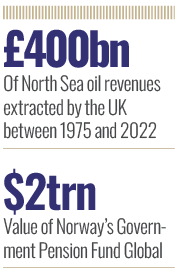
Norway and the United Kingdom, once partners in unlocking the vast hydrocarbon wealth of the North Sea, now stand as stark economic contrasts, their diverging paths a potent lesson in fiscal stewardship and intergenerational responsibility. While Norway has meticulously cultivated a colossal sovereign wealth fund, the Government Pension Fund Global, now exceeding $2 trillion and steadily growing for its citizens, the UK has largely consumed its oil bounty, leaving a legacy of significant national debt and a dwindling capacity for future savings. The contemporary debate surrounding the feasibility of a UK-inspired Norway-style wealth fund is urgent, complex, and fraught with politically uncomfortable realities, particularly as North Sea oil production declines and the fiscal landscape shifts dramatically.
Norway’s success is not an accident of resource discovery but a deliberate, sustained national strategy. The genesis of its oil fund can be traced back to the 1960s, when the Norwegian government asserted sovereignty over its continental shelf. Although oil was first discovered in 1969, it was not until 1990 that the legislative framework for the Government Petroleum Fund was established, underpinned by a prescient principle: oil wealth is finite, but accumulated financial capital can endure. The fund received its inaugural deposit in 1996, and today it represents a formidable economic force, holding stakes in approximately 1.5% of all publicly traded companies globally and theoretically bestowing upon each Norwegian citizen a financial inheritance worth hundreds of thousands of dollars.
The Norwegian model is characterised by two fundamental pillars: scale and discipline. All revenues generated from oil and gas extraction are channelled directly into the fund, eschewing their immediate use for day-to-day government expenditures. This capital is then strategically invested across a diversified global portfolio, mirroring the approach taken with Norway’s foreign exchange reserves. The fund’s holdings span thousands of companies, including significant investments in major technology firms, effectively transforming finite fossil fuel assets into a perpetual, income-generating engine.

Crucially, Norway adheres to a strict fiscal rule, annually spending only the projected long-term return on its investments, typically around 3%. This disciplined approach ensures that the principal capital remains intact, safeguarding wealth for future generations. Managed with a high degree of independence by Norges Bank Investment Management, the fund has largely been shielded from the vicissitudes of short-term political agendas. This remarkable achievement is not a secret formula but the result of a sustained, collective national decision to prioritize saving over immediate consumption.
In stark contrast, the United Kingdom’s experience with North Sea oil has been one of ephemeral gains and persistent spending. Between 1975 and 2022, the UK generated an estimated £400 billion (in today’s money) from its North Sea revenues. However, unlike Norway, not a single pound was earmarked for a long-term wealth preservation vehicle. These revenues were absorbed directly into the general government spending pool, largely dissipating without creating any enduring structural financial asset.
The pivotal divergence occurred in the 1980s. While Norway was laying the groundwork for its future financial powerhouse, Margaret Thatcher’s government in the UK utilized North Sea revenues to mitigate the immediate social and economic fallout of deindustrialisation. The funds were deployed to cover unemployment benefits and redundancy packages, facilitating the politically necessary, albeit economically and socially disruptive, dismantling of Britain’s manufacturing base. Once this transitional expenditure was met, the oil money effectively vanished.
This pattern of immediate expenditure continued under successive governments. Revenues were quickly absorbed into current spending, with no mechanisms in place for ring-fencing, investment, or compounding growth. The historical record reveals that Britain was not entirely without foresight; economists like Wynne Godley had advocated for a Norwegian-style fund as early as the 1970s, before the full influx of revenue. However, these proposals were rejected by the Labour government of the time, led by James Callaghan. This was not a deficit of knowledge or resources but a conscious political choice to forgo deferred gratification and to spend future wealth in the present.

The current debate about establishing a UK sovereign wealth fund is intrinsically linked to the Energy Profits Levy (EPL), introduced in 2022 to capture windfall profits during periods of high energy prices. While the EPL has generated billions annually, it represents a minuscule fraction of what decades of disciplined saving might have yielded. With North Sea production having peaked in the late 1990s and now in a steady decline, fewer new projects are being initiated, and exploration activity has significantly decelerated. The EPL, now reaching an effective total tax rate of 78% on North Sea operators in 2026, is increasingly perceived by the industry as a "going-out-of-business tax," disincentivizing crucial investment.
This situation exposes a fundamental policy tension: the commitment to ambitious net-zero targets coexists with a reliance on dwindling fossil fuel revenues, further complicated by heavy taxation on the very sector that sustains these diminishing receipts. This paradox presents an uncomfortable truth: any attempt to emulate Norway today would be initiated from a position of a mature, declining resource base, with significantly less time and opportunity to accumulate substantial capital.
Assessing the realistic potential for a UK sovereign wealth fund, stripped of historical context, requires a clinical examination of the present. The North Sea still holds substantial estimated reserves, including 2.9 billion barrels of oil equivalent (BOE) of proven and probable resources, alongside significant contingent and prospective resources. Under current price conditions and the existing EPL regime, these reserves could still generate meaningful revenue. However, "meaningful" is a far cry from "transformative" when juxtaposed with the UK’s current national debt of £2.8 trillion.
Norway’s fund did not materialize overnight; it was the product of over two decades of disciplined accumulation. Even under optimistic projections – assuming stable commodity prices, a reformed tax structure that encourages investment, sustained operational activity, and an unwavering political commitment to ring-fencing revenues – the UK could potentially establish a reasonably sized fund over a 20-to-30-year horizon. However, this would still be a fraction of Norway’s current standing and a modest counterweight to the nation’s substantial debt burden. The creation of such a fund faces three interconnected challenges: scalability, governance, and politics.
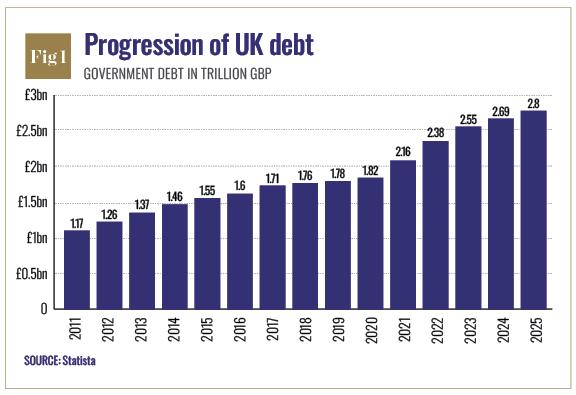
While the scalability issue is significant, it is not insurmountable. The governance challenge, however, is far more formidable. The Norwegian fund’s resilience stems from its insulation from direct political intervention; successive governments cannot easily access its principal. In contrast, British political culture, characterized by five-year electoral cycles, inherent short-termism, and persistent pressure for immediate public spending, has historically struggled to sustain long-term fiscal vehicles. A UK wealth fund would require legislative safeguards robust enough to withstand multiple government changes, a feat that transcends technical solutions and delves into a fundamental cultural shift.
The political obstacle is perhaps the most daunting. A serious endeavor to build a sovereign wealth fund necessitates a renewed commitment to North Sea investment, which, in turn, requires a significant restructuring of the EPL. This would demand a government willing to publicly advocate for increased fossil fuel extraction as serving the nation’s long-term economic interest. In 2026, such an argument is politically contentious, bordering on taboo, even where its economic logic holds considerable weight. Therefore, while a British sovereign wealth fund is theoretically attainable, its practical implementation is exceedingly difficult, and its political viability is severely constrained.
For a future government committed to this objective, an honest policy design is paramount. The initial step would involve restructuring the EPL, moving towards a tiered system that captures substantial revenue from mature fields while actively incentivizing investment in new exploration. Norway’s own petroleum tax framework offers a model, employing high headline rates but structured to make exploration viable rather than punitive. The objective would be to maximize extraction over a longer period, rather than solely focusing on the tax take per barrel.
This approach necessitates reopening the North Sea to new licensing rounds and exploration initiatives. It also requires an admission that prioritizing domestic energy production is a strategic trade-off, potentially sacrificing short-term net-zero optics for long-term fiscal resilience. The current approach of importing gas from Norway and Qatar while curtailing domestic supply presents a clear contradiction, both economically and environmentally.
Crucially, any revenues generated must be irrevocably ring-fenced. A UK equivalent of the Norwegian model can only succeed if it is genuinely protected by legislation and insulated from the shifting sands of political cycles, akin to a constitutional mandate rather than an advisory body. Historically, British long-term fiscal initiatives have faltered precisely at the governance stage. Establishing a cross-party board to design and oversee the fund’s structure could offer some insulation from electoral pressures. However, even with cross-party consensus, the inherent challenges of fiscal management remain substantial.
Complementary revenue streams, such as those derived from offshore wind farm leases, spectrum licenses, or future carbon credit markets, could bolster North Sea receipts and partially address the scalability concerns. Nevertheless, the most significant requirement is the most challenging: a fundamental recalibration of public expectations. This is not a short-term initiative but a multi-generational project, spanning 30 to 40 years, with no sitting politician likely to witness its full realization. The argument must be framed in intergenerational terms, mirroring Norway’s commitment since 1990.
While the economic hurdles are significant, they are not insurmountable. The ultimate limiting factors lie in the UK’s capacity for long-term strategic thinking and its willingness to transcend a political culture that has consistently prioritized present comfort over the future prosperity of its citizens.