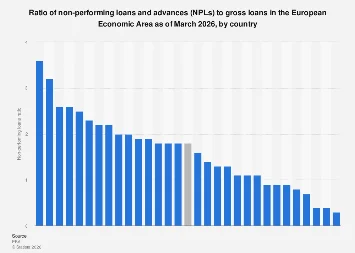
European financial institutions are navigating a complex and evolving economic environment, with a keen eye on the projected trajectory of non-performing loans (NPLs) across the continent. While specific figures for 2026 remain subject to a range of economic variables and policy interventions, recent trends and expert analyses suggest a nuanced picture, marked by regional disparities and a persistent focus on asset quality management. The legacy of the sovereign debt crisis and the more recent economic shocks from the pandemic and energy price surges continue to inform the strategies of banks and regulators alike, as they strive to maintain financial stability and foster sustainable growth.
The concept of non-performing loans, typically defined as loans where borrowers have failed to make scheduled payments for a significant period, remains a critical barometer of the health of the banking sector. High NPL ratios can erode a bank’s profitability, constrain its lending capacity, and, in systemic cases, pose a threat to broader financial stability. Therefore, understanding the anticipated NPL situation by 2026 is paramount for investors, policymakers, and the European banking industry.
Across the European Union, efforts to reduce NPLs have been a central theme for regulatory bodies like the European Central Bank (ECB) and the European Banking Authority (EBA) for over a decade. Post-2008, several Southern European countries, notably Greece, Italy, and Cyprus, grappled with exceptionally high NPL burdens, stemming from prolonged economic downturns and structural issues within their economies. While significant progress has been made in reducing these legacy NPLs through asset quality reviews, targeted disposal strategies, and the establishment of asset management companies (AMCs), the underlying economic sensitivities mean that vigilance remains crucial.
Projections for 2026, while not yet solidified into definitive country-by-country statistics, are likely to reflect a continued divergence. Countries that have successfully implemented structural reforms, diversified their economies, and maintained robust economic growth are expected to exhibit lower and more manageable NPL ratios. Conversely, nations still heavily reliant on sectors vulnerable to economic shocks, or those facing persistent structural challenges, might see a slower decline or even a temporary uptick in NPLs depending on the prevailing macroeconomic conditions.
The performance of the mortgage market is a key indicator, as it represents a significant portion of many European banks’ loan portfolios. Historically, residential mortgages have tended to have lower NPL rates compared to corporate or consumer loans due to the collateralization involved and the often more stable income streams of homeowners. However, rising interest rates, increased inflation, and potential economic slowdowns can put pressure on household finances, leading to a higher incidence of defaults. The anticipated increase in the cost of borrowing across the Eurozone and wider Europe is a factor that banks are closely monitoring for its potential impact on mortgage NPLs.
Data from organizations like the EBA and ECB, which regularly publish statistics on banking sector asset quality, offer insights into current trends. While specific forward-looking data for 2026 is not yet available, the general direction of travel indicates a sustained focus on deleveraging and strengthening balance sheets. The average NPL ratio for the EU banking sector has fallen considerably from its peak, but regional variations persist. For instance, while some Nordic countries and Northern European nations have consistently maintained low NPL levels, others in the Mediterranean and Eastern Europe have historically faced greater challenges.
Expert analysis suggests that by 2026, the NPL landscape will be shaped by several interconnected factors. The pace of economic recovery and growth across the continent will be a primary determinant. A strong and inclusive economic expansion will naturally support borrowers’ repayment capacity. Conversely, a recessionary environment could lead to an increase in defaults across various loan categories, including mortgages.
Furthermore, the effectiveness of national and supranational regulatory frameworks in encouraging banks to proactively manage their loan books will play a crucial role. Initiatives such as the EU’s Non-Performing Loans Strategy have aimed to create a more supportive environment for NPL market development, including secondary markets for distressed debt. The success of these measures in facilitating the sale and resolution of NPLs will influence reported ratios.
The composition of the NPLs themselves will also be of interest. While the focus has often been on legacy NPLs from past crises, the emergence of new distressed assets, particularly within specific sectors impacted by recent geopolitical and economic events (e.g., energy-intensive industries, certain segments of the hospitality sector), could present new challenges. The banking sector’s ability to identify and manage these emerging risks will be critical.
Market data from financial analytics firms often provide forecasts and scenarios for asset quality. These analyses typically consider macroeconomic variables such as GDP growth, unemployment rates, inflation, and interest rate trajectories. For 2026, scenarios might anticipate that countries with more resilient economies and proactive fiscal policies will continue to see NPL ratios stabilize at low levels, potentially below 2%. However, in more vulnerable economies, or under adverse economic scenarios, NPL ratios could remain elevated or see a modest rise, perhaps in the 3-5% range for certain segments or countries, though still significantly lower than historical peaks.
The global context also matters. As European banks operate in an interconnected financial system, trends in other major economies can have ripple effects. For example, a global economic slowdown or significant financial market volatility could impact European businesses and households, indirectly affecting loan repayment capabilities.
In conclusion, while precise, finalized country-by-country NPL ratios for Europe in 2026 are not yet available, the trajectory suggests a continued focus on asset quality. The banking sector is expected to have strengthened its defenses since the post-crisis era, with improved capital buffers and more sophisticated risk management practices. However, the evolving economic climate, characterized by inflation, rising interest rates, and geopolitical uncertainties, means that NPL management will remain a strategic priority. The figures for 2026 will likely reflect a mosaic of national economic performances, regulatory effectiveness, and the ongoing resilience of European banks in adapting to a dynamic global financial landscape. The continued development of secondary markets for NPLs and robust supervisory oversight will be key to ensuring financial stability across the continent.