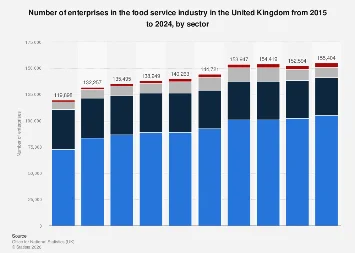
The United Kingdom’s vibrant food service industry, a crucial engine of economic activity and employment, continues to demonstrate resilience and adaptation in 2024. Analysis of enterprise data reveals a dynamic sector, with distinct segments experiencing varied levels of growth and presenting unique opportunities and challenges. At the forefront of this complex ecosystem, restaurants and mobile food services represent the largest segment, encompassing a vast network of establishments from high-end dining to casual eateries and dynamic street food vendors. This segment’s sheer scale underscores its foundational role in the nation’s culinary scene and its significant contribution to consumer spending.
Beyond the ubiquitous presence of restaurants, the broader food service industry is characterized by several other key sectors, each with its own economic footprint. Beverage serving activities, including pubs, bars, and licensed clubs, form another substantial pillar, catering to a wide range of social and leisure needs. Event catering, a sector closely tied to the health of the events industry and corporate spending, also plays a vital role, facilitating everything from intimate private gatherings to large-scale public functions. Rounding out the landscape are "other food service activities," a broad category that captures a diverse array of businesses, from canteens and contract caterers to specialized food providers. The aggregate number of food service businesses operating across the UK has seen an upward trend in 2024, signaling a robust recovery and continued expansion following periods of economic uncertainty.
The resilience of the UK’s food service sector is a testament to its inherent adaptability and the enduring consumer demand for dining out and social experiences. Despite inflationary pressures and shifts in consumer behaviour, the industry has navigated these headwinds with a degree of success. The growth in the total number of enterprises suggests a healthy pipeline of new ventures and the expansion of existing ones, indicative of a positive market sentiment. This expansion is not uniform, however, with different sub-sectors exhibiting distinct growth trajectories. Understanding these nuances is crucial for investors, policymakers, and industry stakeholders seeking to capitalize on emerging trends and address sector-specific challenges.
Globally, the food service industry is a significant contributor to GDP and employment across most economies. In developed markets like the UK, it often serves as a bellwether for consumer confidence and discretionary spending. While specific figures for 2024 across all nations are still emerging, preliminary data suggests a global trend of recovery and growth in the sector, albeit with regional variations influenced by local economic conditions, consumer preferences, and regulatory environments. The UK’s performance, therefore, offers valuable insights into broader international trends within the hospitality and food service domain.
The dominance of the "restaurants and mobile food services" category is a consistent feature across many international markets. However, the UK’s specific market dynamics are shaped by its unique cultural preferences, demographic makeup, and the competitive intensity of its urban centers. The proliferation of mobile food services, for instance, reflects a growing demand for convenience, affordability, and diverse culinary options, mirroring trends seen in cities across North America, Europe, and Asia. This segment’s adaptability to changing consumer habits, including the rise of delivery and takeaway services, has been a key factor in its sustained growth.
The beverage serving activities sector, while often intertwined with the broader hospitality industry, holds a distinct cultural significance in the UK, with pubs and bars serving as traditional social hubs. The health of this sector is influenced by factors such as licensing laws, changes in alcohol consumption patterns, and the rise of specialized beverage concepts like craft breweries and cocktail bars. As consumers increasingly seek unique experiences, this segment is evolving to offer more than just drinks, incorporating food offerings, live entertainment, and themed events.
Event catering, by its nature, is more susceptible to fluctuations in larger economic cycles. The post-pandemic resurgence in social and corporate events has provided a significant boost to this sector. As businesses resume in-person meetings and consumers prioritize celebrations, demand for professional catering services has rebounded. The ability of caterers to offer flexible, bespoke solutions, catering to diverse dietary needs and event formats, will be critical for their continued success.
The "other food service activities" category, while less defined, is a crucial indicator of innovation and niche market development within the food service industry. This can include everything from specialized dietary providers (e.g., vegan, gluten-free) to corporate canteens, institutional catering, and even ghost kitchens that solely focus on delivery. The growth in this segment often reflects a diversification of food consumption patterns and the increasing demand for specialized culinary solutions tailored to specific needs and contexts.
Economic analysis of the UK food service sector reveals its significant multiplier effect on the wider economy. Beyond direct employment and revenue generation, the industry supports a vast supply chain, from agricultural producers and food manufacturers to logistics providers and technology companies offering point-of-sale systems and delivery platforms. Increased consumer spending in food service outlets translates into demand for goods and services across these related sectors, amplifying its overall economic impact.
Furthermore, the food service industry plays a vital role in regional economic development, particularly in areas with strong tourism sectors or vibrant urban centers. Local employment opportunities, the development of culinary talent, and the creation of distinct cultural identities are all fostered by a thriving food service ecosystem. The increasing prevalence of independent restaurants and food businesses contributes to the unique character and appeal of towns and cities across the UK.
Looking ahead, several trends are likely to shape the future of the UK food service industry. The continued integration of technology, from online ordering and delivery platforms to AI-driven inventory management and personalized marketing, will be paramount. Sustainability and ethical sourcing are also becoming increasingly important considerations for consumers, driving demand for businesses that demonstrate a commitment to environmental and social responsibility. The ongoing evolution of consumer tastes, driven by global influences and a growing interest in health and wellness, will continue to push the boundaries of culinary innovation.
The data on enterprise numbers in 2024 provides a snapshot of a sector that is not only recovering but actively evolving. The dominant presence of restaurants and mobile food services highlights the enduring appeal of dining out, while the growth across other segments underscores the industry’s capacity for diversification and specialization. As the UK economy continues to navigate global uncertainties, the food service sector’s adaptability, its role as a significant employer, and its contribution to the national and regional economies position it as a key area to monitor for economic health and consumer sentiment. The aggregate increase in the number of food service businesses signifies a sector that is dynamic, responsive, and poised for continued development in the coming years.