The global financial landscape is currently defined by a complex tug-of-war between persistent inflationary pressures and the underlying resilience of a transforming economy. For institutional investors and retail participants alike, the prevailing atmosphere has been one of caution, fueled by the Federal Reserve’s "higher-for-longer" interest rate narrative and the geopolitical flashpoints that have historically sent energy prices into a tailspin. However, senior leadership within the world’s most influential investment banks is beginning to signal a more constructive path forward. Ashok Varadhan, the co-head of global banking and markets at Goldman Sachs, has recently emerged as a prominent voice of optimism, suggesting that despite the myriad of "exogenous shocks" hitting the system, the most prudent strategy remains a steadfast commitment to the markets.
This constructive outlook is predicated on a trifecta of economic catalysts: a stabilization of monetary policy, a projected retreat in global energy costs, and the transformative, disinflationary potential of artificial intelligence. While market sentiment often swings violently on the back of singular data points—such as a softening labor report or a spike in Brent crude—the institutional view focuses on the structural durability of nominal growth. By dissecting these three pillars, investors can gain a clearer understanding of why the current volatility may represent a transition period rather than a precursor to a secular downturn.
The first pillar of this optimistic thesis centers on the trajectory of the Federal Reserve. Throughout the first half of the decade, the central bank’s aggressive tightening cycle was the primary driver of market anxiety. However, the narrative is shifting from "how high will they go" to "how long will they stay." Despite lingering concerns that inflation might prove too "sticky" to reach the Fed’s 2% target, many top-tier analysts believe the peak of the tightening cycle is firmly behind us. The consensus among some of the most seasoned traders on Wall Street is that the Federal Reserve will likely maintain its current stance for the remainder of the year, eschewing further hikes.
This perspective stands in stark contrast to certain market-implied probabilities that have periodically flirted with the idea of a late-year tightening. Recent labor market data has played a pivotal role in this recalibration. Following a July jobs report that showed a noticeable cooling in hiring, the probability of a September hike plummeted, according to the CME Group’s FedWatch Tool. Traders are now pricing in a higher likelihood of a "hold" or even a "pivot" toward easing if economic activity slows too rapidly. For investors, this creates a more predictable environment. When the threat of further rate hikes is removed, equity valuations can begin to stabilize, as the discount rates used to value future cash flows become less of a moving target.
The second major component of the bullish argument involves a significant cooling of the energy sector. Oil prices have long been a thorn in the side of global central banks, acting as a "stealth tax" on consumers and a primary driver of headline inflation. Recent months have seen West Texas Intermediate (WTI) and Brent crude fluctuate wildly, often driven by tensions in the Middle East, specifically regarding the Strait of Hormuz—a vital maritime artery through which roughly one-fifth of the world’s daily oil consumption passes.
However, the long-term forecast from leading commodities desks suggests a return to more manageable levels. Predictions now suggest that crude oil could settle well below the $70-per-barrel mark as we move toward the latter stages of 2026. This downward trajectory is expected to be driven by a combination of increased non-OPEC+ supply and a gradual easing of the geopolitical risk premiums that have kept prices artificially inflated. Furthermore, the global transition toward renewable energy and the increasing efficiency of internal combustion engines are beginning to exert structural downward pressure on demand. If energy prices do indeed retreat to the sub-$70 range, it would provide a massive disinflationary tailwind, giving the Federal Reserve and other central banks more breathing room to support economic growth without the fear of reigniting a price-wage spiral.
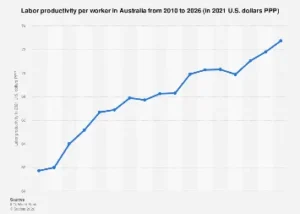
The third and perhaps most transformative pillar of the current economic expansion is the rapid integration of artificial intelligence into the global workforce. We are currently in the midst of a massive infrastructure build-out, where trillions of dollars are being poured into data centers, semi-conductors, and power grids to support the AI revolution. In the short term, this capital expenditure (CAPEX) can be inflationary, as it creates intense competition for specialized labor and raw materials. However, history teaches us that such periods of intense technological investment are almost always followed by a surge in productivity.
Artificial intelligence is increasingly viewed as a "general-purpose technology," akin to the steam engine or the internet. Once the initial infrastructure is in place, the productivity gains—the ability to produce more output with less input—are expected to be profound. This is fundamentally disinflationary. By allowing companies to operate more efficiently, AI can help maintain corporate profit margins even in a high-wage environment. This productivity boom is a key reason why the underlying nominal growth of the economy has remained so resilient despite the fastest interest rate hiking cycle in forty years. The "Goldilocks" scenario—where the economy grows at a healthy clip while inflation continues to trend downward—is becoming more plausible because of these technological advancements.
This resilience is not just limited to the equity markets; it is also reflected in the credit markets. Corporate bond spreads—the premium investors demand to hold corporate debt over "risk-free" government Treasuries—have remained remarkably tight. While there has been a heavy volume of new debt issuance as companies look to lock in financing, the strength of corporate balance sheets has prevented a dramatic widening of spreads. When the underlying economy is durable and default expectations remain low, the credit market acts as a stabilizing force for the broader financial system. High-yield and investment-grade debt continue to offer attractive returns for those willing to navigate the current interest rate environment, further supporting the "stay invested" mantra.
Furthermore, the global context cannot be ignored. While the United States remains the primary engine of global growth, other regions are beginning to find their footing. The European Central Bank has already begun its easing cycle, and emerging markets are showing signs of stabilization as the US dollar’s relentless climb shows signs of peaking. This global synchronization of the economic cycle, albeit at different stages, provides a diversified buffer for international investors.
The S&P 500’s recent rally to record highs, posting double-digit gains well into the current year, serves as a testament to the market’s ability to look past immediate headlines and focus on long-term structural strengths. The "wall of worry" that markets are currently climbing is built on legitimate concerns—geopolitical instability, trade tariffs, and political uncertainty. Yet, the data suggests that the "exogenous shocks" that have defined the post-pandemic era are beginning to lose their potency.
For the strategic investor, the message from the upper echelons of global banking is clear: market timing is a precarious game, often resulting in missed opportunities during the most significant periods of recovery. The combination of a Federal Reserve that has reached its terminal rate, a projected decline in energy costs, and a generational leap in productivity through AI creates a compelling case for equity and credit exposure. While the road ahead will undoubtedly feature periods of volatility, the structural integrity of the global economy suggests that those who remain invested will be best positioned to capture the value created by the next era of economic expansion. The transition from a period of "scarcity and inflation" to one of "productivity and stabilization" is well underway, providing a robust foundation for long-term capital appreciation.