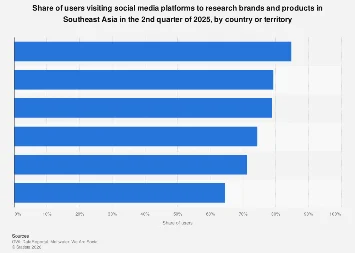
In the dynamic landscape of Southeast Asian commerce, social media platforms are rapidly transforming from mere communication tools into crucial hubs for brand and product research. By the second quarter of 2025, a significant portion of internet users across the region are expected to leverage these digital arenas to inform their purchasing decisions, signaling a profound shift in consumer behavior and marketing strategies. While precise figures for individual countries remain proprietary, available insights indicate a pronounced divergence in adoption rates, with nations like Vietnam demonstrating a higher propensity for social media-driven brand discovery compared to more digitally mature markets such as Singapore.
This trend underscores the growing influence of social proof, influencer marketing, and user-generated content in shaping consumer perceptions and driving purchase intent. As consumers increasingly seek authentic recommendations and relatable experiences, social media offers an unparalleled environment for these interactions to flourish. The accessibility and ubiquitous nature of platforms like Facebook, Instagram, TikTok, and local equivalents mean that potential customers are encountering brands and products organically throughout their daily digital lives. This constant exposure, coupled with the ability to engage directly with brands and fellow consumers, cultivates a level of trust and familiarity that traditional advertising channels often struggle to replicate.
The economic implications of this paradigm shift are substantial. For businesses operating in or targeting Southeast Asia, understanding and adapting to this social media-centric research behavior is no longer optional but a strategic imperative. Companies that fail to establish a robust and engaging presence on relevant social platforms risk becoming invisible to a growing segment of their target audience. Conversely, those that effectively harness the power of social media can unlock significant opportunities for brand building, customer acquisition, and ultimately, revenue growth. This necessitates a nuanced approach, acknowledging that a one-size-fits-all strategy will not suffice across the diverse markets within Southeast Asia.
Vietnam’s leading role in this trend suggests a market where digital adoption is rapidly accelerating, and consumers are particularly receptive to peer recommendations and online community validation. This can be attributed to several factors, including a growing middle class with increasing disposable income, a younger demographic that is highly engaged with digital technologies, and a nascent but rapidly expanding e-commerce ecosystem. In such an environment, social media serves as a primary gateway to discovering new brands and evaluating their credibility before making a purchase. The rapid spread of information and trends through these channels means that consumer sentiment can shift quickly, placing a premium on real-time engagement and responsive brand communication.
In contrast, Singapore, with its highly developed digital infrastructure and a consumer base that is often more discerning and less reliant on purely social validation, exhibits a more measured approach. While social media is undoubtedly a part of the Singaporean consumer’s journey, its role in brand research might be more integrated with other information sources, such as independent review sites, professional publications, and established retail channels. This does not diminish the importance of social media, but rather suggests that its influence is perhaps more targeted or supplementary in this particular market. Singaporean consumers may utilize social media for initial discovery or to gather supplementary information, but they may also place a higher value on verified reviews and expert opinions.
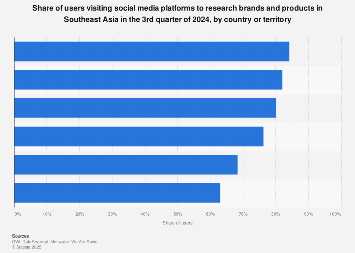
The survey period, the second quarter of 2025, positions these insights within a near-future context, allowing businesses to proactively adjust their strategies. The age group surveyed, 16 years and older, captures a broad spectrum of the online population, reflecting the widespread adoption of social media across different demographics. The methodology, an online survey, is a standard approach for gauging digital behavior, though it’s important to acknowledge potential biases inherent in self-reported data.
Globally, the trend of social media influencing purchase decisions is not unique to Southeast Asia. Markets in North America, Europe, and other parts of Asia have long seen the rise of social commerce. However, the pace of adoption and the specific cultural nuances within Southeast Asia present a unique set of challenges and opportunities. The region’s rapid economic growth, coupled with its diverse cultural tapestry and varying levels of digital penetration, means that brands must conduct granular market research to tailor their social media strategies effectively. For instance, the type of content that resonates in Indonesia might differ significantly from that in the Philippines or Thailand.
The economic impact extends beyond individual business strategies. A thriving social media ecosystem for brand research can foster greater competition, drive innovation in product development, and ultimately contribute to the overall growth of the digital economy in Southeast Asia. As consumers become more informed and empowered, businesses are incentivized to offer higher quality products and services, improve customer service, and engage in more transparent and ethical marketing practices. This can lead to a more robust and consumer-centric market, benefiting both businesses and consumers in the long run.
Furthermore, the rise of social media as a research tool has implications for the advertising industry. Traditional media buys may see a decline in effectiveness as marketing budgets shift towards influencer collaborations, sponsored content, and social media advertising campaigns. Agencies and marketing professionals will need to develop new skill sets focused on community management, content creation for social platforms, and data analytics to measure the ROI of social media initiatives. The ability to track engagement, understand audience sentiment, and adapt campaigns in real-time will become paramount.
The data, when fully accessible, will likely reveal further granular details about country-specific behaviors, potentially highlighting differences in platform preferences, the types of content that drive engagement, and the perceived credibility of different information sources on social media. For example, some markets might lean more towards visual platforms like Instagram and TikTok for product discovery, while others might still rely on text-based reviews and discussions on platforms like Facebook. Understanding these nuances will be critical for developing targeted and effective marketing campaigns.
In conclusion, the projection that a significant portion of Southeast Asian internet users will turn to social media for brand and product research by mid-2025 is a powerful indicator of evolving consumer behavior. This trend necessitates a strategic re-evaluation by businesses, demanding a deeper understanding of digital consumer journeys and a commitment to building authentic and engaging social media presences. The economic repercussions are far-reaching, promising to reshape marketing landscapes, foster greater competition, and ultimately contribute to the continued digital transformation of this vibrant and rapidly growing region. Navigating this evolving terrain with agility and insight will be the hallmark of successful brands in Southeast Asia for years to come.