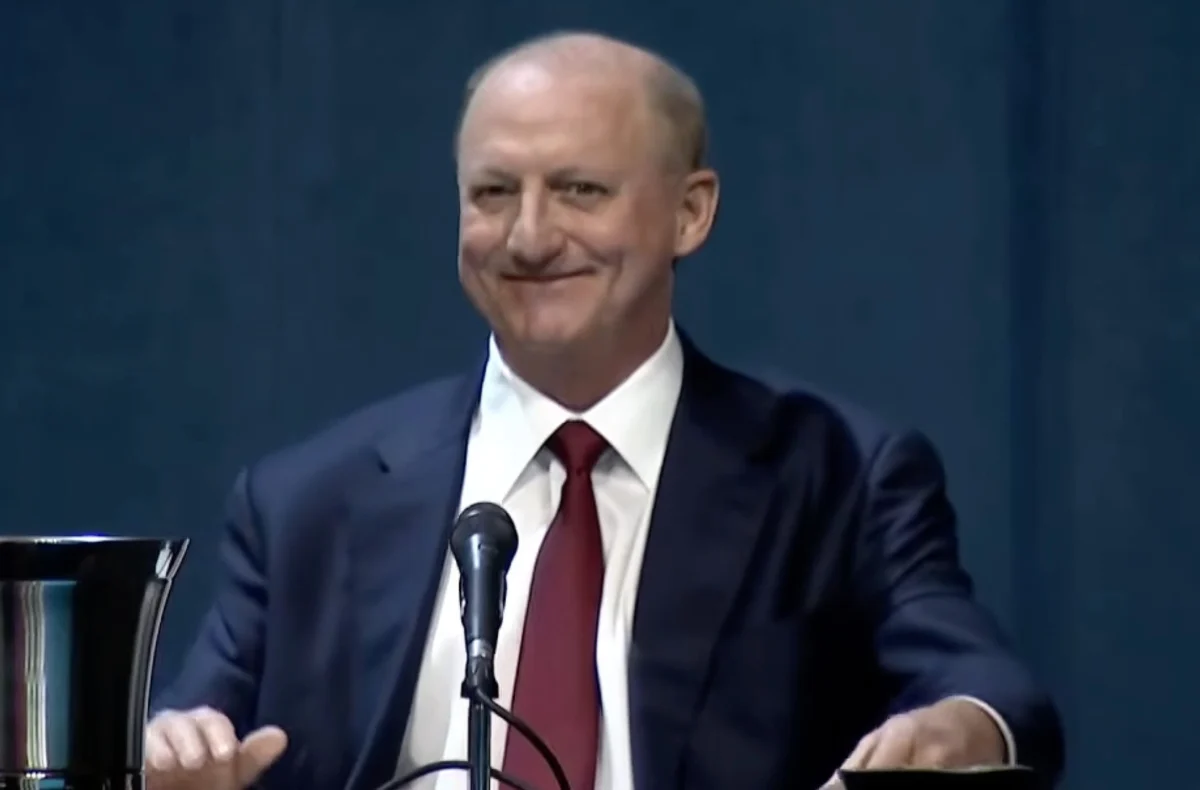
The transition of power at the world’s most famous investment vehicle has moved from theoretical succession to operational reality, as Berkshire Hathaway’s second-quarter results signal a decisive shift in how the firm manages its mountainous reserves. Under the leadership of CEO Greg Abel, who assumed the mantle from Warren Buffett at the start of 2026, the Omaha-based conglomerate reported a 16% surge in operating earnings, reaching $12.98 billion. While the headline growth figures underscore the resilience of Berkshire’s diverse industrial and energy holdings, the more profound story lies in the aggressive deployment of capital, marking the end of a long period of liquidity accumulation that had left many analysts wondering when the "elephant gun" would finally be fired.
For the better part of three years, Berkshire Hathaway had functioned as a massive vacuum for cash, with Buffett famously lamenting a lack of attractive valuations in an overheated equity market. That era appears to be evolving. In the second quarter of 2026, the company’s cash hoard—a figure that has often been viewed as a barometer for market overvaluation—retreated from its record peak of $397.4 billion to $365.5 billion. This reduction of nearly $32 billion represents a significant pivot in strategy, as Abel begins to navigate the complex waters of a post-Buffett era by putting capital to work in both public equities and direct acquisitions.
The internal engines of the Berkshire machine showed remarkable synchronization during the period, particularly within the capital-intensive sectors that Abel managed for years before becoming CEO. Manufacturing, service, and retailing divisions saw their collective earnings jump 24% to $4.47 billion, benefiting from robust consumer demand and stabilized supply chains. Berkshire Hathaway Energy (BHE) was another standout, with profits surging 27% to $891 million. This performance is particularly noteworthy given the regulatory and environmental headwinds facing the utility sector globally; it suggests that Berkshire’s long-term investments in grid modernization and renewable integration are beginning to yield tangible fiscal rewards.
Similarly, BNSF Railway—often considered a proxy for the health of the American industrial economy—posted a 6% increase in earnings to $1.56 billion. The railroad’s performance reflects a broader stabilization in transcontinental freight volumes, despite fluctuating fuel costs and the ongoing evolution of global logistics patterns. When viewed as a whole, these "non-insurance" businesses provided a sturdy floor for the company’s valuation, offsetting volatility in the more unpredictable corners of the portfolio.
However, the quarter was not without its friction points. The insurance segment, historically the cornerstone of Berkshire’s "float" and investment strategy, faced a period of contraction. Underwriting earnings dipped 13% to $1.73 billion, while insurance investment income fell 9% to $3.06 billion. This softness highlights the ongoing challenges within the property and casualty markets, where inflationary pressures on repair costs and a higher frequency of climate-related claims have forced insurers to recalibrate their risk models. Despite these headwinds, the massive liquidity generated by the insurance arm remains the primary fuel for Abel’s new investment offensive.
The most striking departure from recent years was Berkshire’s activity in the stock market. After 14 consecutive quarters of being a net seller of equities—a streak that underscored Buffett’s defensive posture—the company turned into a net buyer in the second quarter, with nearly $20 billion in net purchases. This reversal suggests a fundamental change in the firm’s outlook on market valuations. Leading this charge was a significant $10 billion investment in Alphabet, the parent company of Google. The move marks a rare foray into the heart of the "Magnificent Seven" tech giants for a firm that has historically avoided high-multiple technology stocks, with the exception of Apple.
The Alphabet investment, which Buffett noted was initiated by himself in close consultation with Abel, is strategically positioned as a play on the development of artificial intelligence. By backing a tech incumbent with a massive data moat and the infrastructure to scale AI, Berkshire is signaling that it no longer views the sector as outside its "circle of competence." With Alphabet now joining American Express, Apple, Bank of America, and Coca-Cola as one of Berkshire’s five largest holdings, the portfolio is beginning to reflect a more modern balance between traditional value and technological growth.
Beyond the public markets, Abel has also demonstrated a willingness to pull the trigger on full acquisitions. The second quarter saw the closing of the Taylor Morrison acquisition, a major move into the residential housing market. By bringing one of the nation’s largest homebuilders under the Berkshire umbrella, Abel is doubling down on the "higher-for-longer" housing narrative, betting that the chronic undersupply of American homes will provide a decade-long tailwind for the sector. This acquisition aligns with Berkshire’s existing interests in Clayton Homes and Shaw Industries, further consolidating its position as a dominant force in the domestic infrastructure and housing ecosystem.
Shareholder distribution also saw a marked acceleration. After a quiet first quarter in which only $235 million was spent on share repurchases, Abel ramped up buybacks to approximately $4.5 billion in the second quarter. While this figure fell slightly short of the most aggressive analyst estimates, it serves as a powerful signal of management’s confidence. In the Berkshire philosophy, buybacks are only executed when the stock is trading below a conservative estimate of intrinsic value. By increasing the pace of repurchases, Abel is effectively telling the market that he views Berkshire’s own shares as a more attractive investment than many of the external opportunities currently available.
The market’s reaction to this new leadership style has been one of cautious optimism. While Berkshire’s stock has trailed the S&P 500’s 13% year-to-date gain, rising only 3% in the same period, the last three months have seen a 9% rally. This recent momentum suggests that investors are beginning to price in the "Abel execution" factor. For decades, Berkshire’s valuation included a "Buffett premium"—a recognition of the founder’s peerless capital allocation skills. As Buffett, now 95 and serving as Chairman, focuses more on the philosophical and cultural guardrails of the firm, Abel is proving that he can maintain the company’s disciplined ethos while moving with greater agility.
From a global economic perspective, Berkshire’s shift from cash accumulation to deployment is a significant indicator. When the world’s most patient investor begins to spend, it often suggests that the risk-reward profile of the economy has reached a tipping point. Whether it is through the $10 billion bet on AI via Alphabet or the acquisition of Taylor Morrison, Berkshire is moving its capital out of the safety of short-term Treasuries and into the productive economy. This move provides a vote of confidence in the long-term trajectory of the U.S. economy, even as global markets grapple with geopolitical instability and shifting monetary policies.
The "cash fortress" that Buffett built remains the largest in corporate history, but under Greg Abel, the gates have been opened. The challenge for Abel in the coming years will be to maintain the culture of decentralization and extreme integrity that defined the Buffett era while managing a portfolio that is increasingly influenced by the rapid pace of technological change. The second quarter of 2026 may well be remembered as the moment when Berkshire Hathaway transitioned from a defensive titan protecting its hoard to an active, modern conglomerate ready to shape the next era of American industry. With $365 billion still at his disposal, Abel’s next moves will continue to be the most closely watched actions in the financial world, as he seeks to prove that the Berkshire model is not just a relic of the 20th century, but a blueprint for the 21st.