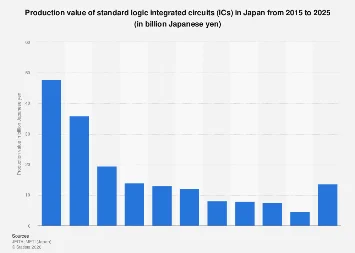
The production value of standard logic integrated circuits (ICs) in Japan is projected to reach a significant milestone by 2025, signaling robust activity within a critical segment of the nation’s semiconductor industry. While precise figures for the coming year remain proprietary, projections indicate a substantial valuation, reflecting ongoing investment and demand for these foundational electronic components. Standard logic ICs, a subset of the broader logic IC market, are fundamental building blocks for a vast array of electronic devices, performing essential functions such as data processing, decision-making, and signal management. This category encompasses a wide spectrum of products, including but not limited to, basic gates (AND, OR, NOT), flip-flops, counters, and multiplexers, which are indispensable across consumer electronics, automotive systems, industrial automation, and telecommunications infrastructure.
The importance of standard logic ICs extends beyond their individual functionalities; they form the bedrock upon which more complex integrated circuits are built. Their reliability, cost-effectiveness, and wide availability make them a constant in the design and manufacturing of virtually all modern electronic systems. Japan’s historical strength in advanced manufacturing and its significant presence in the global semiconductor supply chain underscore the significance of these projections. The nation has long been a key player in semiconductor technology, with companies renowned for their innovation in materials science, fabrication processes, and specialized chip design.
This anticipated growth in the production value of standard logic ICs is not occurring in a vacuum. It is deeply intertwined with global economic trends, technological advancements, and evolving consumer demands. The ongoing digital transformation across industries, the burgeoning market for artificial intelligence (AI) and the Internet of Things (IoT) devices, and the continuous upgrade cycles in consumer electronics all contribute to an elevated need for reliable and efficient logic components. Furthermore, the increasing sophistication of automotive electronics, from advanced driver-assistance systems (ADAS) to infotainment, requires a substantial volume of logic ICs. The push towards electric vehicles (EVs) also presents a significant demand driver, as these vehicles integrate more complex control and management systems.
Globally, the semiconductor market, including the segment for logic ICs, has experienced significant volatility in recent years, influenced by supply chain disruptions, geopolitical tensions, and fluctuating demand. However, underlying trends point towards sustained long-term growth. The International Semiconductor Industry Association (SEMI) has consistently forecast expansion in the global fab equipment market, indicating a strong commitment from manufacturers to increase production capacity. This global investment directly impacts the availability and pricing of components like standard logic ICs, and influences national production figures.
Japan’s strategic focus on revitalizing its semiconductor industry, bolstered by government initiatives and private sector investment, is a key factor supporting this positive outlook. Initiatives aimed at fostering domestic chip production, encouraging research and development, and attracting foreign investment are designed to enhance Japan’s competitiveness and resilience in the global semiconductor landscape. The nation’s commitment to producing high-quality, reliable components aligns with the stringent requirements of industries such as automotive and industrial automation, where failure is not an option.
The economic impact of a strong standard logic IC sector extends beyond the direct revenue generated. It creates high-skilled employment opportunities, stimulates innovation in related fields, and strengthens the overall technological ecosystem. A robust domestic supply of these essential components can reduce reliance on external sources, thereby mitigating risks associated with supply chain vulnerabilities and enhancing national economic security. Moreover, advancements in logic IC technology can lead to the development of more energy-efficient and powerful electronic devices, contributing to broader societal goals related to sustainability and technological progress.
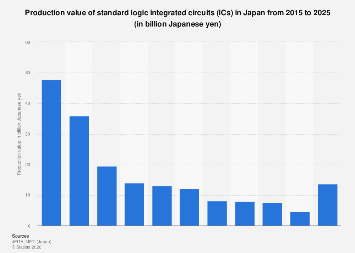
While the specific figures for 2025 are not publicly disclosed, the trend indicated by available data suggests a trajectory of sustained growth from previous years. Projections for the broader logic IC market, which standard logic ICs form a part of, often show compound annual growth rates (CAGRs) in the mid-to-high single digits, driven by the aforementioned macro trends. For instance, reports from market research firms often place the global logic IC market’s CAGR in the range of 5-8% over the medium term. If Japan’s standard logic IC production aligns with or surpasses this global average, it would translate into significant year-over-year increases in production value.
The competitive landscape for standard logic ICs is characterized by both established global players and specialized domestic manufacturers. Japanese companies have historically excelled in certain niches, particularly in areas requiring high precision and reliability. Their continued focus on quality control, advanced manufacturing techniques, and incremental innovation ensures their relevance in a market that, while often dominated by high-performance processors, still relies heavily on the fundamental capabilities of standard logic. The ability to produce these chips efficiently and at scale is crucial for maintaining market share and profitability.
Looking ahead, the evolution of standard logic ICs will likely be influenced by advancements in semiconductor manufacturing processes, such as the adoption of smaller lithography nodes, and the integration of new materials. While the core functionality of standard logic gates remains constant, improvements in power efficiency, speed, and integration density are continuous areas of development. The pursuit of these advancements will require ongoing investment in research and development, as well as close collaboration between chip designers, materials suppliers, and equipment manufacturers.
In conclusion, the projected increase in the production value of standard logic integrated circuits in Japan by 2025 underscores the enduring importance of these fundamental electronic components. This growth is a testament to the nation’s enduring strength in semiconductor manufacturing, its strategic focus on technological advancement, and the pervasive demand driven by global digitalization and innovation across various sectors. As Japan continues to invest in and refine its semiconductor capabilities, the standard logic IC sector is poised to remain a vital contributor to its economic and technological landscape, underpinning the development of the next generation of electronic devices and systems.