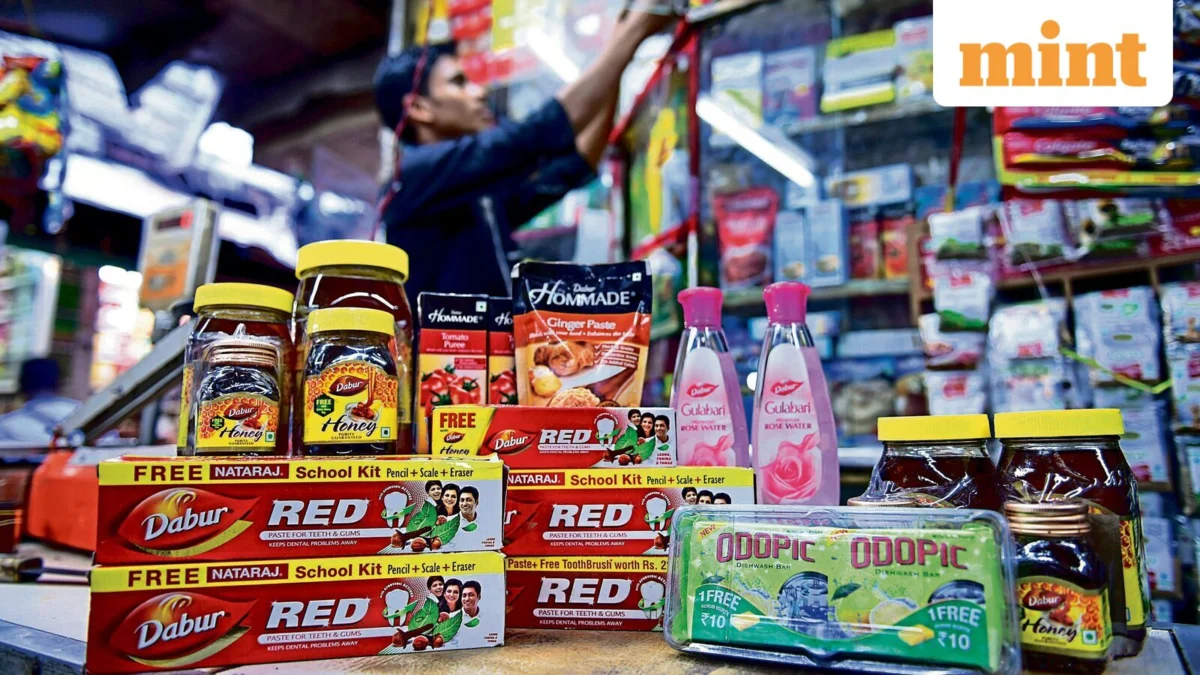
India’s sprawling food and beverage industry is navigating a period of heightened regulatory scrutiny, with the Food Safety and Standards Authority of India (FSSAI) intensifying its enforcement actions against misleading product claims. This invigorated oversight, underscored by recent high-profile legal challenges and a more assertive public communication strategy, is compelling major Fast-Moving Consumer Goods (FMCG) players to fundamentally rethink their packaging, advertising, and even product formulations. The current climate signals a significant shift towards greater transparency and accountability, with profound implications for market competition, consumer confidence, and public health.
The catalyst for this renewed vigilance is multi-faceted. On August 3, the FSSAI issued a directive barring Dabur India from marketing certain products with "100%" claims, precipitating a 4% decline in the company’s shares the following day—its steepest in twenty weeks. This action quickly escalated, with Dabur moving the Delhi High Court for an urgent hearing. Concurrently, Diageo-owned United Spirits is challenging an FSSAI order in the Bombay High Court concerning the sale of some of its offerings. These instances are not isolated but indicative of a broader trend where the regulator, while not necessarily introducing new legislation, is demonstrably altering its approach to enforcement and public engagement. The FSSAI has become increasingly vocal on digital platforms, leveraging social media to highlight violations and encouraging public participation through its ‘Food Safety Connect’ mobile application, which allows consumers to report misleading labels with photographic evidence. This proactive stance follows sustained criticism from public health advocates and non-governmental organizations, who have consistently argued for aligning India’s food safety standards more closely with advanced global benchmarks, particularly those in Europe.
At the core of this regulatory push lies the Food Safety and Standards Act, 2006 (FSS Act), and its accompanying regulations, notably the FSS (Advertising & Claims) Regulations, 2018. These legislative instruments form the bedrock for governing food and beverage labelling in India. Claims such as "100%" are often deemed problematic under these regulations due to their inherent ambiguity, difficulty in verification, and propensity to mislead consumers. Industry experts highlight that product packaging serves as the most direct and often irrefutable evidence of such misleading claims, making labelling violations a frequent target for FSSAI enforcement. The regulator’s focus on these specific claims reflects a global movement towards clearer, more honest communication with consumers, especially as health and wellness trends continue to dominate purchasing decisions.
The burgeoning significance of product labelling in India is inextricably linked to evolving consumer behaviour and market dynamics. A growing segment of the Indian population, particularly urban millennials and Gen Z, exhibits a pronounced preference for healthier food options, translating into a willingness to pay a premium for products perceived as "cleaner" or more beneficial. A Redseer report indicates that approximately two out of three millennials are prepared to pay around 15% more for ready-to-eat and ready-to-cook products with transparent health credentials. This shift has dramatically elevated the commercial value of health-related claims on packaging, transforming labels from mere informational tools into critical competitive differentiators. Data from market intelligence platform 1DigitalStack underscores this trend, reporting a doubling of sales for categories like protein bars, makhana, healthy chips, nuts, and seeds on quick commerce platforms, from ₹154 crore to ₹327.7 crore in the January-March period of 2026 alone. This robust growth in the health and wellness food segment, projected to expand at a compound annual growth rate (CAGR) exceeding 15% over the next five years, means that the stakes for accurate and compliant labelling have never been higher.

In response to the intensified regulatory environment, companies are adopting diverse strategies, ranging from proactive packaging revisions to assertive legal challenges. The case of clean-label food brand The Whole Truth exemplifies the former: after receiving an FSSAI show-cause notice triggered by a rival’s complaint, the company removed "no added sugar" claims, replacing them with the more precise "sweetened with dates." This pivot reflects a broader industry trend where brands are recalibrating their marketing language to align with regulatory expectations and avoid potential penalties. Similarly, energy drink manufacturers, including PepsiCo’s Sting, are reportedly updating their labels to de-emphasize direct health claims. Dabur, despite its current legal challenge against the latest FSSAI ban, had already initiated the replacement of labels and advertisements featuring the "100%" claim following an earlier directive in 2025. These actions highlight the operational complexities and financial investments involved in large-scale relabelling efforts, impacting supply chains, marketing campaigns, and inventory management across the vast FMCG landscape. Legal battles, while potentially offering temporary reprieve or setting precedents, also carry significant reputational risks and can be costly, diverting resources from core business activities.
Globally, the landscape of food labelling standards varies, with certain regions setting benchmarks for consumer protection and public health. The European Union (EU) is widely regarded as a leader, enforcing some of the world’s most stringent food safety standards. Beyond tighter limits on pesticide residues – with a default residue limit of 0.01 mg/kg for unapproved pesticides – the EU rigorously regulates food additives and colorings, and mandates comprehensive nutrition declarations, allergen information, and origin labelling. This approach is rooted in a precautionary principle, prioritizing consumer health and environmental protection.
Latin America, meanwhile, has emerged as a pioneer in front-of-pack (FOP) warning labels, specifically designed to combat rising rates of obesity and non-communicable diseases. Countries like Chile, Mexico, and Brazil have implemented mandatory "high in" or "excess" warning seals for products that exceed predetermined thresholds for critical nutrients such as sugar, sodium, saturated fat, and trans fat, and in some instances, calories. These stark, often octagon-shaped, labels are strategically placed to enable quick, informed consumer choices, aiming to steer individuals away from products deemed unhealthy. The effectiveness of these FOP labels in altering purchasing habits and improving public health outcomes has spurred discussions globally, including in India, about adopting similar mechanisms. The debate around FOPL in India has been ongoing, balancing industry concerns about feasibility and potential economic impact against public health imperatives.
The FSSAI’s heightened enforcement, therefore, places India within this global trajectory towards greater transparency and stringent oversight. While India’s current regulations are robust, the enforcement push signifies a move towards closing the gap with global leaders in food safety and labelling. This regulatory evolution has significant economic implications. For businesses, it translates into increased compliance costs, investments in R&D for product reformulation, and potential market share shifts as brands adapt. Companies that prioritize transparency and genuinely healthy products may gain a competitive advantage, while those perceived as non-compliant face financial penalties, product recalls, and erosion of brand trust. For consumers, the long-term benefits include improved access to accurate nutritional information, enabling healthier dietary choices and potentially contributing to a reduction in the burden of diet-related non-communicable diseases. Investors, too, are closely monitoring these developments, as regulatory compliance and ethical marketing practices become increasingly important metrics for evaluating the sustainability and long-term viability of food sector companies.
Looking ahead, the FSSAI’s proactive stance signals a new era for India’s food industry. The ongoing legal battles and corporate responses will likely shape the interpretation and application of existing regulations, potentially setting new precedents for industry conduct. Furthermore, the global trend towards enhanced transparency, coupled with growing consumer awareness, suggests that the pressure on food manufacturers to be more forthcoming about their products will only intensify. This could pave the way for further regulatory innovations, such as the eventual adoption of more explicit front-of-pack labelling, the leveraging of digital technologies like QR codes for detailed product information, or even tighter controls on health and wellness marketing claims. The current regulatory clampdown is not merely a punitive measure but a foundational step towards building a more trustworthy, transparent, and health-conscious food ecosystem in one of the world’s largest and fastest-growing consumer markets.