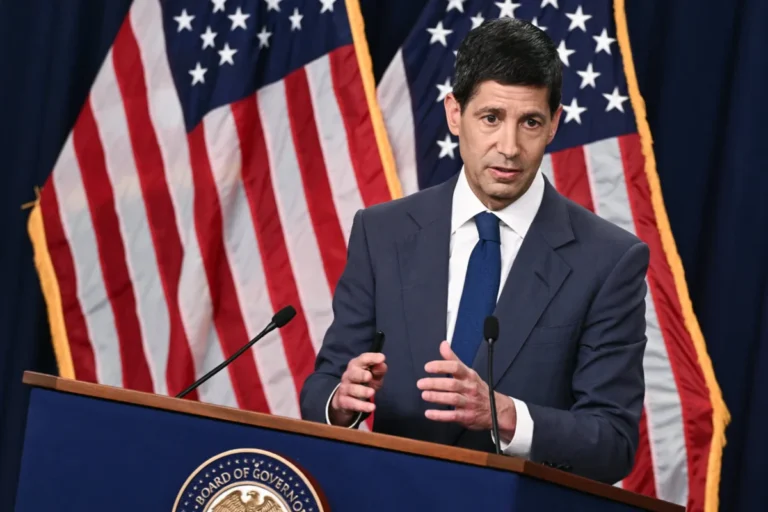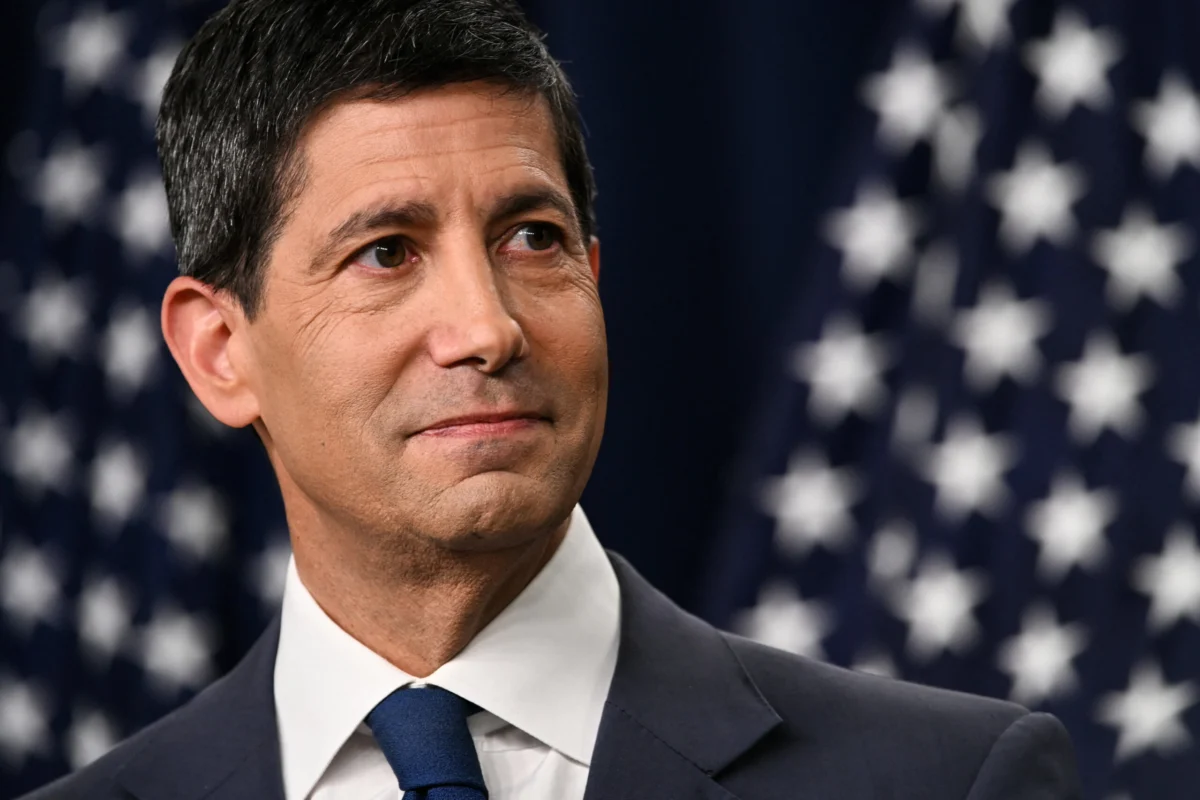
The era of the "hyper-transparent" central bank is facing a systematic dismantling. Since assuming the chairmanship of the Federal Reserve in May 2026, Kevin Warsh has moved with startling speed to roll back decades of institutional culture, aiming to reduce the central bank’s omnipresence in financial markets. His latest gambit—a proposal to potentially reduce the frequency of the Federal Open Market Committee (FOMC) meetings—represents the most significant structural challenge to the Fed’s operational status quo in forty years. By signaling that the traditional schedule of eight meetings per year may no longer be sacrosanct, Warsh is forcing a fundamental reckoning for investors who have grown accustomed to a Federal Reserve that acts as both a conductor and a safety net for global capital.
This shift marks a clean break from the legacies of Ben Bernanke and Jerome Powell, who championed "forward guidance" as a tool to suppress volatility and manage expectations. Under Warsh, the Fed is retreating into a posture of strategic ambiguity. The chairman has already curtailed the practice of signaling future interest rate moves, truncated the post-meeting policy statements to their bare essentials, and adopted a cryptic, almost evasive tone during his first two press conferences. The message to Wall Street is blunt: the Federal Reserve will no longer hold the market’s hand.
The proposal to reduce the number of FOMC meetings from the current eight is currently being discussed in what insiders describe as "hypothetical" terms, yet the mere suggestion has sent ripples through the fixed-income and equity markets. Historically, the Fed’s meeting schedule has been fluid. Until the early 1980s, the committee met nearly every month. It was under the chairmanship of Paul Volcker that the Fed settled on the eight-meeting rhythm, a cadence that provided a predictable heartbeat for global finance. While the Fed retains the authority to call emergency sessions at any time, doing so carries a heavy psychological burden; an unscheduled meeting is often interpreted by the public as a "break glass in case of emergency" signal, potentially sparking the very panic the central bank seeks to avoid.
Within the Federal Reserve system, the appetite for this "less is more" approach is surprisingly diverse. Minneapolis Fed President Neel Kashkari recently noted that there is no "magic number" for policy meetings, expressing an openness to re-evaluating the calendar. Philadelphia Fed President Anna Paulson echoed this sentiment, suggesting that a healthy debate over the frequency of meetings is overdue. However, the move is not without its detractors. Bill English, a former head of monetary affairs at the Fed and current Yale professor, has expressed concern that while six meetings a year might be functionally adequate, the broader trend toward silence is a retreat from accountability. English argues that clear communication is not just a courtesy to the market, but a vital component of making monetary policy effective. Without it, the public’s ability to anticipate and align with the Fed’s goals is severely compromised.
The market’s reaction to the "Warsh Doctrine" has been a study in cautious optimism and simmering anxiety. Since Warsh took the gavel on May 22, the Dow Jones Industrial Average has climbed approximately 7%, adding 3,500 points as investors price in a more laissez-faire regulatory and monetary environment. Bond yields have remained relatively stable, with the 2-year and 10-year Treasury yields each rising by a modest 8 basis points. Yet, beneath this calm surface, seasoned analysts warn of a "regime of continuous market repricing." Dario Perkins of TS Lombard suggests that Warsh’s ultimate goal may be to reintroduce uncertainty as a discipline for traders. If investors cannot predict the outcome of a meeting, they are forced to engage in more robust risk management rather than simply "trading the Fed."
One of the most contentious aspects of Warsh’s tenure has been his treatment of the "dot plot"—the Summary of Economic Projections that maps out individual officials’ expectations for interest rates. Warsh has been a vocal critic of the grid, viewing it as a source of false precision that confuses the public more than it clarifies policy. In a move that stunned Fed watchers in June, Warsh declined to submit his own "dot" to the forecast, effectively rendering the consensus model incomplete. By withholding his personal outlook and establishing five internal task forces to rethink the Fed’s data utilization and communication strategy, Warsh is effectively blinding the market’s most relied-upon forecasting tools.
The economic ramifications of this information vacuum are particularly acute for the U.S. Treasury. The federal government is currently grappling with a massive $31.1 trillion in outstanding debt held by the public. With interest outlays estimated to hit $1.3 trillion this year—a figure that now rivals Social Security as the largest single government expenditure—the Treasury cannot afford a sustained spike in borrowing costs. Komal Sri-Kumar of Sri-Kumar Global Strategies warns that Warsh’s approach could trigger a "bear steepener" in the yield curve. In this scenario, long-term yields rise faster than short-term rates as investors demand a higher "uncertainty premium" to hold government debt. If bondholders feel the Fed is no longer providing a clear roadmap for inflation management, they may exit the market, driving up the cost of financing the national deficit and complicating the work of Treasury Secretary Scott Bessent.
Bessent himself has characterized the Warsh approach as a "detox" for the financial system. The theory is that by removing the addictive influence of constant Fed signaling, the market will return to a state where prices are determined by fundamental economic data rather than the nuances of "Fedspeak." Warsh recently told market participants that they should learn to "play the ball, not the referee," an athletic metaphor for a policy environment where economic indicators like CPI, PCE, and payroll data carry more weight than the speeches of regional Fed governors.
When compared to its international peers, a leaner FOMC schedule would put the U.S. central bank in closer alignment with other major institutions. The European Central Bank (ECB) and the Bank of England (BoE) both operate on eight-meeting cycles for their primary interest rate decisions. However, those institutions often maintain a more consistent and predictable communication style than what Warsh is currently proposing. If the Fed moves to six meetings per year, it would become one of the least frequent meeting bodies among the G7 central banks, potentially leading to periods of significant lag between economic shifts and policy responses.
The true test of the Warsh era will likely arrive in late August during the Fed’s annual symposium in Jackson Hole, Wyoming. Historically, this gathering has served as the stage for chairmen to announce major policy shifts, such as Ben Bernanke’s signaling of quantitative easing or Jerome Powell’s transition to average inflation targeting. Warsh is expected to use this platform to further articulate his vision of a "shrunken" Federal Reserve footprint.
For the global economy, the stakes are immense. If Warsh succeeds in decoupling market movements from Fed rhetoric without triggering a liquidity crisis or a debt-service catastrophe, he will have successfully executed the most significant pivot in central banking since the Volcker era. However, if the "detox" proves too jarring, the resulting volatility could destabilize a global financial system that has, for nearly twenty years, been built on the foundation of central bank transparency. For now, the market is giving Warsh the benefit of the doubt, but as the frequency of meetings drops and the silence from the William McChesney Martin Jr. Building grows louder, the "grace period" for this new regime will eventually face the cold reality of the next economic downturn. Without a clear signal from the referee, investors will be left to navigate the storm entirely on their own.