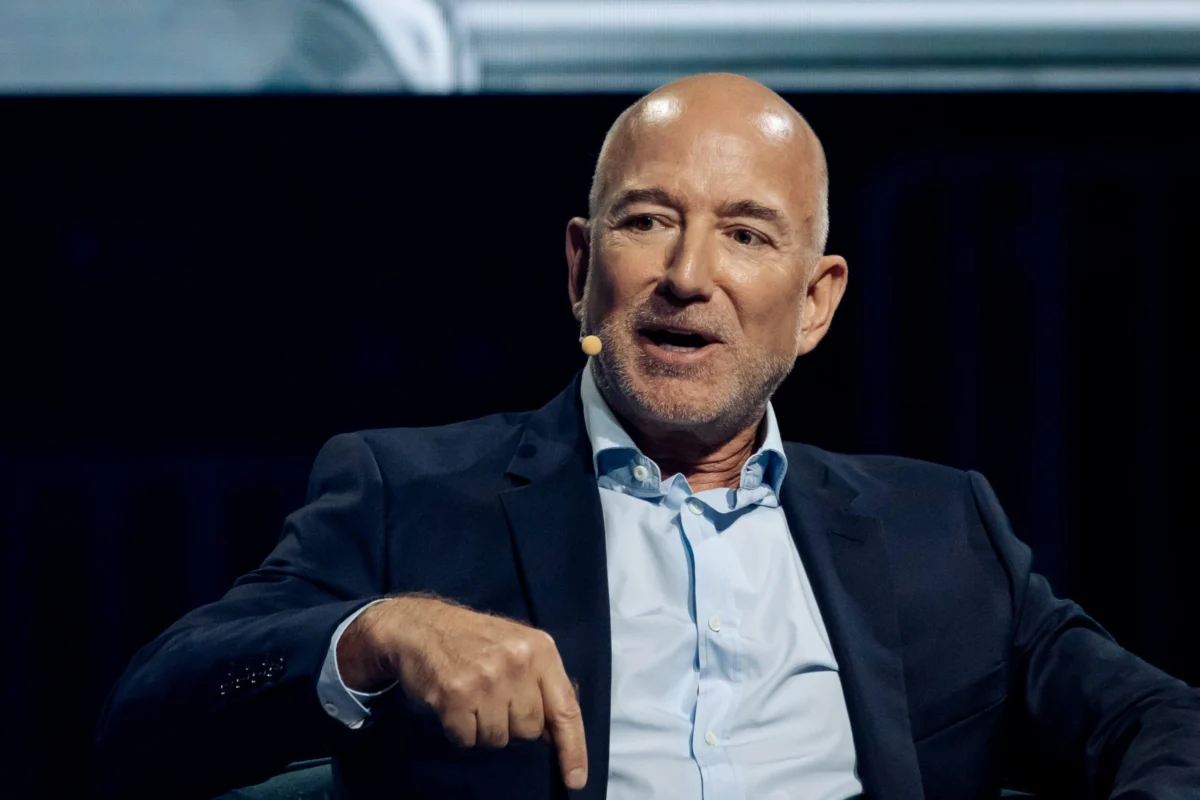
In a move that underscores the massive valuation rebound of the technology sector, Jeff Bezos, the founder and executive chair of Amazon.com Inc., has filed to sell approximately 15 million shares of the company. The transaction, valued at roughly $4.1 billion based on recent market prices, comes at a pivotal moment for the e-commerce and cloud computing giant. The filing, submitted to the Securities and Exchange Commission (SEC), follows a period of exceptional performance for the Seattle-based firm, which recently saw its market capitalization eclipse the historic $3 trillion mark.
The sale was orchestrated under a Rule 10b5-1 trading plan, a regulatory mechanism that allows corporate insiders to sell a predetermined number of shares at a predetermined time to avoid accusations of insider trading. According to the disclosure, Bezos adopted this specific plan on November 14, 2025, with the actual sales being executed through Morgan Stanley. While the news of the divestment initially triggered a 2% decline in Amazon’s share price during early Tuesday trading, market analysts largely view the move as a routine liquidity event for one of the world’s wealthiest individuals rather than a signal of waning confidence in the company’s future.
The timing of the filing is particularly noteworthy, coinciding with Amazon’s stock reaching an all-time high. This surge was fueled by a blockbuster second-quarter earnings report that far exceeded Wall Street’s expectations. The primary catalyst for this optimism remains Amazon Web Services (AWS), the company’s cloud infrastructure division. As businesses globally race to integrate generative artificial intelligence into their operations, AWS has seen a reacceleration in growth, quieting earlier concerns that it might lose ground to competitors like Microsoft Azure or Google Cloud.
Amazon’s fiscal performance has been nothing short of stellar in the current calendar year. The stock has rallied by approximately 23% year-to-date, significantly outperforming the broader market. For comparison, the S&P 500 has posted gains of roughly 11% in the same period. This "tech-led" rally has been driven by a handful of mega-cap companies, often referred to as the "Magnificent Seven," which have benefited from the cooling of inflation and the massive capital expenditures being poured into AI hardware and software.
The shares being liquidated by Bezos are identified as "founder stock," dating back to the company’s incorporation and initial public offering in the mid-1990s. When Bezos founded Amazon in 1994 as an online bookstore operating out of a garage, the concept of a $3 trillion enterprise was virtually inconceivable. Today, the company stands as a pillar of the global economy, dominating not only retail and cloud computing but also digital advertising, logistics, and streaming media.
This latest divestment is part of a broader pattern of selling by Bezos, who has stepped back from the day-to-day operations of the company since resigning as CEO in 2021. While he remains the company’s largest individual shareholder, his financial focus has increasingly shifted toward other ventures. Chief among these is Blue Origin, his private space exploration company. Bezos has previously stated that he liquidates approximately $1 billion in Amazon stock annually to fund the ambitious aerospace firm, which seeks to lower the cost of access to space and move heavy industry off-Earth.
In addition to his aerospace ambitions, Bezos has become an increasingly active figure in global philanthropy. The SEC filing noted that in May, he donated 220,200 shares to various non-profit organizations. These shares, worth tens of millions of dollars, were likely liquidated by the recipients over the subsequent months. Through the Bezos Earth Fund, a $10 billion commitment to fight climate change, and the Bezos Day One Fund, which focuses on homelessness and preschool education, the founder has significantly increased his charitable footprint in recent years.

From an economic perspective, the sale of $4 billion in stock provides a window into the liquidity needs of the ultra-high-net-worth class. Even for a billionaire, the vast majority of wealth is often "paper wealth" tied up in company equity. Periodic sell-offs are necessary to fund lifestyle expenses, tax obligations, and new investment opportunities. For Amazon, the market’s ability to absorb a $4 billion sale with only a minor price fluctuation is a testament to the stock’s deep liquidity and the high demand from institutional investors.
The broader implications for the tech sector are also significant. When founders of major tech firms sell shares at record highs, it often prompts a discussion about "market tops." However, historical data suggests that insider selling in the tech space is rarely a reliable indicator of an impending crash. For instance, leaders at Meta, Alphabet, and Nvidia have all engaged in systematic share sales over the past year as their respective companies reached new valuation milestones. These sales are typically viewed as a form of portfolio diversification rather than a commentary on the company’s intrinsic value.
Amazon’s current valuation of $3 trillion places it in an elite tier of global corporations, alongside Apple and Microsoft. This valuation is supported by a fundamental shift in the company’s profit margins. While Amazon was famously "unprofitable" for much of its early history, reinvesting every dollar into growth, it has now matured into a cash-generating powerhouse. The integration of high-margin businesses—specifically AWS and a rapidly growing advertising arm—has transformed the company’s balance sheet.
The advertising business, in particular, has become a silent giant within the Amazon ecosystem. By leveraging its vast trove of first-party consumer data, Amazon has built the third-largest digital advertising platform in the world, trailing only Google and Meta. This segment provides a high-margin revenue stream that offsets the lower margins associated with its capital-intensive retail and logistics operations.
Looking ahead, the primary challenge for Amazon—and the reason investors are watching the company so closely—is the execution of its AI strategy. The company is investing billions into custom silicon chips, such as Trainium and Inferentia, designed to provide a cost-effective alternative to Nvidia’s dominant GPUs. If Amazon can prove that its internal hardware and Bedrock AI platform can offer superior value to developers, the "AI tailwinds" currently lifting the stock could persist for years.
The minor 2% dip in share price following the announcement of Bezos’s sale is likely a "digestive" period for the market. Traders often react to large block sales by adjusting their positions, but the long-term trajectory of the stock remains tied to its quarterly earnings and growth guidance. With Amazon’s capital expenditures projected to increase as it builds out more data centers to meet AI demand, the company is signaling that it is still in an aggressive expansion phase.
In summary, Jeff Bezos’s decision to liquidate $4.1 billion in Amazon equity is a strategic move that reflects both the company’s record-breaking success and the founder’s personal transition into a multi-industry mogul and philanthropist. While the headline figure is staggering, it represents only a fraction of Bezos’s total holdings. For the global investment community, the focus remains firmly on whether Amazon can maintain its dominance in the cloud and retail sectors while navigating the complex regulatory and competitive landscape of the artificial intelligence era. As the company continues to hover near its $3 trillion valuation, the market’s appetite for its shares remains robust, suggesting that the "Bezos era" of growth is being successfully succeeded by a new chapter of diversified technological leadership.