The strategic imperative for Europe to bolster its financial sovereignty has intensified, driven by a complex interplay of geopolitical shifts, domestic vulnerabilities, and the lingering ambition for a truly unified economic bloc. This quest is not merely an academic exercise in economic theory; it is a tangible necessity underscored by recent events, such as the thwarted attempt by Italian bank UniCredit to acquire a significant stake in Germany’s Commerzbank in 2024. While the German government’s staunch opposition, citing Commerzbank’s importance to its industrial base, ultimately led to the rejection of the offer, the episode served as a potent reminder of a persistent tension within the European Union: member states profess support for deeper financial integration while simultaneously guarding national control. This inherent contradiction is being tested as calls for greater EU financial autonomy gain momentum, fueled by external pressures and the recognition that the bloc’s current financial architecture falls short of global competitiveness.
The pursuit of a genuinely European and globally competitive financial services sector has been a long-standing objective since the inception of the EU single market in the 1990s. However, a confluence of recent developments has injected a new urgency into these calls. The departure of the United Kingdom from the European Union, commonly known as Brexit, deprived the bloc of London, its preeminent global financial center. This loss has left the EU reliant on a constellation of disparate financial hubs—including Frankfurt, Dublin, Paris, Milan, and Amsterdam—none of which possess the scale or global reach of New York or Hong Kong. More profoundly, Russia’s invasion of Ukraine and the subsequent imposition of stringent financial sanctions, including the exclusion of Russian banks from the SWIFT messaging system and the freezing of assets, starkly highlighted the EU’s deep integration with and reliance on the U.S. financial architecture.
Perhaps the most significant catalyst for this reevaluation of financial strategy has been the resurgence of nationalist economic policies in the United States, particularly under the Trump administration. Renewed protectionist measures, such as increased tariffs on European goods, have underscored the need for Europe to develop greater self-reliance. Public pronouncements from U.S. officials, coupled with perceived shifts in foreign policy—such as renewed pressure on Denmark regarding Greenland—have sown deep unease among European policymakers. The perceived fraying of the transatlantic alliance has directly translated into concerns about the reliability of U.S. financial institutions, especially the Federal Reserve, in its traditional role as the global lender of last resort, a role it fulfilled during the 2008 Great Recession. This erosion of trust necessitates a re-examination of Europe’s capacity to weather financial storms independently.
The urgency for enhanced European financial autonomy has been amplified by influential reports. A pivotal study spearheaded by former European Central Bank (ECB) President Mario Draghi argues that the EU risks falling behind its global competitors if it does not accelerate its financial integration. Draghi frames this challenge as a strategic imperative in an era marked by escalating geopolitical fragmentation. Complementing this perspective, a separate report commissioned by the EU and led by Enrico Letta emphasizes the need to complete the single market to unlock economies of scale. Letta’s recommendations focus on dismantling barriers to cross-border investment, harmonizing regulatory frameworks, and bolstering common institutions to effectively mobilize private capital. Both reports identify critical structural weaknesses within the EU’s financial system: fragmented capital markets, insufficient risk-sharing mechanisms, and a lack of depth in financial services. They issue a stark warning that without substantial reform, Europe will struggle to finance its ambitious priorities, including the green transition, digital innovation, and, critically in the current geopolitical climate, defense capabilities. While these reports have generated considerable debate among political leaders, the pace of concrete action has been notably slow, with Holger Schmieding, chief economist at Berenberg Bank, observing that "so far, few of the steps Draghi has recommended have been taken." Nevertheless, the collective impact of these analyses has been to crystallize a consensus around the indispensable role of financial integration in achieving Europe’s strategic autonomy.
At the heart of this strategic debate lies the consolidation of EU capital markets, a project that has been underway for over a decade. The Draghi report identifies the underutilization of Europe’s accumulated capital as a significant economic weakness. Compared to the United States, Europe has historically struggled to effectively channel savings into productive investments for businesses, particularly in the technology sector. It is estimated that approximately €14 trillion in retail capital remains largely dormant in European bank deposits. This presents a significant missed opportunity for economic growth and innovation.

Compounding this issue is the growing dominance of U.S. firms in Europe’s investment landscape. American investment banks already command a substantial share of capital markets activity, accounting for roughly 40% of investment banking fees and an even larger proportion in critical areas such as mergers and acquisitions (M&A) and equity underwriting. The pervasive presence of U.S. asset managers—BlackRock, Vanguard, and State Street—continues to expand in Europe, often with a strategic bias towards domestic U.S. investments. The European asset management sector, in contrast, remains underdeveloped, partly due to national governments’ reluctance to fully embrace cross-border activity, which can be perceived as a threat to domestic savings and demand for public debt.
In an effort to invigorate Europe’s capital markets, the European Commission has revitalized its Capital Markets Union initiative, now framed under the broader umbrella of a "Savings and Investment Union." The proposed measures aim to incentivize retail investment in European assets through tax breaks, adjust capital requirements for banks and insurers to encourage lending, and reform private pension and savings frameworks to channel household savings into capital markets. A key objective is the establishment of a unified regulatory regime for equities, bonds, and other investment vehicles, intended to bolster investor confidence and curtail regulatory arbitrage. By harmonizing regulations and dismantling cross-border investment barriers, the initiative seeks to diversify funding sources for businesses beyond the traditional banking sector.
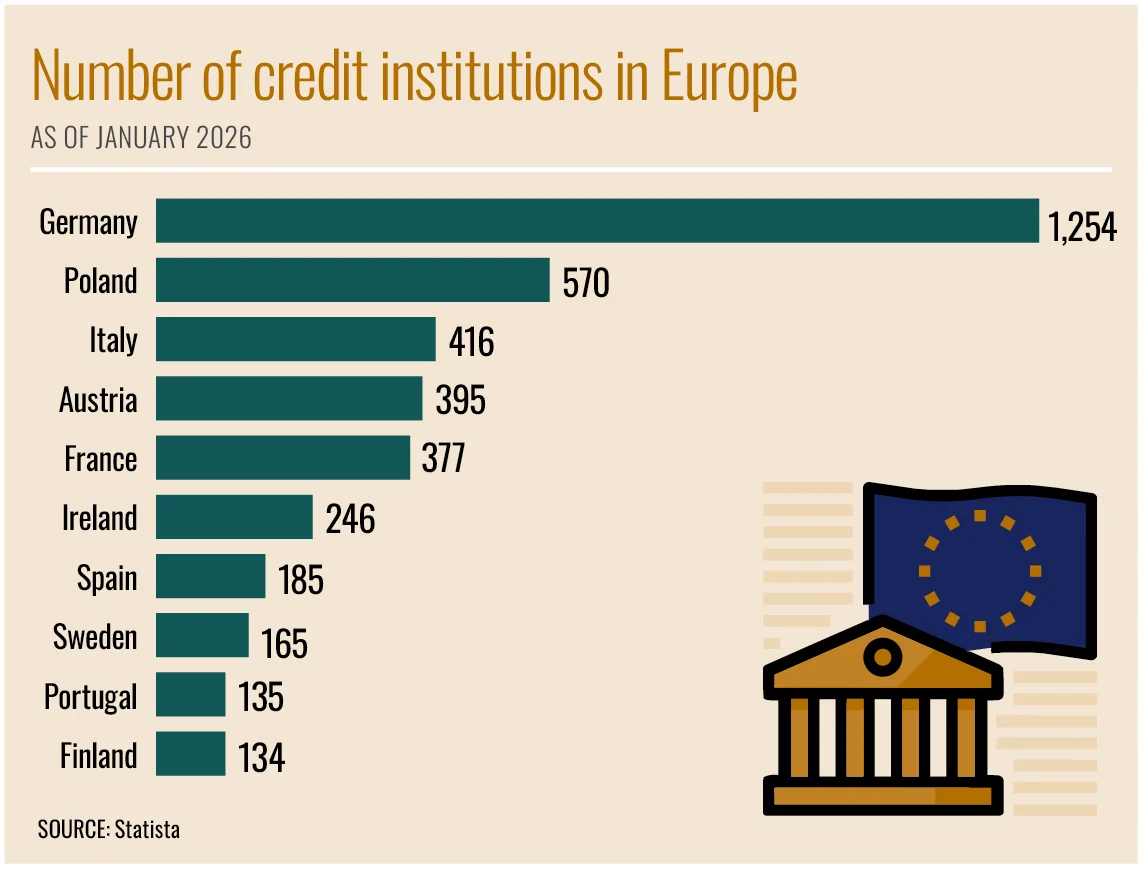
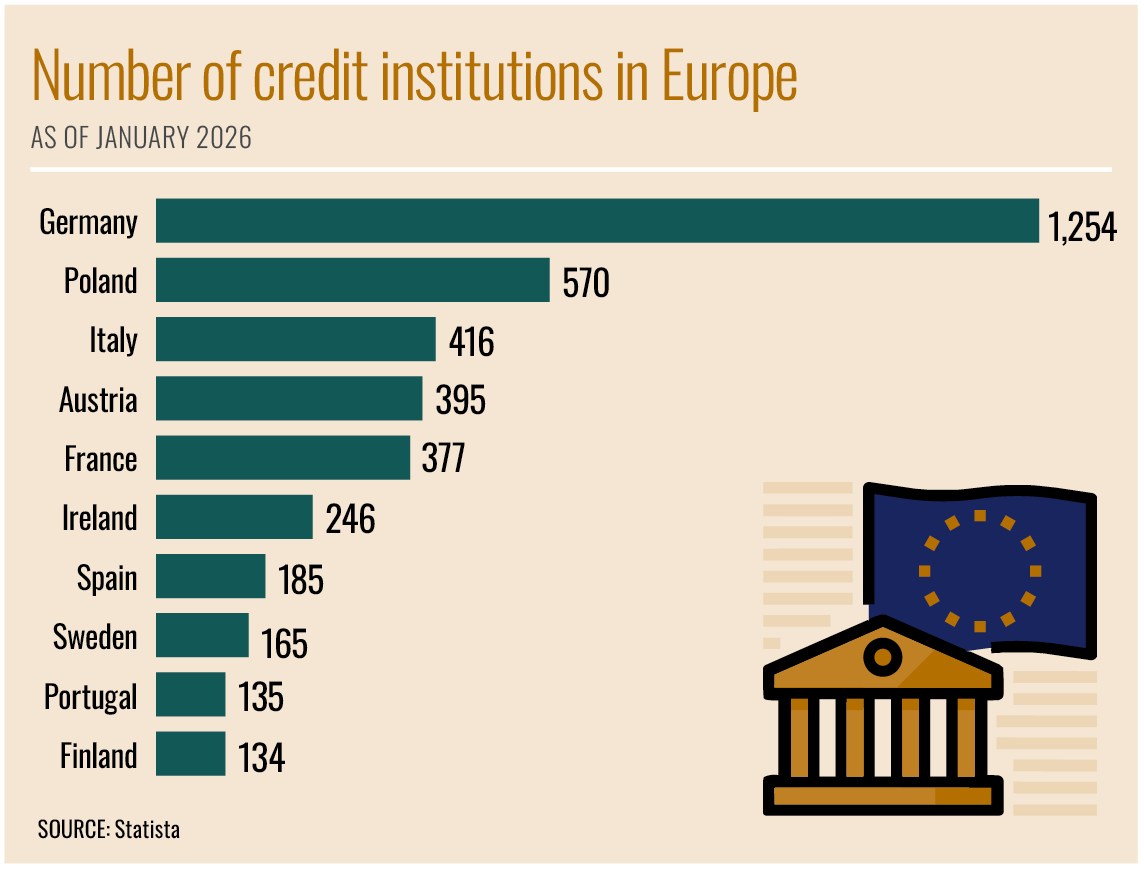
These reforms are also designed to indirectly address a long-standing challenge in the European economy: overbanking. The proliferation of banks across the continent has led to a fragmented market, limiting economies of scale and stifling competition. This environment has historically encouraged businesses to rely more heavily on bank lending than on capital markets for financing, thereby hindering the development of deeper and more robust capital markets. Skeptics, however, caution that even with successful implementation, these proposals may not fully resolve the underlying structural issues. Carsten Brzeski, global head of macro research at ING Research, notes that "the proposals so far will further harmonise capital markets but not complete it the union." He also highlights the persistent challenge of "tax issues and how to deal with different taxation of capital gains and asset wealth."
Despite these reservations, there is a palpable sense of optimism fueled by a gradual shift in the political mood. Major EU economies have signaled support for the Commission’s proposal to expand the supervisory role of the European Securities and Markets Authority (ESMA). This expansion would grant ESMA direct oversight of significant cross-border market infrastructures, including central counterparties, securities depositories, select trading venues, and crypto-asset service providers. Currently, supervisory authority remains largely at the national level, even for institutions operating across multiple jurisdictions, as member states are hesitant to cede oversight to EU-level bodies. Economist Ignazio Angeloni, a senior policy fellow at the Leibniz Institute for Financial Research SAFE and a former member of the ECB’s supervisory board, suggests that a hybrid model, akin to the Single Supervisory Mechanism (SSM) for banking, would be the most viable approach. He posits that "the structure of the Single Supervisory Mechanism (SSM), where the supervisory board, effectively its decision-making arm, includes national banking supervisors as voting members, has proved viable and can be extended to market supervision."
The reform of Europe’s financial architecture necessitates a revival of the politically sensitive project of a fully fledged banking union. However, dismantling the national barriers that fragment European banking has proven to be a formidable challenge. Launched in 2012 during the Eurozone debt crisis, the banking union remains incomplete. The banking sector across the Eurozone continues to be characterized by a loosely connected network of national markets, with deposit and loan markets largely remaining under national purview. The crisis itself triggered a contraction in cross-border banking activity, with EU banks’ cross-border exposures and interbank lending declining by 25% and 40% respectively. Nevertheless, Angeloni argues that the banking union has achieved its primary objective: enhancing bank safety and preserving financial stability. He observes that "no significant banking crises have occurred since then, while there have been some elsewhere in the world, bank balance sheets have been cleaned and bank profitability restored."
The critical missing element, according to most analysts, is a common deposit insurance scheme that would serve as a unified safety net for depositors. Without such a scheme, national governments remain inextricably linked to their domestic banking systems. The European Commission is hopeful that reviving plans for a European Deposit Insurance Scheme (EDIS) could unlock deeper integration by fostering the growth of cross-border banking groups and facilitating easier operation for lenders across member states. Brzeski deems the plan "critical in an ideal world," but acknowledges that "in a more realistic world, a second-best capital markets union would not necessarily require a full EDIS but simply enough trust in the stability and solidity of harmonised national schemes." The political obstacles that have stalled the EDIS project persist. Countries like Germany and the Netherlands have voiced concerns about risk-sharing, wary of underwriting banking systems in nations with historically higher rates of non-performing loans. Conversely, Southern member states argue that without shared protections, integration will remain incomplete.

Encouraging cross-border mergers and acquisitions is another key objective. Brussels contends that greater consolidation within the banking sector could bolster profitability in an industry facing significant digital disruption and shrinking margins. The Draghi report advocates for an even more ambitious approach, proposing that cross-border banking activity be treated as equivalent to national activity through a "country-blind" supervisory regime. However, smaller countries harbor fears that consolidation could lead to the demise of their national banking sectors, leaving their financial systems dominated by larger economies. Many governments continue to provide direct or indirect guarantees to their domestic banks, seeking to maintain so-called "national champions" capable of international competition. Regional banks also continue to play a significant role in several countries, benefiting from less stringent supervision by national regulators compared to larger banks under ECB oversight. Yet, Angeloni warns that fostering a few large entities capable of competing with U.S. and Asian banks is essential for the EU to achieve financial sovereignty. He notes that "at present, even the largest EU banks have a largely national footprint. Because of lack of scale, they cannot compete with non-EU banking giants even in EU markets, particularly in investment banking and related areas, such as M&A and IPOs."
On the monetary front, a cornerstone of the EU’s strategy is the ECB’s initiative to develop a digital euro, a central bank digital currency (CBDC). A pilot phase is anticipated to launch in the coming year, with full issuance projected before the end of the decade. While awaiting political approval, the digital euro project has become central to Europe’s ambition to reduce its external dependencies, particularly in relation to an increasingly assertive United States and its dollar. Matteo Bursi, a researcher specializing in the digital economy at the Italian think tank Istituto Affari Internazionali, observes that "the aggressive stance adopted by the US over the past year toward the EU has certainly contributed to unblocking the legislative process related to the digital euro."
The digital euro aims to provide European citizens and businesses with a state-backed electronic means of payment, complementing physical cash. For policymakers, it addresses a critical strategic concern: Europe’s substantial reliance on foreign payment providers, including U.S. card networks and rapidly expanding private platforms. The introduction of a digital euro would offer Europeans a secure, public payment option in an era where private stablecoins and big tech payment systems are gaining prominence. Rebecca Christie, a capital markets expert at the Brussels-based think tank Bruegel, emphasizes that such a development would preserve the role of central bank money in the digital age, stating, "It is important that the ECB be the reference point for all things euro, not some kind of privately developed product that becomes the default because it found an unoccupied niche in the markets."
Despite the potential benefits, the digital euro initiative faces scrutiny. European banks have expressed concerns about potential outflows of deposits, while privacy advocates question the safeguards for user data. The ECB has attempted to mitigate these concerns by proposing holding limits and stressing the confidentiality of transactions. Bursi, however, remains skeptical about the initiative’s potential impact, arguing that "the significant limitations currently being imposed on the digital euro, such as the absence of interest on deposits and the introduction of holding limits, substantially weaken the instrument, preventing it from serving monetary policy purposes and constraining its potential as an alternative to private bank deposits." He suggests that low uptake could validate opponents who view the project as a misallocation of public resources. Ultimately, the digital euro is as much a political undertaking as it is technological and financial. Bursi cautions against overly optimistic expectations regarding its impact on the euro’s international standing, noting that "It would be misleading to expect a substantial impact, given that the use of the euro as a global reserve currency remains constrained by limited financial integration among European countries, in particular by the absence of a safe asset comparable to U.S. Treasurys."
This lack of a comparable safe asset is one of the primary reasons why calls for a deeper, more liquid EU-issued bond market are gaining traction in Brussels. Proponents argue that a larger pool of jointly issued debt, serving as a European safe asset, could attract long-term global capital and reduce borrowing costs across the bloc. In stark contrast to the colossal $40 trillion U.S. Treasury market, Europe’s sovereign debt landscape remains fragmented, with national bond markets dominating. This fragmentation limits scale and diminishes the euro’s appeal as a global reserve currency.
Momentum for such a development has been building since the pandemic-era launch of joint borrowing through a recovery fund. This initiative demonstrated both investor appetite and the bloc’s capacity to issue substantial volumes of common debt, offering a potential blueprint for a more permanent feature of the EU’s financial architecture. However, political resistance has historically been a significant impediment. Frugal northern countries, deeply committed to fiscal prudence, have expressed reservations about mutualized debt, fearing it could effectively subsidize more indebted member states. Schmieding of Berenberg Bank asserts that "Jointly issued debt would enhance the international role of the euro and strengthen the financial sovereignty of the EU. But in the multi-national EU, joint bonds must be subject to strict conditions. They should only be issued to finance genuinely new common tasks, for instance as help for Ukraine or for common defence projects." He further stipulates, "They should not finance pre-existing EU tasks or national budgets. Otherwise, they would dilute the fiscal discipline that is required to keep borrowing costs low enough to be sustainable."
Another significant concern revolves around the EU’s limited fiscal capacity to underwrite debt issuance. Nicolas Véron, a senior fellow at the Peterson Institute for International Economics and an expert on financial reform, posits that "You need to embed Eurobonds in a political framework, which is essentially a fiscal union where you also have tax revenue at the European level to back those bonds." He adds, "That requires treaty change, which is very difficult under the current circumstances." Nevertheless, escalating geopolitical tensions, the imperative to finance large-scale investments in defense and energy, and a growing recognition of Europe’s financing gaps are reshaping the debate. Fiscal conditions in southern Europe have also improved, with countries like Spain, Italy, Portugal, and Greece witnessing stable or declining debt levels and credit rating upgrades. These positive trends are gradually softening opposition and creating an opening for incremental steps toward greater common debt issuance.
Europe’s ambition for financial sovereignty is significantly hampered by a critical vulnerability: the backbone of its financial system relies heavily on non-European providers. European banks depend on U.S. cloud giants such as Amazon Web Services, Microsoft Azure, and Google Cloud for data storage and critical operations. This reliance creates concentration risk and exposes the sector to potential geopolitical or regulatory disruptions. Furthermore, Europe’s fintech sector has struggled to match the dynamism of its U.S. counterparts. Investment levels remain comparatively lower, and the market is fragmented along national lines, limiting the ability of European fintechs to scale into global players. Many European fintech startups, including Revolut, Europe’s largest, have indicated a preference for listing in the U.S. to access deeper investor pools. Payments represent another crucial area of dependency. A significant portion of Europe’s card-based payment systems is routed through U.S. giants like Visa and Mastercard, while Chinese players such as Alipay and WeChat Pay are also making inroads into the European market. In response, EU policymakers and industry groups are exploring initiatives to develop alternative payment solutions. However, addressing these challenges will necessitate sustained investment, enhanced regulatory coordination, and unwavering political will. Bursi suggests that "The digital euro, if designed appropriately, would lead to the creation of a payment system that is independent from those currently in use, primarily U.S.-based, and could therefore help reduce Europe’s reliance on foreign providers." Yet, without a more robust domestic fintech ecosystem, Europe risks continued dependence on foreign technology, undermining its overarching goal of achieving financial sovereignty in the digital age. Bursi warns that "The likelihood that the US could exploit Europe’s dependence on payment systems has remained limited, yet with Donald Trump’s return to the White House, those risks have increased." He adds that "Although some initiatives have begun to take shape in Europe, the EU still lacks major private solutions capable of ensuring strategic autonomy in areas such as proximity payments."
Optimists in Brussels envision a future where these disparate projects converge to create a virtuous cycle, revitalizing Europe’s financial sector. A strengthened banking union would provide a more stable foundation for the Savings and Investment Union, enabling cross-border banks to more effectively channel savings into capital markets. Conversely, robust capital markets would reduce the problem of overbanking and indirectly facilitate banking consolidation. The issuance of Eurobonds would supply the crucial common safe asset needed to deepen these markets, while the digital euro would bolster European payment infrastructure and diminish reliance on foreign providers. Véron explains that "The banking union is a project of rationalising European banking into a single system instead of 27 national ones. That should in principle help to address the problem of overbanking, because this has partly to do with national fragmentation." He further notes, "Conversely, if you make capital markets more attractive and trustworthy, you could have rebalancing from banking intermediation to capital markets activity, which is needed to enhance the European economy’s growth potential."
Despite the growing momentum for deeper integration, Europe’s path to financial sovereignty remains obstructed by entrenched national interests. Lobbying efforts by regulators, governments, and banks—all apprehensive about losing influence in a more centralized system—continue to pose significant hurdles. Control over finance is a sensitive matter, given the pivotal role financial institutions play in funding domestic industries. While fragmentation hinders cross-border consolidation, impedes the development of deep capital markets, and complicates crisis management, national stakeholders remain reluctant to cede control to Brussels. Angeloni cautions that even if the Commission’s plans are robust, their effectiveness will hinge on their implementation, which could be diluted or delayed to the point of becoming ineffective. He concludes that "This will largely depend on political cohesion among the member states. Lack of cohesion has repeatedly hampered EU reform in the past."
Historically, crises have served as catalysts for European integration, from the Eurozone debt turmoil to the COVID-19 pandemic. External pressures, including heightened geopolitical competition and the necessity of financing large-scale investments, may once again compel member states toward compromise. There is a growing recognition that the bloc is falling behind its global counterparts. Crucially, the Commission’s proposals do not necessitate unanimity but rather a qualified majority to advance. Ultimately, Brzeski argues, integration is a means to an end: closing the gap with U.S. markets. However, he stresses that this will require difficult compromises. He concludes, "If Europe really wants to become fully European, national preferences and partly national sovereignty would always have to take a step back."