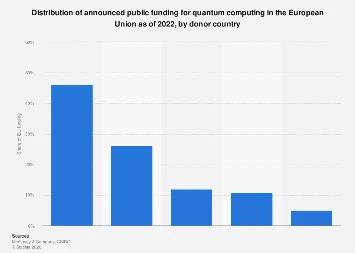
The European Union is strategically channeling substantial public investment into the burgeoning field of quantum computing, signaling a concerted effort to establish a leading position in this transformative technological frontier. As of 2022, announced governmental funding allocated to quantum computing initiatives across the bloc reached an estimated figure in the billions of U.S. dollars, underscoring the critical importance attached to this sector’s development. This significant financial commitment reflects a broader global race to harness the unprecedented computational power and problem-solving capabilities that quantum technologies promise to unlock across diverse industries, from medicine and materials science to finance and artificial intelligence.
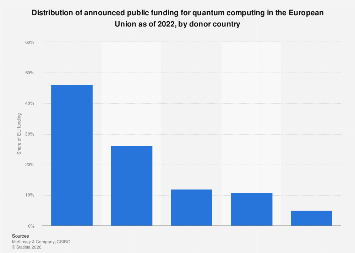
Leading the charge in this continental investment drive is Germany, which has emerged as the principal donor country, accounting for a considerable portion of the total EU funding. This substantial allocation by Germany underscores its commitment to fostering innovation and securing a competitive edge in the quantum landscape. The German government’s proactive stance is part of a comprehensive national strategy aimed at developing a robust quantum ecosystem, encompassing fundamental research, the creation of quantum hardware and software, and the cultivation of a skilled workforce. This approach recognizes that sustained public investment is crucial for de-risking early-stage research and development, which is inherently capital-intensive and carries significant long-term potential rather than immediate commercial returns.
The distribution of public funding within the EU paints a picture of a coordinated, albeit national-led, approach to quantum advancement. While specific figures for individual member states are subject to ongoing reporting and strategic adjustments, the aggregate investment signifies a shared understanding of quantum computing’s strategic imperative. This investment is not merely about funding research; it is a multifaceted strategy designed to stimulate private sector engagement, foster cross-border collaboration among leading research institutions and companies, and establish European sovereignty in a technology with profound geopolitical and economic implications. The aim is to build a resilient and innovative quantum sector that can contribute to solving some of the world’s most pressing challenges and drive future economic growth.
The scale of investment in quantum computing by the EU and its member states is a direct response to the rapidly evolving global quantum landscape. Nations like the United States and China have also been aggressively investing in quantum technologies, creating a competitive environment where strategic funding and focused research are paramount. The EU’s approach, characterized by substantial public backing, aims to create a fertile ground for the development of European quantum champions, fostering an environment where groundbreaking discoveries can be translated into tangible applications and commercial ventures. This involves supporting the entire innovation pipeline, from foundational scientific exploration to the scaling of quantum technologies and their integration into existing industrial processes.
Experts in the field emphasize that such substantial public funding is essential for overcoming the significant technical hurdles inherent in quantum computing. Building and maintaining stable quantum systems requires immense resources, specialized expertise, and a long-term vision that often extends beyond the typical investment horizons of private capital alone. Public investment acts as a catalyst, de-risking these complex endeavors and encouraging the private sector to follow suit, investing in specific applications and commercialization pathways once the foundational technologies mature. The announced funding reflects a recognition that quantum computing is not just another technological advancement but a paradigm shift with the potential to redefine computational capabilities across the board.
The economic impact analysis of this investment is multifaceted. Beyond the direct creation of high-skilled jobs in research, development, and engineering, the successful maturation of quantum computing is expected to spur innovation and productivity gains across numerous sectors. Industries that rely heavily on complex simulations, optimization problems, and data analysis – such as pharmaceuticals for drug discovery, chemical engineering for new material design, financial services for sophisticated risk modeling, and logistics for supply chain optimization – stand to benefit immensely. The ability of quantum computers to tackle problems currently intractable for even the most powerful supercomputers could lead to breakthroughs that revolutionize healthcare, energy, and climate science.
Furthermore, the strategic investment in quantum computing contributes to the EU’s broader goal of digital sovereignty. By fostering a robust domestic quantum industry, the Union aims to reduce its reliance on external technological dependencies and ensure that its citizens and businesses can benefit from the advancements of this powerful technology. This includes developing secure quantum communication networks and cryptographic solutions to protect sensitive data in an era where classical encryption methods may become vulnerable to quantum attacks. The distributed nature of the funding, with national governments taking the lead, also allows for tailored approaches that align with specific regional strengths and priorities, while contributing to a cohesive European quantum strategy.
The long-term vision for quantum computing within the EU extends beyond mere technological development. It encompasses the establishment of a comprehensive quantum ecosystem that includes specialized educational programs to train the next generation of quantum scientists and engineers, the creation of quantum computing centers accessible to researchers and businesses, and the development of ethical and regulatory frameworks to guide the responsible deployment of this powerful technology. The significant public funding announced is a critical first step in this ambitious journey, laying the groundwork for Europe to become a global leader in the quantum revolution and to leverage its transformative potential for societal and economic benefit. The sustained commitment to this field signals a clear intention to not just participate but to shape the future of computing.