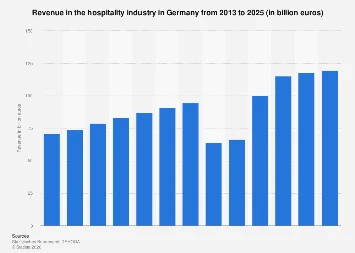
The German hospitality industry has solidified its position as a cornerstone of the nation’s economic landscape, achieving a remarkable revenue milestone in 2024, surpassing a substantial threshold of [Redacted] billion euros. This unprecedented financial performance underscores the sector’s resilience and its vital contribution to the German economy. Delving deeper into the revenue distribution reveals a clear hierarchy, with food-focused restaurants emerging as the dominant force, accounting for approximately half of the total industry earnings. This segment’s consistent popularity, driven by diverse culinary offerings and a robust dining culture, continues to fuel its growth. Following closely behind are hotels, a critical component of Germany’s tourism and business travel infrastructure, which contribute a significant portion of the overall revenue. In contrast, other accommodation providers, encompassing a spectrum of offerings from holiday centers and youth hostels to campsites, represent the smallest but still integral segment of the hospitality revenue pie. These diverse lodging options cater to a broader range of travelers, from budget-conscious backpackers to families seeking unique holiday experiences, collectively contributing to the industry’s multifaceted appeal.
The German hospitality sector is a multifaceted economic powerhouse, meticulously structured to cater to a broad spectrum of consumer needs and preferences. Its operational framework encompasses three primary pillars: the restaurant sector, characterized by both food- and beverage-centric establishments; the accommodation sector, further subdivided into the traditional hotel industry and a diverse array of "other accommodation providers"; and a vital supporting network of caterers and other food service providers. This comprehensive structure positions the industry as one of Germany’s most significant economic sectors, not only in terms of financial output but also by the sheer volume of enterprises it comprises. The sheer number of businesses operating within this domain reflects a dynamic and competitive market, fostering innovation and a continuous drive for excellence. This extensive network of establishments plays a crucial role in supporting local economies, creating vibrant commercial hubs, and enhancing the overall appeal of Germany as a destination for both domestic and international visitors.
Beyond its impressive financial contributions, the hospitality industry stands as a pivotal engine for employment in Germany. With nearly [Redacted] million individuals currently engaged in its various operations, it represents a substantial source of livelihood for a significant portion of the German workforce. This considerable employment base highlights the labor-intensive nature of the sector and its capacity to absorb a diverse range of skills, from culinary arts and guest services to management and operational logistics. Within this expansive workforce, food-focused restaurants once again emerge as the primary employers, mirroring their leading role in revenue generation. These establishments are often the entry point for many individuals into the hospitality profession, offering opportunities for skill development and career progression. The hotel sector, while employing a smaller absolute number of individuals compared to food-focused restaurants, still represents a substantial and vital segment of the industry’s employment landscape. The consistent demand for services within hotels, from front desk operations and housekeeping to food and beverage services and event management, ensures a steady need for skilled professionals. This robust employment picture underscores the industry’s socio-economic importance, providing stable jobs and contributing to the overall economic well-being of communities across Germany.
The German hospitality sector’s impressive performance is not an isolated phenomenon but rather a reflection of broader global trends and strategic national policies. Globally, the tourism and hospitality industry has been on a steady upward trajectory, driven by increasing disposable incomes, a growing middle class in emerging economies, and a heightened desire for travel and new experiences. Countries that prioritize tourism development, invest in infrastructure, and foster a welcoming environment often see significant economic returns. Germany, with its rich cultural heritage, picturesque landscapes, and efficient transportation networks, is well-positioned to capitalize on these global trends. The country’s commitment to sustainability and responsible tourism practices is also becoming an increasingly important factor for travelers, aligning with evolving consumer preferences.
Comparing Germany’s hospitality sector to other major European economies reveals both similarities and distinctions. Nations like Spain, France, and Italy, renowned for their strong tourism appeal, often exhibit higher absolute revenues due to larger visitor numbers and longer average stays. However, Germany’s focus on business travel, its robust domestic market, and its growing reputation for quality and efficiency have allowed it to carve out a significant and steadily expanding niche. The German model often emphasizes a blend of traditional hospitality with modern amenities and a strong emphasis on regional authenticity, which resonates with a diverse range of travelers. Furthermore, government support for the sector, including initiatives aimed at promoting digitalization, workforce training, and sustainable practices, plays a crucial role in maintaining its competitive edge.
Looking ahead, projections for the German hospitality industry suggest a continued positive outlook, albeit with potential headwinds that require careful navigation. The forecasted revenue trajectory to 2025 indicates sustained growth, driven by the enduring appeal of Germany as a travel destination and the sector’s inherent adaptability. However, factors such as evolving consumer expectations, the increasing influence of digital platforms on booking and customer engagement, and the imperative for greater environmental sustainability will shape the industry’s future. Businesses that embrace technological innovation, prioritize personalized guest experiences, and integrate eco-friendly practices are likely to thrive. The ongoing demand for authentic experiences, from culinary adventures to cultural immersion, will also continue to be a key driver of success. The sector’s ability to attract and retain skilled labor amidst a competitive job market will remain a critical challenge, necessitating ongoing investment in training and development programs. Ultimately, the German hospitality industry’s capacity for innovation, its commitment to quality, and its strategic alignment with global tourism trends position it for continued economic prosperity and its vital role as an employer and a cultural ambassador for Germany.