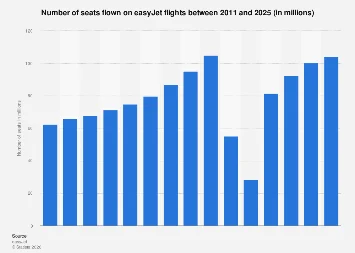
The European low-cost carrier EasyJet is meticulously planning its seating capacity for the 2025 fiscal year, a critical period as the aviation industry continues its recovery and recalibration following the unprecedented disruptions of the COVID-19 pandemic. This strategic foresight into seat availability is not merely an operational exercise but a complex economic calculation, reflecting anticipated passenger demand, fleet management strategies, and the evolving competitive landscape. As airlines globally grapple with fluctuating fuel prices, geopolitical uncertainties, and the persistent need for cost efficiency, EasyJet’s approach to optimizing its seat inventory for 2025 offers a valuable case study in post-pandemic airline strategy.
At the heart of EasyJet’s 2025 capacity planning lies a nuanced assessment of projected passenger traffic. The airline anticipates a robust return of leisure travel, a segment that has shown remarkable resilience. However, the recovery in business travel, while present, remains more cautious and subject to shifts in corporate travel policies. EasyJet’s network, heavily focused on popular holiday destinations and inter-city routes across Europe, positions it to capitalize on this leisure-led resurgence. The company’s projections will likely factor in macroeconomic indicators such as consumer disposable income, inflation rates, and consumer confidence across its key markets, particularly in the UK, Germany, France, and Italy, which represent significant portions of its operational footprint.
Market data from aviation analytics firms suggests a continued upward trend in European air travel demand. For instance, preliminary figures for the latter half of 2023 and early 2024 indicate passenger numbers approaching, and in some instances exceeding, pre-pandemic levels on leisure-heavy routes. EasyJet’s capacity decisions for 2025 will be informed by these trends, aiming to balance the opportunity for revenue generation with the risk of overcapacity and its associated cost implications. The airline’s strategy will likely involve a dynamic approach, with flexibility built into its flight schedules to adapt to real-time booking patterns and unforeseen market shifts.
A key element influencing EasyJet’s seating capacity is its fleet strategy. The airline operates a predominantly Airbus A320 family fleet, known for its fuel efficiency and operational flexibility. The company’s ongoing fleet modernization program, which includes the introduction of newer, more fuel-efficient aircraft like the A320neo and A321neo, plays a crucial role. These newer aircraft offer a higher seating density and lower operating costs per seat, allowing EasyJet to deploy them on high-demand routes to maximize revenue and minimize per-passenger expenditure. The airline’s leasing and ownership mix of its aircraft will also be a factor, providing leverage to adjust fleet size and configuration in response to long-term demand forecasts. Discussions around potential aircraft deferrals or accelerated retirements of older, less efficient models might also be part of the broader capacity management discussion for 2025.
The competitive environment in the European low-cost carrier (LCC) sector is intensely fierce, and EasyJet’s capacity planning for 2025 will undoubtedly take into account the strategies of its rivals, such as Ryanair and Wizz Air. These competitors are also actively expanding their networks and fleet sizes, particularly in Eastern and Southern Europe. EasyJet’s strategic response will involve identifying underserved markets or routes where it can establish a strong competitive advantage, potentially through more attractive pricing, superior network connectivity, or enhanced customer service offerings. The airline’s historical strength in key Western European markets provides a solid foundation, but continued innovation and network optimization are essential to maintain its market share.
Economic factors beyond direct travel demand significantly impact capacity decisions. The volatility of jet fuel prices remains a persistent concern for all airlines. EasyJet, like its peers, will be hedging its fuel costs to mitigate this risk, but significant price spikes can still influence route profitability and, by extension, capacity deployment. Higher fuel costs can make less dense routes or routes with lower yields less attractive, potentially leading to a reduction in available seats on such services. Conversely, successful fuel hedging strategies can provide a cost advantage, enabling the airline to offer more competitive fares and stimulate demand, thereby justifying higher seating capacity.
Furthermore, the broader economic health of the Eurozone and the UK will be critical. Inflationary pressures can impact consumer spending power, potentially dampening demand for non-essential travel. Conversely, if inflation subsides and economic growth accelerates, consumer confidence is likely to rise, leading to increased travel bookings. EasyJet’s financial forecasting models for 2025 will incorporate various economic scenarios to stress-test its capacity plans and ensure financial resilience. The airline’s ability to manage its cost base effectively, beyond just fuel, will be paramount. This includes labor costs, airport charges, and maintenance expenses, all of which can influence the viability of deploying a certain number of seats on a given route.
Global comparisons offer further context. While EasyJet focuses on the European short-haul market, its capacity strategies can be viewed alongside trends in other major aviation markets. For instance, in the North American market, airlines have been adjusting capacity based on a strong domestic rebound but are also navigating the slower return of international long-haul travel. In Asia, the recovery has been more varied, with some markets bouncing back strongly while others continue to face regulatory hurdles and varying levels of domestic and international demand. EasyJet’s European focus means its capacity planning is more sensitive to regional economic and political developments, but the underlying principles of matching supply with demand, optimizing fleet utilization, and managing costs remain universal.
The airline’s route network development is intrinsically linked to capacity. EasyJet has historically been adept at identifying and developing new routes that tap into leisure demand. For 2025, this will likely involve a combination of strengthening its presence on existing high-performing routes and strategically launching new services to capitalize on emerging travel trends. The decision to increase or decrease seating capacity on a particular route is a data-driven process, informed by historical performance, competitive analysis, and forward-looking demand forecasts. Slot availability at congested European airports also plays a crucial role; securing desirable takeoff and landing slots is a prerequisite for deploying capacity effectively, and competition for these slots can be intense.
In essence, EasyJet’s 2025 seating capacity outlook is a sophisticated balancing act. It requires a deep understanding of passenger psychology and economic trends, a commitment to fleet modernization and efficiency, and a keen awareness of a highly competitive marketplace. The success of this planning will not only determine the airline’s operational performance but also its financial health and ability to navigate the dynamic and ever-evolving landscape of the global aviation industry in the years to come. The company’s ability to remain agile, responsive to market signals, and focused on cost leadership will be key differentiators in its pursuit of profitable growth.