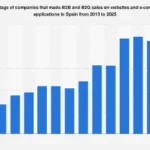
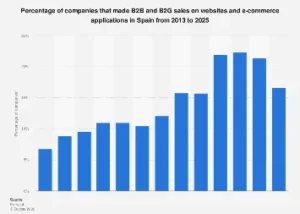


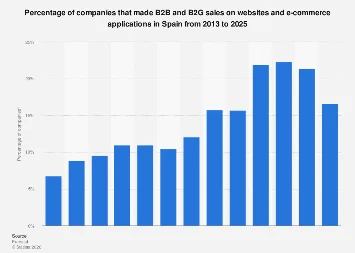
Spain’s business landscape is on the cusp of a significant digital transformation, with projections indicating a substantial increase in companies engaging in Business-to-Business (B2B) and Business-to-Government (B2G) e-commerce activities by 2025. This anticipated surge reflects a broader global trend of digitalization across all sectors, driven by evolving customer expectations, the pursuit of operational efficiencies, and the undeniable convenience offered by online transactions. While consumer-facing e-commerce has dominated headlines for years, the less visible, yet equally impactful, B2B and B2G segments are rapidly gaining momentum, promising to reshape procurement, sales cycles, and public service delivery within the Spanish economy.
The forecast suggests a heightened adoption rate among Spanish enterprises looking to streamline their supply chains, broaden their market reach, and enhance their competitive edge. For B2B transactions, the move towards online platforms signifies a departure from traditional, often lengthy, negotiation and order processes. Companies are increasingly recognizing the potential of digital marketplaces and dedicated e-commerce portals to automate order management, improve inventory visibility, and facilitate seamless payment gateways. This digital shift is particularly crucial in sectors characterized by complex supply chains and a high volume of recurring orders, such as manufacturing, wholesale distribution, and professional services. The ability to place orders 24/7, track shipments in real-time, and access product information instantly empowers procurement managers and ultimately contributes to cost savings and improved productivity.
Similarly, the B2G segment, encompassing transactions between businesses and government entities, is also poised for significant digital advancement. Governments worldwide are increasingly leveraging e-procurement platforms to enhance transparency, reduce administrative burdens, and ensure fair competition in public tenders. For Spanish businesses, engaging with public sector clients through digital channels offers a more efficient and accessible route to government contracts. This includes participating in online bidding processes, submitting digital proposals, and managing contract-related documentation electronically. The drive for digitalization in public administration, often spurred by initiatives aimed at modernizing public services and combating corruption, creates a fertile ground for businesses equipped to navigate these digital frameworks.
Market analysts point to several key drivers fueling this projected growth. Firstly, the lingering effects of the global pandemic have accelerated the acceptance and integration of digital tools across all business functions. Companies that may have been hesitant to invest in e-commerce infrastructure are now prioritizing it as a strategic imperative for resilience and future growth. Secondly, the increasing availability of sophisticated e-commerce platforms and Software-as-a-Service (SaaS) solutions has lowered the barrier to entry for many small and medium-sized enterprises (SMEs), which form the backbone of the Spanish economy. These platforms offer scalable solutions that can be adapted to specific business needs without requiring massive upfront investments in custom development.
Furthermore, the younger generation of business leaders and procurement professionals, who are digital natives, are more comfortable and adept at conducting business online. Their expectations are shaping the way companies operate and interact with their suppliers and clients. This demographic shift is creating a natural demand for more integrated and user-friendly digital transaction environments.
Statistics from various industry reports underscore the global trend. While specific figures for Spain in 2025 are still projections, broader European Union data indicates a steady upward trajectory. For instance, Eurostat data has consistently shown an increase in the percentage of enterprises engaging in online sales and purchases over the past decade. While B2C e-commerce often accounts for a larger share of overall online retail, the growth rate in B2B e-commerce has been particularly robust in recent years. Reports from market research firms like Forrester and Gartner consistently highlight the expanding digital marketplace for business transactions, projecting significant compound annual growth rates (CAGR) for B2B e-commerce globally, often in the double digits. This growth is mirrored in the increasing adoption of digital procurement tools and e-invoicing systems across European nations, including Spain.
The economic impact of this digital expansion for Spain is expected to be substantial. Increased adoption of B2B and B2G e-commerce can lead to enhanced productivity across industries by automating manual processes, reducing transaction costs, and minimizing errors. This can translate into improved profit margins for businesses and potentially lower prices for consumers and public services. Moreover, the digital transformation fosters greater market access. Spanish companies can more easily reach clients and partners beyond their immediate geographical vicinity, both domestically and internationally. This outward expansion is crucial for boosting exports and contributing to a more diversified and resilient national economy.
For the public sector, the digitization of procurement processes promises greater efficiency and accountability. Streamlined tendering and contract management can lead to more effective allocation of public funds and a reduction in opportunities for fraud or mismanagement. This, in turn, can foster greater public trust and confidence in government institutions.
However, this digital transition is not without its challenges. Businesses will need to invest in robust cybersecurity measures to protect sensitive data and ensure the integrity of their online transactions. Furthermore, upskilling the workforce to effectively utilize new digital tools and platforms will be crucial. Companies will also need to adapt their business strategies to leverage the full potential of e-commerce, moving beyond simply replicating traditional sales processes online to embracing new models of customer engagement and service delivery. The development of user-friendly interfaces and comprehensive customer support will be paramount to ensure successful adoption and customer satisfaction.
The Spanish government has a vital role to play in facilitating this digital evolution. Continued investment in digital infrastructure, the promotion of digital literacy programs, and the creation of supportive regulatory frameworks can significantly accelerate the adoption of B2B and B2G e-commerce. Initiatives that simplify the process for SMEs to go digital, such as providing access to affordable e-commerce solutions and offering guidance on digital marketing and cybersecurity, will be particularly impactful.
As Spain moves closer to 2025, the projected increase in companies participating in B2B and B2G e-commerce is more than just a statistical forecast; it represents a fundamental shift in how business is conducted. This digital imperative is set to unlock new opportunities for growth, efficiency, and transparency, ultimately contributing to a more dynamic and competitive Spanish economy on the global stage. The businesses that proactively embrace this digital transformation will be best positioned to thrive in the evolving economic landscape.