
Half a century ago, in the throes of an unprecedented energy crisis, U.S. President Gerald R. Ford articulated a vision for national resilience, stating, "The single most important energy objective for the US today is to resolve our internal differences and put ourselves on the road toward energy independence." His words, delivered shortly after signing the Energy Policy and Conservation Act in December 1975, laid the groundwork for a crucial national defense mechanism: the Strategic Petroleum Reserve (SPR). This initiative, born from the severe economic fallout of the 1973 Arab oil embargo—a retaliatory measure against U.S. support for Israel during the Yom Kippur War—was designed to safeguard the American economy and populace from the devastating impact of supply disruptions and volatile energy prices. The embargo had exposed a critical vulnerability, contributing to stagflation and underscoring the perils of over-reliance on foreign oil. Ford’s foresight aimed to ensure that such a magnitude of supply shock would never again paralyze the nation.
Today, the echoes of Ford’s pronouncements resonate globally as a new geopolitical upheaval in the Middle East, which began in late February and shows no immediate signs of resolution, is once again exposing the fragility of global crude oil supplies. This ongoing conflict is precipitating significant political and socio-economic turbulence, threatening stability in key energy-producing regions. The recurring nature of these disruptions—including the COVID-19 pandemic, the Russia-Ukraine war, and now the Middle East conflict, all within the last six years—underscores a stark reality: the strategic stockpiling of emergency oil reserves has become a paramount concern for nations worldwide. Kenneth Medlock, Senior Director of the Center for Energy Studies at the Baker Institute for Public Policy, emphasizes that "Strategic stocks are held to buffer supply shocks." He adds that "The entire policy push behind strategic stocks is precisely for times like these," highlighting that energy security remains the primary motivator for maintaining these vital reserves.
The current energy crisis, often referred to as an "energy crisis from the blue moons" due to its unexpected and severe nature, was significantly exacerbated on February 28th with the launch of Operation Epic Fury, a U.S.-led military action targeting Iran. The stated objectives of this operation, conducted in collaboration with Israel, were to dismantle Iran’s missile capabilities, production facilities, and military infrastructure, with a particular emphasis on preventing the acquisition of nuclear weapons. The Trump administration had initially anticipated a swift military engagement with minimal global repercussions. However, experts suggest that the U.S. may have underestimated Iran’s capacity for asymmetrical responses. By unleashing a barrage of retaliatory missiles and drones across the Middle East, Tehran has instigated widespread disruption in a region that is a critical hub for crude oil production.
According to data from the International Energy Agency (IEA), the Middle East accounts for approximately 30 percent of global oil production and 17 percent of natural gas output. The conflict’s impact is amplified by the fact that many nations in the region are U.S. allies and host American military bases. Iran’s strategic targeting of crude facilities and refineries in countries like Saudi Arabia and Kuwait demonstrates a calculated approach to its countermeasures. A crucial element of Iran’s response has been the instigation of actions that threaten the closure of the Strait of Hormuz, a vital maritime chokepoint that sends shockwaves through global energy markets. Sarah Emerson, President of the consulting firm ESAI Energy, notes that "President Trump seems to have started this conflict with limited knowledge of the Iranian regime or the critical geography of the Strait of Hormuz." She further suggests that "owing to the disjointed handling of the war on the part of Washington, the world should brace for a conflict that could run for months."
The Strait of Hormuz, a narrow waterway connecting the Persian Gulf with the Gulf of Oman and the Arabian Sea, stretches approximately 168 kilometers and is only 34 kilometers wide at its narrowest point. It separates the Arabian Peninsula from Iran. In times of conflict, its strategic importance escalates dramatically. It is one of the world’s busiest shipping lanes, facilitating the transit of roughly 20 percent of global oil consumption. In 2025, the IEA reported that approximately 20 million barrels per day of crude oil and oil products were transported through the strait. Of this, nearly 15 million barrels per day were crude oil, representing about 34 percent of global crude oil trade, destined for Asian markets, predominantly China and India, which together consume 44 percent of the crude passing through Hormuz. For key oil-producing nations like Saudi Arabia, the United Arab Emirates (UAE), Kuwait, Qatar, Iraq, Bahrain, and Iran, the strait serves as their primary export route. The UAE and Qatar also rely almost exclusively on this waterway for their liquefied natural gas (LNG) exports, which constitute 19 percent of global LNG trade.
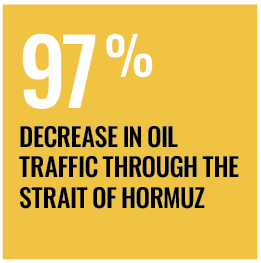
The sheer volume of oil and gas transiting the Strait of Hormuz, coupled with limited alternative routes, means that any disruption triggers the largest supply shock in history. This shock is estimated to be 18 times more significant than the initial weeks of the Russian-Ukraine conflict in 2022. During the early stages of the current Middle East conflict, oil flows through the Strait of Hormuz reportedly plummeted by as much as 97 percent, affecting approximately 2,000 tankers.
This disruption of crude oil flows has had catastrophic consequences for global oil markets and the broader world economy. Before the conflict, crude oil prices averaged around $65 per barrel. By April, they had surged to approximately $115 per barrel, with no immediate signs of stabilization. This volatile environment is further complicated by the UAE’s decision to withdraw from OPEC, citing a desire to focus on "national interests" and chart its own course in crude production. The UAE, a member of OPEC for six decades, accounts for about 15 percent of the cartel’s production capacity. The situation is compounded by the continued U.S. blockade of Iranian ports, a standoff that could persist for months unless a diplomatic resolution is reached in ongoing peace talks. By the end of April, crude oil prices had surpassed the $120 per barrel mark, a level not seen since 2022. Adi Imsirovic, a guest lecturer at the University of Oxford, warns that "If shipping through Hormuz is not allowed for another four to six months, we can expect oil prices to rise over $150 a barrel."
The prospect of crude prices exceeding $150 per barrel represents an economic anguish that the global economy is ill-equipped to endure. The International Monetary Fund (IMF) and the World Bank have already cautioned that the conflict has stalled momentum that would have otherwise propelled global growth to an estimated 3.4 percent this year. As the conflict approached its 60th day in late April, with crude prices continuing to climb, the IMF’s forecast has shifted towards a more adverse scenario, projecting a decline in global growth to 2.5 percent this year and an inflation rate of 5.4 percent. In a severe scenario, where energy supply dislocations extend into the following year, growth could plummet to two percent for both years, with inflation exceeding six percent. Indermit Gill, Chief Economist at the World Bank, observes that the conflict is impacting the global economy in cumulative waves: first through higher energy prices, then higher food prices, and subsequently, higher inflation. He further warns of extreme waves, including interest rate spikes and increased borrowing costs, that are likely to emerge as the conflict prolongs. "The poorest people, who spend the highest share of their income on food and fuels, will be hit the hardest, as will developing economies already struggling under heavy debt burdens. All of this is a reminder of a stark truth: war is development in reverse," Gill stated.
In response to the unprecedented disruption of crude supplies, nations worldwide have resorted to a range of coping mechanisms, some aimed at averting civil unrest fueled by high prices and shortages. These measures have included tax cuts, declarations of national emergencies, promotion of remote work, limitations on government travel, and closures of educational institutions to reduce energy consumption. By the end of April, approximately 40 countries had implemented some form of tax reduction, such as slashing value-added tax (VAT) or excise duties, and some had even abolished levies on petroleum products. Medlock notes that "Most economies have used tax abatements to control price volatilities," characterizing these actions as "classical cases of desperate times calling for desperate measures."
These stopgap measures have provided some relief, particularly for the least developed and frontier economies. Kenya, for instance, experienced domestic super petrol prices soaring to a record KSh206.97 ($1.59) in April, up from KSh178.28 ($1.37) in March. Amidst opposition calls for demonstrations, the government reduced VAT from 16 percent to eight percent, bringing prices down to KSh197.60 ($1.52). However, this move came at a significant cost, with the government projected to lose KSh12.9 billion ($100 million) in revenue over three months.
For larger and emerging economies, a more proactive strategy has involved releasing emergency strategic stocks into the market. Historically, the release of SPRs has been infrequent, typically occurring during extreme circumstances such as wars, pandemics, adverse weather events, natural disasters, and severe economic crises. These emergency reserves are government-controlled, though some inventories are accumulated by private entities under government agreements and oversight. According to data from the U.S. Energy Information Administration (EIA), by the end of the previous year, the world held an estimated 2.5 billion barrels of emergency oil inventory. China, the United States, and Japan possessed the three largest reserves. While Beijing often maintains secrecy regarding its inventory data, estimates suggest its stockpile approached 1.4 billion barrels, derived from import, export, refining, and inventory data from various sources. The U.S. held 413 million barrels, and Japan’s inventories were estimated at 263 million barrels. Other significant holders included Europe with approximately 179 million barrels, Saudi Arabia with 82 million barrels, South Korea with 97 million barrels, Iran with 71 million barrels, the UAE with 34 million barrels, and India with 21 million barrels.
The IEA, an organization of 32 member countries that mandates members to maintain specific oil stocks and coordinates their release, provides a clear overview of global stockpiles. Cumulatively, its members hold over 1.2 billion barrels, with an additional 600 million barrels of industry stocks held under government obligation. Since its inception in 1974, the IEA has coordinated the release of emergency stocks by its members six times. Notably, in 2011, members collectively released 60 million barrels in response to shortages caused by the Libyan war. In 2022, members undertook two releases totaling 180 million barrels to mitigate supply disruptions and high prices resulting from Russia’s invasion of Ukraine.
However, these previous interventions pale in comparison to the scale of the emergency stock release necessitated by the ongoing Middle East conflict. A fortnight after the war erupted and with the world grappling with its worst crude supply disruption in decades, it became evident that strategic reserves were the primary recourse to buffer the global economy. Consequently, IEA members unanimously agreed to make 400 million barrels available to the market, marking the largest coordinated oil stock release in history, which the IEA described as "decisive and unprecedented."
Fatih Birol, IEA Executive Director, remarked following the action on March 11th, "Oil markets are global so the response to major disruptions needs to be global too." He further indicated that the agency stands ready to enact further releases depending on how the situation evolves, expressing hope that additional interventions would not be necessary but affirming their readiness to act if needed. The United States has been a significant contributor to the IEA’s call to action, agreeing to release 172 million barrels from its SPR. By the end of April, the U.S. had released approximately 80 million barrels, with Europe being a primary destination market. These releases are typically conducted on an exchange basis, where oil majors and traders purchase the stocks with an expectation to return equivalent supplies at a later date. In an initial contract awarded in March, the U.S. Department of Energy made 45 million barrels available, with an agreement to receive 55 million barrels in return. Beyond the U.S., Japan and the United Kingdom have also been proactive in releasing stocks, contributing 36 million barrels and 13 million barrels respectively.
Emerson asserts that "Making the strategic stocks available to the market has been the right move." She highlights a distinct characteristic of the current crisis compared to previous ones: for the first time, Saudi Arabia’s traditional role of increasing production to offset global shortages has been significantly hampered by the closure of the Strait of Hormuz. "In most of the other past crises, we often saw Saudi crude oil production increase. It has not been the case in the current crisis," she observed.
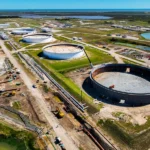
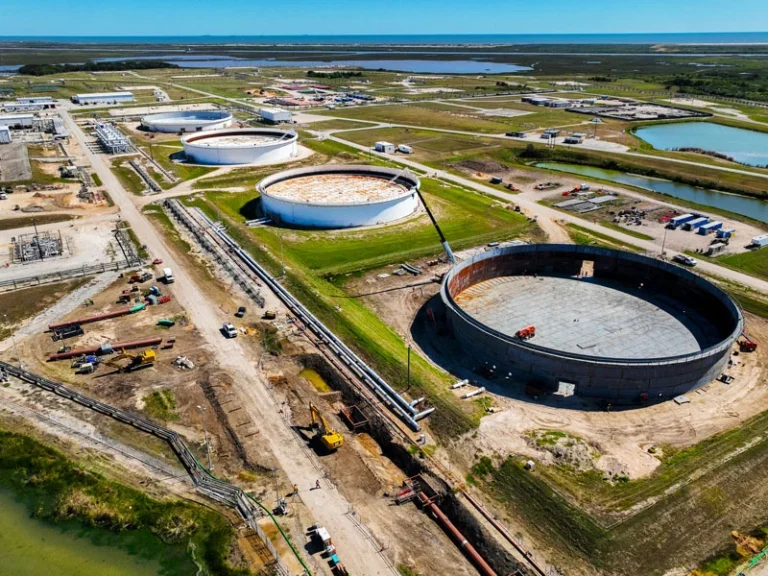
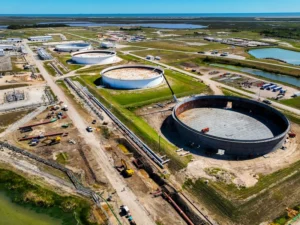
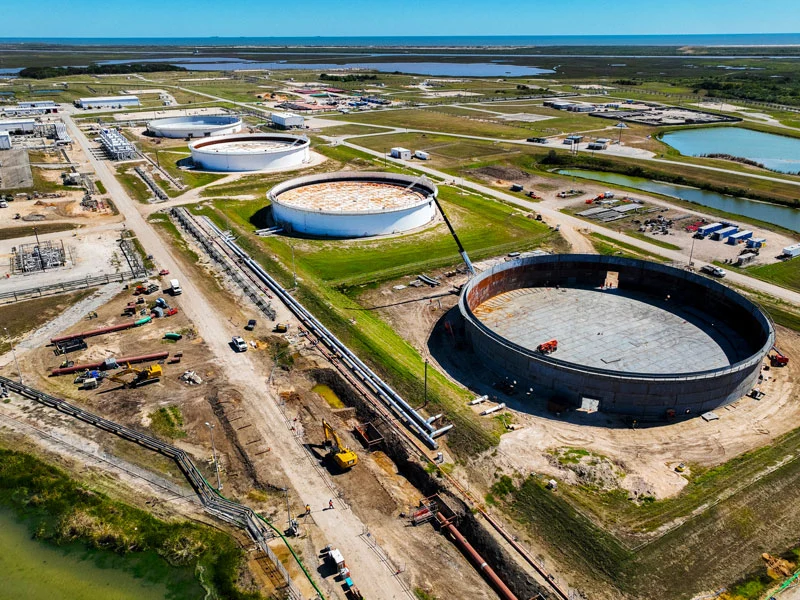
The history of Strategic Petroleum Reserves (SPRs) dates back to the 1940s, with concrete infrastructure investments beginning in the 1970s, spurred by the 1973 oil crisis. The U.S. invested in complex underground storage caverns in salt domes along the Texas and Louisiana Gulf Coasts, chosen for their cost-effectiveness, security, and proximity to refineries and distribution networks. These caverns have a capacity of up to 727 million barrels. Prior to the coordinated release in March, the U.S. SPR inventory had increased to over 415 million barrels. The reserve has only reached its full authorized capacity once, in December 2009, when the recorded inventory stood at 726.6 million barrels.
President Ford’s initial objective was "energy independence." Today, however, the role of emergency stocks has evolved, as demonstrated by the Middle East conflict. Governments worldwide are utilizing SPRs to stabilize supply, prevent fuel shortages, curb price hikes, and manage inflation. More critically, countries are deploying these inventories as instruments of geopolitical influence and as a shield against external aggression. China serves as a prime example. As the world’s largest crude oil importer, averaging 11.6 million barrels per day in 2025, with Russia, Saudi Arabia, Malaysia, Iraq, and Brazil as its top suppliers, accumulating strategic stocks is a matter of existential importance. Beyond its economy’s deep dependence on oil, China’s military machinery requires an uninterrupted fuel supply in potential conflict scenarios, with observers pointing to potential U.S.-Taiwan tensions as a factor in its inventory build-up.
Medlock cautions, "While the release of reserves has helped avert dire impacts, they are not a panacea for long-term supply and price stability." The relief provided by emergency stocks is undeniable, yet the world’s daily crude oil consumption stands at 100 million barrels, making the release of 400 million barrels a significant, but ultimately limited, intervention. Despite surging prices, the impact of SPRs has likely been more substantial than apparent, as experts suggest price spikes could have been far more severe without them. Following the IEA’s announcement on March 11th, crude prices saw a decline of $18. Furthermore, SPRs have played a crucial role in mitigating inflationary pressures, particularly for net oil-importing countries. India, which imports about 90 percent of its oil, has demonstrated resilience, with its key inflation rate remaining below the central bank’s four percent target, despite increasing from 2.75 percent in January to 3.4 percent in March.
Crucially, SPRs have helped prevent product shortages for many countries, especially developing nations lacking the resources to build their own strategic reserves. Amassing stockpiles is an expensive undertaking that spans years. The U.S. experience illustrates this, with an investment of $25.7 billion in its SPR, including $5 billion for infrastructure and $20.7 billion for crude oil purchases. For net importers, the financial burden is even greater, particularly when replenishing stocks amidst high crude prices. Without question, emergency oil inventories have played a pivotal role in neutralizing the immediate impacts of the Middle East conflict. As global uncertainties become the norm, the imperative to accumulate strategic reserves is poised to intensify, marking a new era of energy security considerations.