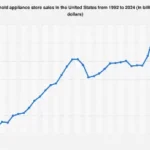
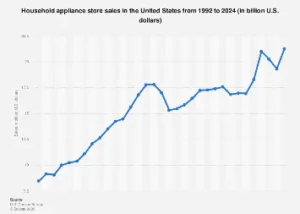

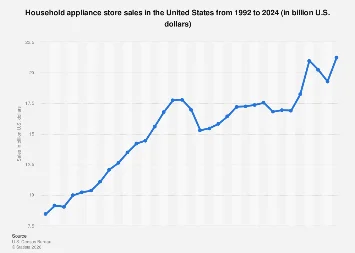
The United States household appliance retail sector is demonstrating resilience and a projected upward trajectory for 2024, with sales anticipated to climb further after a notable surge in recent years. While specific figures for 2024 remain subject to detailed market analysis and final reporting, preliminary indicators and historical trends suggest a robust performance, building upon the significant gains observed in the preceding years. This sustained expansion reflects a dynamic interplay of economic factors, technological advancements, and shifting consumer priorities in how Americans equip and maintain their homes.
The market for household appliances, encompassing everything from refrigerators and ovens to washing machines and smaller kitchen gadgets, has proven to be a vital component of the broader retail landscape. This sector is not merely transactional; it is deeply intertwined with consumer lifestyle choices, home improvement trends, and the fundamental needs of modern living. The appliance market’s performance offers a valuable barometer of consumer confidence, disposable income levels, and the overall health of the housing sector.
Following an extraordinary period of growth that saw a significant peak in 2021, largely attributed to the widespread impact of the COVID-19 pandemic, the sector is now navigating a more normalized, yet still strong, growth phase. The pandemic-induced surge was fueled by a confluence of factors, including increased time spent at home, a heightened focus on domestic comfort and functionality, and a substantial influx of government stimulus, which bolstered consumer spending power. Many households utilized this period to upgrade aging appliances, invest in more energy-efficient models, or acquire new devices to facilitate remote work and domestic activities.
As the nation transitions into 2024, the drivers of appliance sales are evolving. While the immediate urgency of pandemic-related home upgrades may have subsided, a set of new and persistent factors are contributing to sustained demand. A key element is the ongoing housing market activity. While interest rates have presented challenges, the underlying demand for housing, coupled with a steady pace of new construction and renovations, continues to translate into appliance purchases. New homes require a full suite of appliances, and homeowners undertaking renovations or remodeling projects often see appliance upgrades as a critical part of their investment, enhancing both functionality and aesthetic appeal.
Furthermore, technological innovation remains a powerful catalyst for consumer interest. The appliance market is increasingly characterized by smart technology integration, energy efficiency, and sophisticated design. Consumers are drawn to appliances that offer enhanced convenience, connectivity, and sustainability. Features such as voice control, remote monitoring via smartphone apps, advanced cooking capabilities, and water-saving technologies are no longer niche offerings but are becoming standard expectations in many product categories. Manufacturers are continually investing in research and development to bring these cutting-edge features to market, creating compelling upgrade cycles and attracting new buyers.
Energy efficiency, in particular, is gaining prominence as a purchasing consideration. With rising energy costs and a growing global awareness of environmental sustainability, consumers are increasingly prioritizing appliances that reduce their utility bills and minimize their ecological footprint. Government incentives and regulations promoting energy-efficient appliances also play a crucial role in shaping consumer choices and driving demand for newer, more efficient models. This trend is not only environmentally conscious but also economically prudent for households in the long run.
The competitive landscape within the appliance retail sector is also a significant factor. Major retailers, online marketplaces, and specialized appliance stores are all vying for consumer attention through a variety of strategies. Aggressive marketing campaigns, competitive pricing, financing options, and enhanced customer service, including installation and delivery services, are crucial for capturing market share. The rise of e-commerce has further transformed the retail environment, offering consumers greater convenience and access to a wider selection of products, though the tactile experience and immediate availability offered by brick-and-mortar stores still hold considerable appeal for many, especially for larger ticket items.
Analyzing the economic impact, the household appliance sector contributes significantly to the U.S. economy through job creation, manufacturing, logistics, and retail employment. A robust sales performance translates into increased revenue for manufacturers, suppliers, and retailers, fostering economic growth and supporting a complex supply chain. Moreover, the development and adoption of energy-efficient technologies within the sector also contribute to broader national goals related to energy independence and environmental stewardship.
Looking at global comparisons, the U.S. appliance market is one of the largest and most sophisticated globally. While other developed markets, such as those in Western Europe and parts of Asia, also exhibit strong demand for home appliances, the U.S. market is characterized by its sheer size and the rapid adoption of new technologies. Emerging markets, while showing significant growth potential, are still in earlier stages of appliance penetration and technological adoption compared to the mature U.S. landscape. The trends observed in the U.S. – smart home integration, energy efficiency, and a focus on design – often foreshadow similar shifts in other international markets.
While the outlook for 2024 remains positive, the sector is not without its challenges. Economic headwinds, such as persistent inflation impacting consumer discretionary spending, potential interest rate fluctuations, and global supply chain vulnerabilities, could influence the pace of growth. However, the fundamental drivers of appliance demand—replacement cycles, new home construction, renovations, and the continuous introduction of innovative, desirable products—are expected to provide a strong foundation for continued sales expansion. The ability of retailers and manufacturers to adapt to changing consumer preferences, offer compelling value propositions, and navigate potential economic uncertainties will be key to unlocking the full potential of the U.S. household appliance market in the years ahead. The sector’s ongoing evolution underscores its importance not just as a retail category, but as a critical enabler of modern domestic life and a significant contributor to the nation’s economic vitality.