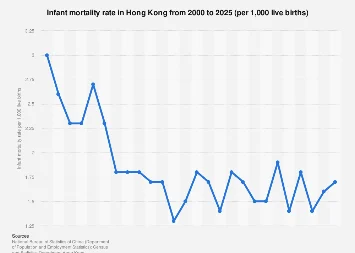
Hong Kong is anticipated to maintain its status as a global leader in infant health, with projections indicating a continued decline in its infant mortality rate for the year 2025. This forecast underscores the city’s robust healthcare infrastructure, comprehensive public health initiatives, and a sustained commitment to maternal and child well-being. While precise, real-time data often requires specialized access, the trajectory of Hong Kong’s infant mortality figures has consistently placed it among the most successful regions worldwide in safeguarding its youngest citizens. This trend is not merely a statistical anomaly but a reflection of deep-seated socio-economic factors and targeted policy interventions that have demonstrably improved neonatal and post-neonatal survival rates.
The significance of a low infant mortality rate extends far beyond a single health metric; it serves as a crucial indicator of a nation’s or territory’s overall development, the efficacy of its healthcare system, and the general quality of life for its population. A declining rate suggests improvements in areas such as prenatal care, access to skilled birth attendants, advanced neonatal intensive care units (NICUs), widespread vaccination programs, and the availability of safe drinking water and sanitation. In Hong Kong, these elements have been systematically prioritized, leading to outcomes that often rival, and sometimes surpass, those of the most developed Western nations. For instance, while the United States has seen its infant mortality rate hover around 5.4 deaths per 1,000 live births in recent years, many East Asian economies, including Hong Kong, have consistently achieved rates below 2 deaths per 1,000 live births, a benchmark of exceptional public health performance.
Several key drivers contribute to Hong Kong’s sustained success in this domain. The territory’s healthcare system, a hybrid public-private model, offers a high standard of care accessible to a broad segment of the population. The public sector, heavily subsidized, provides essential services, including comprehensive maternal and child health programs, ensuring that financial barriers do not impede access to critical prenatal and postnatal care. This includes regular check-ups for pregnant women, nutritional guidance, and postnatal support for new mothers, all of which play a vital role in preventing complications and ensuring healthy outcomes for both mother and infant. Furthermore, the availability of advanced medical technology and highly trained medical professionals, particularly in neonatology, means that even premature or critically ill newborns have a high chance of survival and recovery.
The economic implications of a low infant mortality rate are also substantial. A healthier start to life translates into a more productive future workforce. Reduced infant and child mortality lessens the burden on the healthcare system in the long term, as fewer individuals require extensive medical intervention due to preventable early-life conditions. Moreover, a territory renowned for its high quality of life, including excellent healthcare, can attract and retain skilled professionals and families, further bolstering its economic dynamism and global competitiveness. This creates a virtuous cycle where public health investment yields economic dividends, reinforcing the rationale for continued prioritization of these initiatives.
Looking at global trends, the reduction of infant mortality has been a central objective of the United Nations’ Sustainable Development Goals (SDGs), specifically SDG 3, which aims to ensure healthy lives and promote well-being for all at all ages. Target 3.2 calls for ending preventable deaths of newborns and children under 5 years of age, with a target of reducing neonatal mortality to at least as low as 12 per 1,000 live births and under-5 mortality to as low as 25 per 1,000 live births. Hong Kong’s performance far exceeds these targets, demonstrating a commitment to health outcomes that aligns with and often surpasses international benchmarks for developed nations. This consistent performance not only reflects well on Hong Kong’s internal policies but also positions it as a potential model for other regions striving to improve their own child survival rates.
The economic context of Hong Kong, as a global financial hub, also plays a role. A strong economy generally correlates with higher per capita income, greater public and private investment in health and education, and a population with better access to resources that promote health, such as nutritious food and safe living environments. While economic downturns or global health crises can present challenges, Hong Kong’s resilience and its well-established social support systems have historically helped to mitigate their impact on critical public health indicators like infant mortality. The territory’s proactive approach to public health, often involving rapid response to emerging health threats and continuous evaluation of existing programs, further strengthens its ability to maintain low mortality rates.
As 2025 approaches, the focus for Hong Kong will likely remain on refining existing strategies and addressing any emerging challenges. This could involve further research into specific risk factors that may still contribute to infant mortality, such as rare genetic conditions or unforeseen environmental factors. Continued investment in research and development within its healthcare sector, alongside ongoing public education campaigns on healthy lifestyle choices for expectant parents and the importance of regular medical check-ups, will be crucial. The territory’s ability to adapt and innovate within its healthcare system, drawing on both local expertise and international best practices, will be key to sustaining its exemplary record in infant health. The projected figures for 2025, therefore, represent not just a statistical forecast but a testament to a sustained, multi-faceted approach to public health that has yielded profound and enduring benefits for its youngest residents and for the territory as a whole.