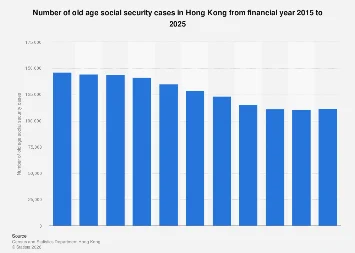
Hong Kong, a global financial hub renowned for its dynamic economy and dense urban environment, is facing a significant demographic shift that will profoundly impact its social security system. Projections indicate a substantial increase in the elderly population in the coming years, necessitating a proactive and comprehensive approach to ensure the sustainability and adequacy of social welfare provisions for its aging citizens. By 2025, the proportion of the population aged 65 and over is expected to continue its upward trajectory, placing increasing demands on public resources and private support mechanisms.
The current framework for elderly social security in Hong Kong is multifaceted, encompassing a range of programs and policies designed to address financial, healthcare, and social needs. Key components include the Comprehensive Social Security Assistance (CSSA) scheme, which provides a safety net for those with limited financial means, and various public healthcare services administered by the Hospital Authority. Beyond these foundational elements, the government also supports a network of elderly centers, residential care homes, and community-based services aimed at promoting active aging and social inclusion. However, the escalating number of seniors presents a formidable challenge to the existing infrastructure, raising questions about its capacity to meet future demand.
Economic analysts and demographers point to a confluence of factors driving this demographic transformation. Improvements in public health, advancements in medical technology, and a generally higher standard of living have contributed to increased life expectancy across Hong Kong. While this is a positive development in terms of individual well-being, it simultaneously accelerates the aging of the population. The dependency ratio – the number of dependents (children and the elderly) per working-age person – is projected to rise, potentially straining the tax base that underpins social security contributions. This trend is not unique to Hong Kong; many developed and rapidly developing economies worldwide are grappling with similar demographic headwinds. For instance, Japan, already a super-aged society, offers valuable lessons in long-term care strategies and the economic implications of a rapidly aging populace. South Korea and Singapore are also implementing policies to address their own aging demographics, highlighting the global nature of this challenge.
The financial implications of an expanding elderly population are a primary concern for policymakers. Increased demand for pensions, healthcare services, and long-term care will inevitably translate into higher government expenditure. Projections for future spending on social welfare for the elderly underscore the need for fiscal prudence and innovative funding models. This could involve exploring avenues such as adjustments to contribution rates, the introduction of new revenue streams, or encouraging greater private sector involvement in providing elder care services. The current model relies heavily on public funding, but to ensure long-term sustainability, a more diversified approach may be necessary.
Beyond financial considerations, the nature of elderly care itself is evolving. There is a growing emphasis on enabling seniors to age in place, allowing them to remain in their own homes and communities for as long as possible. This necessitates robust home-based support services, including personal care, domestic assistance, and medical monitoring. Furthermore, the demand for specialized care facilities, such as nursing homes and assisted living residences, is also expected to rise, requiring significant investment in infrastructure and trained personnel. The quality and accessibility of these services are critical determinants of the well-being of Hong Kong’s aging population.
The labor market implications of an aging society are also significant. As the working-age population shrinks relative to the elderly population, there is a potential for labor shortages in various sectors, including healthcare and elder care. Strategies to address this may include encouraging later retirement, increasing labor force participation among women and older workers, and attracting skilled immigration. Moreover, the demand for services catering to the elderly, such as specialized healthcare professionals, caregivers, and therapists, will likely create new employment opportunities.
Hong Kong’s government has acknowledged these challenges and has been implementing various initiatives to prepare for the future. These include efforts to promote healthy aging, encourage intergenerational solidarity, and enhance the efficiency and effectiveness of social welfare programs. The focus is shifting towards a more holistic approach that considers not only the financial security of the elderly but also their physical health, mental well-being, and social engagement. Public-private partnerships are being explored to leverage the strengths of both sectors in delivering comprehensive care solutions.
Expert opinion suggests that Hong Kong needs to accelerate its preparations. Dr. Evelyn Chan, a leading gerontologist at the University of Hong Kong, emphasizes the importance of early intervention and preventative care. "Investing in health promotion and disease prevention programs now will pay dividends in the future by reducing the burden of chronic diseases and improving the quality of life for our seniors," she states. "Furthermore, fostering a supportive community environment where older adults feel valued and connected is crucial for their overall well-being."
The private sector also has a vital role to play. Financial institutions are increasingly offering retirement planning services and investment products tailored to the needs of an aging population. Insurance companies are developing new products to cover long-term care expenses, and real estate developers are exploring the creation of age-friendly housing solutions. The innovation within the private sector, spurred by evolving consumer needs, can be a powerful engine for addressing the challenges of an aging society.
Looking ahead, Hong Kong’s ability to successfully navigate its demographic transition will depend on its capacity to adapt its social security system, healthcare infrastructure, and economic policies. A sustained commitment to strategic planning, investment in human capital, and the fostering of collaborative partnerships will be essential. The coming years will be a critical period for Hong Kong as it strives to build a resilient and supportive society that caters to the evolving needs of its growing elderly population, ensuring that its citizens can enjoy their later years with dignity and security. The experiences and policy responses of Hong Kong will likely serve as a valuable case study for other regions facing similar demographic shifts in the 21st century.