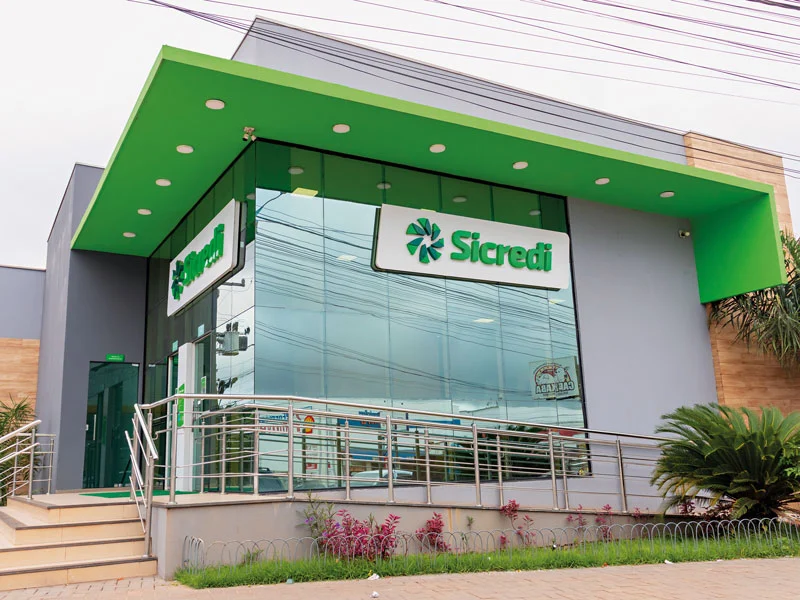
In an era defined by escalating climate risks, persistent social disparities, and volatile economic landscapes, the traditional paradigm of financial institutions is undergoing a profound re-evaluation. The imperative for profitability is now inextricably linked with the demand for long-term value creation that actively addresses pressing environmental and social challenges. Within this evolving financial ecosystem, the cooperative banking model has emerged not merely as an alternative, but as a potent and scalable solution, demonstrating a unique capacity to merge robust financial performance with a deep-seated commitment to local and sustainable development. This intrinsic alignment allows cooperatives to channel capital with greater inclusivity and impact, a principle powerfully exemplified by Sicredi, one of Brazil’s largest cooperative financial institutions. With a membership exceeding 10 million individuals and businesses, a network of over 3,000 branches, and a presence spanning more than 2,200 municipalities, Sicredi’s scale underscores the transformative potential of this model.
This substantial and consistent impact has garnered international recognition, notably through Sicredi’s recent accolade at the World Finance awards, where it was honoured with the "Outstanding Contribution to Sustainable Finance by a Cooperative (LatAm)" award. This distinction celebrates institutions that are not only advancing the frontiers of sustainable finance but are actively redefining the role of financial systems in fostering inclusive and low-carbon economic trajectories.
Integrating Sustainability for Long-Term Development
At the heart of Sicredi’s operational philosophy lies a strategic integration of environmental and social criteria into its core credit decision-making processes. This approach ensures that financial solutions are not merely transactional but actively contribute to sustained, long-term development. This commitment has propelled the growth of its green credit portfolio, which reached an impressive $17.8 billion in 2025, a testament to its sustained efforts to harmonize financial success with tangible sustainability outcomes. The framework underpinning this green credit portfolio is robust, employing a classification system that meticulously combines sectoral assessments, specific eligible credit lines, and clearly defined environmental and social benefits. Sicredi adheres to the sustainability taxonomy established by the Brazilian Banking Federation (Febraban), a standard that is itself aligned with globally recognized benchmarks such as the Climate Bonds Initiative, the European Union’s taxonomy framework, and the Social Bond Principles.
In practical terms, financing operations are designated as "green" when they support activities that actively contribute to the transition towards a low-carbon economy, enhance climate adaptation and resilience, promote sustainable land management, facilitate the generation of renewable energy, improve resource efficiency, conserve biodiversity, or foster social inclusion within vulnerable territories. Beyond the intrinsic purpose of the financed activity, Sicredi’s credit evaluation process rigorously incorporates social, environmental, and climate risk assessments. This multi-faceted approach guarantees that sustainability objectives are intrinsically linked with financial prudence and the overarching goal of long-term societal and economic advancement.
Within this strategic architecture, a significant $1.9 billion was specifically allocated to support low-carbon agricultural practices. Concurrently, Sicredi has solidified its position as a leading financier of renewable energy initiatives, boasting a portfolio that has grown to $4.3 billion. A substantial portion of these investments is directed towards the expansion of distributed solar generation capacity, empowering producers to adopt more sustainable farming techniques, including crop rotation, efficient water management, and biodiversity conservation. These initiatives not only yield positive environmental results but also bolster the resilience of the agricultural sector. Sicredi’s influence extends far beyond environmental stewardship, however. Through its extensive operations in smaller municipalities, rural areas, and underserved regions, the cooperative plays an indispensable role in broadening financial inclusion and stimulating local economic growth. This targeted outreach resulted in $5 billion being channeled to micro and small enterprises situated in municipalities exhibiting below-average Human Development Index (HDI) scores.
Empowering Economies Through Financial Inclusion
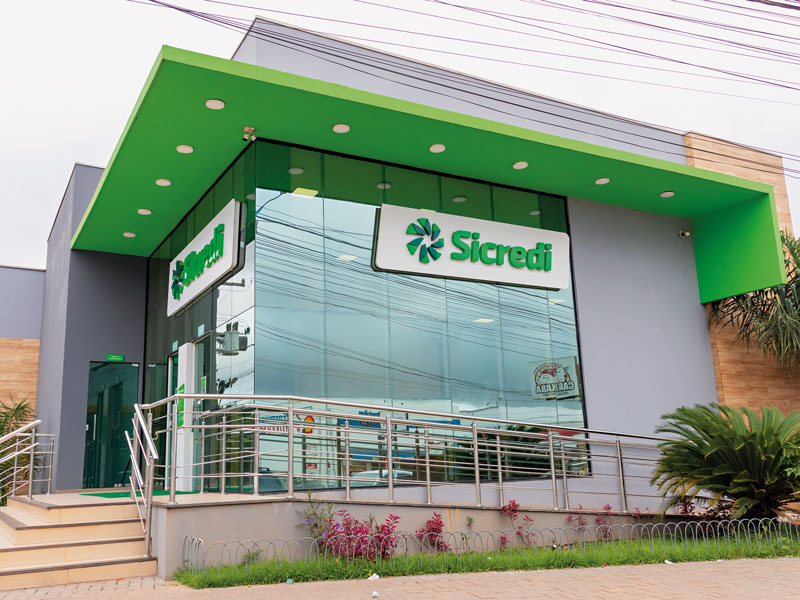
Furthermore, the cooperative actively champions the economic empowerment of under-represented groups. Its dedicated portfolio for women-led businesses reached $1.8 billion in 2025, underscoring the critical role of accessible credit in driving economic independence, fostering income generation, and promoting social equity. Sicredi amplifies its impact through strategic partnerships with international entities, such as the International Finance Corporation (IFC). These collaborations facilitate the mobilization of global capital for localized initiatives, effectively merging international financial resources with intimate, on-the-ground territorial knowledge. This blended finance approach enhances the capacity to deliver scalable and measurable impact across a diverse range of geographical contexts.
The comprehensive integration of Environmental, Social, and Governance (ESG) principles within Sicredi’s operations signifies that these considerations are not treated as peripheral concerns or mere reputational enhancements. Instead, they are woven into the very fabric of its organizational identity, forming an integral component of its business model and the inherent ethos of the cooperative system itself. The systematic incorporation of social, environmental, and governance criteria now guides every facet of the institution, from strategic planning and capital allocation to risk management and the cultivation of enduring relationships with its members and the communities it serves.
As the global financial sector increasingly pivots towards sustainability as a central tenet, Sicredi offers a compelling case study. It demonstrates how the cooperative banking model can serve as a powerful engine for shaping a more inclusive, resilient, and sustainable global economy. By seamlessly aligning financial performance with demonstrable social and environmental impact, the cooperative model presents a robust and replicable pathway for sustainable development, not only within Brazil but as a significant benchmark for financial systems worldwide. The focus on community benefit, long-term investment, and equitable distribution of resources positions cooperatives as vital players in addressing the multifaceted challenges of the 21st century.