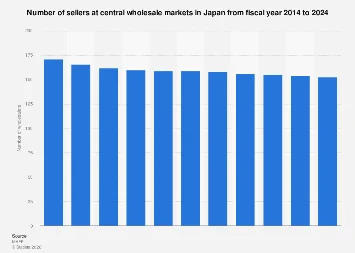
The intricate network of central wholesale markets in Japan, a cornerstone of the nation’s food distribution system, is experiencing a gradual evolution in its seller base. While precise figures for the most recent fiscal year remain under commercial access, data spanning from fiscal year 2014 to 2024 indicates a dynamic environment for the wholesalers operating within these critical hubs. These markets, operating under the stringent oversight of the Ministry of Agriculture, Forestry and Fisheries (MAFF), serve as indispensable conduits, connecting producers to a vast array of retailers and consumers across the archipelago.
The significance of these wholesale markets extends far beyond simple transaction points; they are vital economic engines that ensure the efficient and equitable distribution of agricultural, forestry, and fishery products. Historically, markets like the legendary Tsukiji Market in Tokyo, once the world’s largest seafood wholesale market before its relocation, exemplified the scale and importance of these institutions. While specific numbers are restricted, the general trend suggests a consistent, albeit potentially fluctuating, presence of thousands of wholesalers contributing to the daily flow of goods.
Understanding the seller numbers within these markets is crucial for grasping the broader economic health of Japan’s food supply chain. A stable or growing number of wholesalers typically signifies a robust and competitive market, fostering innovation and potentially better pricing for end consumers. Conversely, a significant decline could signal underlying economic pressures, consolidation within the industry, or shifts in consumer purchasing habits that impact the traditional wholesale model.
The fiscal year in Japan, commencing on April 1st and concluding on March 31st of the following year, provides the framework for these annual statistics. Figures are typically reported as of the end of this fiscal period, offering a snapshot of the market’s structure at a given point in time. The MAFF’s supervision underscores the government’s commitment to maintaining the integrity and functionality of these markets, which are intrinsically linked to national food security and the livelihoods of countless farmers, fishermen, and distributors.
The broader context of Japan’s wholesale sector reveals a complex interplay of tradition and modernization. While many wholesale markets adhere to long-established practices, they are also increasingly grappling with the digital revolution and evolving consumer demands. The rise of e-commerce, direct-to-consumer sales channels, and the increasing sophistication of logistics and supply chain management are all factors that could influence the number and operational strategies of wholesale market sellers.
Globally, wholesale markets play a similar foundational role in food distribution in many countries. However, the Japanese model, with its centralized, government-supervised structure, possesses unique characteristics. In contrast, markets in some European nations, for instance, might exhibit a more fragmented structure with a greater reliance on private enterprise and less direct governmental intervention in operational numbers, though regulatory frameworks still apply. North American wholesale distribution often involves a mix of large, consolidated players and smaller, specialized distributors, with less emphasis on a single, national network of government-sanctioned central markets.
The economic impact of these wholesalers is substantial. They not only facilitate trade but also provide employment, contribute to regional economies through their operations, and play a role in price discovery for agricultural commodities. The efficiency with which they operate directly influences the cost of food for households and the profitability of primary producers. Any shifts in their numbers or operational capacity can have ripple effects throughout the economy.
Analyzing the trends in wholesale market sellers can also offer insights into demographic shifts within the agricultural and distribution sectors. For example, an aging population of farmers might lead to fewer producers, which in turn could influence the volume of goods entering the wholesale system. Similarly, the appeal of traditional wholesale businesses to younger generations of entrepreneurs will shape the future composition of market participants.
The data, even in its aggregated form, points to a sector that is vital but not static. The precise number of wholesalers, while a key metric, is just one facet of a much larger and more intricate economic ecosystem. Factors such as the volume of goods traded, the types of products handled, the technological adoption rates among sellers, and their engagement with both domestic and international markets are all critical components in understanding the health and trajectory of Japan’s central wholesale markets. As Japan continues to navigate global economic shifts and evolving domestic consumer preferences, the composition and operational dynamics of its wholesale market sellers will remain a subject of significant economic interest and analysis. The resilience and adaptability of these market participants will be key to ensuring the continued efficiency and effectiveness of Japan’s food supply chain for years to come.