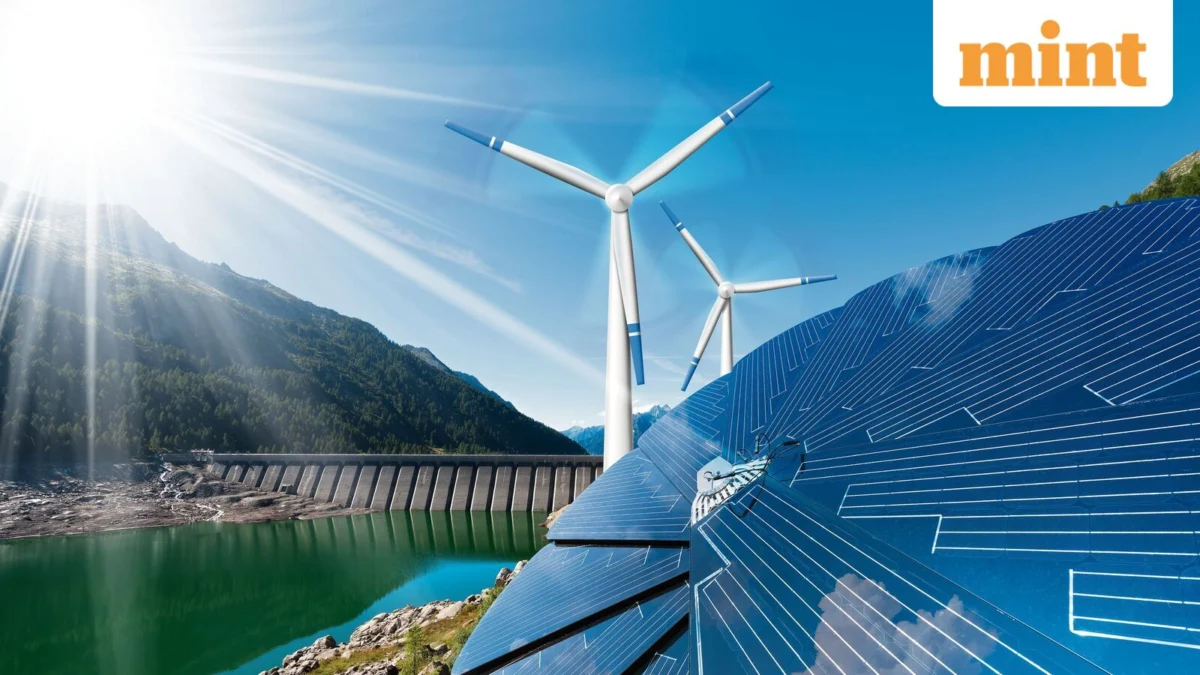
India’s ambitious clean energy transition recently marked a pivotal milestone, with combined generation from wind and ground-mounted solar assets briefly surpassing the 100 gigawatt (GW) threshold on its national power grid. This unprecedented achievement, recorded at 12:05 PM IST on July 13 when generation peaked at 103.7 GW, underscores the nation’s remarkable pace in deploying renewable capacity. On the same day, renewable power constituted a record 42.79% of the total all-India demand at 12:29 PM, a figure that held above 100 GW for the subsequent two days, reaching 102.42 GW on July 14 and 100.9 GW on July 15, according to data from Grid Controller of India Ltd (Grid-India). While a testament to India’s commitment to decarbonization, this breakthrough simultaneously spotlights the formidable challenges of integrating increasingly variable power sources into a rapidly evolving and demand-intensive grid infrastructure.
The surge past the 100 GW mark for intermittent renewables is a significant indicator of India’s progress towards its stated climate goals, including the target of 500 GW of non-fossil fuel capacity by 2030 and net-zero emissions by 2070. The nation has been adding green capacity at an extraordinary rate; Union Minister Pralhad Joshi announced a substantial 30.58 GW of renewable capacity addition in the first half of 2026 alone, representing a 25% growth over the same period last year. Solar energy has been the primary driver, contributing 26.34 GW during this period, a remarkable 43% increase compared to the first half of 2025. This rapid build-out places India among the global leaders in renewable energy deployment, rivalling the scale seen in countries like China and the United States, and positions it as a crucial player in the global energy transition. The economic implications are vast, ranging from reduced reliance on fossil fuel imports to the creation of a burgeoning domestic manufacturing and services sector.
However, the impressive growth in installed capacity masks a more complex reality on the ground: the operational grid infrastructure is struggling to keep pace with the sheer volume and variability of new renewable energy sources. India currently boasts approximately 288 GW of renewable energy capacity, making up about 52% of its total installed power capacity of 548.8 GW. Yet, the actual generation from non-fossil fuels accounted for only 29.2% of total power generation in FY26. This stark disparity highlights the fundamental challenge of intermittency – solar and wind power generation fluctuates with weather conditions and daylight hours, creating a mismatch between peak generation times and peak demand, as well as rapid ramp-up and ramp-down requirements.
This dynamic variability exerts immense pressure on grid stability and security. As S.R. Narasimhan, former chairman and managing director of Grid-India, noted, the 100 GW record had been "in the making for the last three months," but was previously hindered by "transmission and flexibility-related Variable Renewable Energy (VRE) curtailments, lower wind generation, and cloud cover." Curtailment, the practice of reducing renewable energy output even when available, occurs when the grid lacks the capacity to transmit or absorb the power, or when balancing issues arise. This not only represents a loss of clean energy but also carries significant economic costs for developers and disincentivizes further investment. Geographically, India’s prime solar and wind resources are often located far from major demand centres, necessitating extensive, robust, and flexible transmission infrastructure – a ‘green energy corridor’ – that is still under development.

The operational challenges are exacerbated by India’s soaring electricity demand, driven by rapid urbanization, industrial growth, and increasingly, climate-related factors. On July 13, peak demand reached 256.96 GW, slightly below the all-time record of 270.8 GW observed on May 21. The Central Electricity Authority (CEA) projects peak demand to hit 272 GW this year, with the Power Minister forecasting an even higher 300 GW by FY28. Such escalating demand, particularly during hot spells intensified by phenomena like El Niño, places unprecedented strain on the entire power system. The CEA has issued advisories urging judicious electricity use, particularly by avoiding continuous operation of air conditioners, and has mandated distribution companies (discoms) to establish emergency response teams and summer action plans to mitigate blackouts and curb load shedding.
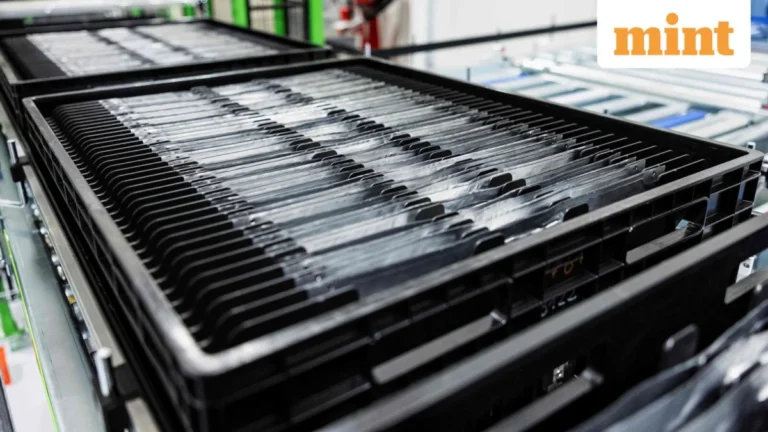
To bridge the gap between burgeoning renewable capacity and grid flexibility, India is making concerted efforts to deploy energy storage solutions. Battery Energy Storage Systems (BESS) and Pumped Hydro Storage (PHS) are critical for time-shifting renewable energy, absorbing surplus generation during periods of high output and releasing it during peak demand or low renewable availability. The government has launched Production Linked Incentive (PLI) schemes for Advanced Chemistry Cell (ACC) battery manufacturing and is inviting bids for large-scale grid storage. However, the current pace of storage deployment, while accelerating, is still nascent compared to the scale required. Innovations in smart grid technologies, including advanced forecasting, demand-side management, and virtual power plants, are also crucial for optimizing resource utilization and enhancing grid resilience.
The journey towards a fully integrated, high-renewable grid is fraught with technical, financial, and regulatory hurdles. The financial health and operational capabilities of discoms are paramount, as they are the direct interface with consumers and key to implementing demand-side management and smart metering initiatives. Furthermore, ensuring robust payment security mechanisms for renewable power developers and streamlining land acquisition and permitting processes are essential to maintain investor confidence and sustain the rapid growth trajectory. While the 100 GW generation milestone is a cause for celebration, it also serves as a stark reminder that the "power system is not keeping pace with the renewable build-out," as articulated in expert analyses.
Looking ahead, India’s strategic vision involves not just adding capacity but building a truly resilient and flexible grid capable of handling a significant proportion of intermittent renewables. This necessitates substantial investment in upgraded transmission lines, flexible generation assets (such as gas-fired plants or advanced coal units with faster ramp rates), and a diverse portfolio of storage technologies. Lessons can be drawn from other high-renewable penetration grids globally, such as those in Germany, California, or Australia, which have grappled with similar integration challenges, sometimes leading to grid instability events like the blackouts experienced in Spain and Portugal. India’s ability to navigate these complexities will not only determine the success of its own energy transition but will also offer valuable blueprints for other emerging economies embarking on similar decarbonization pathways. The 100 GW generation mark is a clear signal that the era of green energy dominance is arriving, demanding an equally green and smart grid to support it.