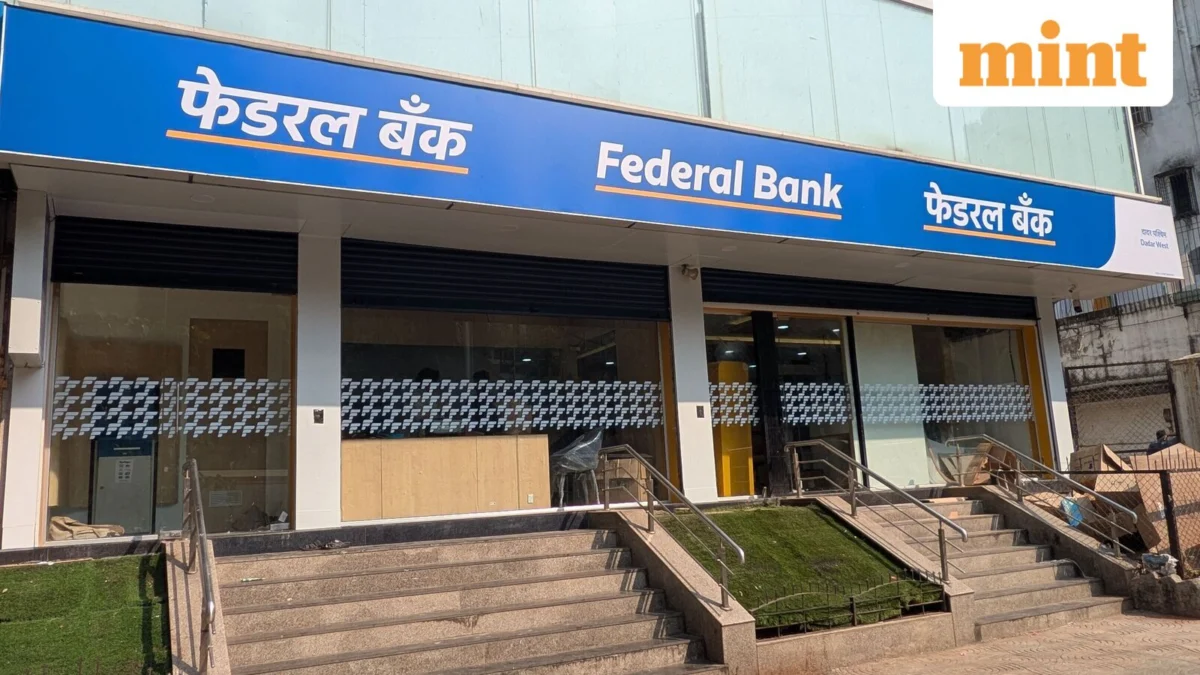
Federal Bank, a prominent private sector lender in India, is strategically enhancing its funding architecture by leveraging the Reserve Bank of India’s (RBI) relaxed Foreign Currency Non-Resident Bank (FCNR-B) deposit scheme and preparing to tap international capital markets. This dual-pronged approach aims to fortify its funding base, fuel robust credit expansion, and significantly reduce its historical reliance on potentially volatile wholesale deposits. K.V.S. Manian, the bank’s managing director and chief executive officer, underscored this pivot during a recent post-earnings briefing, highlighting the institution’s proactive stance in capitalising on current regulatory opportunities and market dynamics.
The FCNR-B scheme, a crucial conduit for attracting non-resident Indian (NRI) funds, has been a focus for the RBI to shore up dollar liquidity and support the rupee amidst global economic uncertainties. Announced on June 5th and valid until September 30th, the temporary relaxation permits banks to raise FCNR-B deposits with maturities ranging from three to five years. Crucially, the RBI offers a concessional rate for banks to swap these dollars into rupees, making the scheme more attractive for domestic lenders. Federal Bank has swiftly moved to capitalise on this window, with Manian confirming early inflows, encompassing both leveraged and unleveraged components, though specific mobilisation figures remain undisclosed.
A distinguishing feature of Federal Bank’s strategy is its offering of leverage, ranging from 8 to 12 times, to eligible customers under the FCNR-B scheme. This mechanism allows depositors to amplify their potential returns by borrowing against their FCNR-B deposits, effectively enhancing the appeal of the product. The bank is actively establishing additional funding lines and structuring its IFSC Banking Unit (IBU) balance sheet to support this leveraged programme, anticipating a significant capture of market share. This innovative approach reflects a calculated risk-reward assessment, aiming to attract a larger volume of NRI deposits by offering a more compelling value proposition compared to traditional FCNR-B offerings. While leveraging can enhance returns, it also introduces a layer of complexity and risk, which the bank aims to manage through careful underwriting and risk mitigation frameworks.
The geographic focus for these FCNR inflows is primarily West Asia, a region with a substantial Indian diaspora and significant remittances back to India. Singapore and Hong Kong are also identified as key sources, reflecting their status as major financial hubs with a strong NRI presence. Conversely, demand from markets like the United States, the United Kingdom, and Australia is expected to be more limited. This disparity is largely attributed to varying tax implications and regulatory environments that may render the FCNR-B product less attractive from a tax efficiency standpoint for residents in these Western economies. This targeted geographic approach allows the bank to concentrate its marketing and outreach efforts where the potential for mobilisation is highest.
Federal Bank already boasts a substantial non-resident deposit base, with NRE/NRO deposits exceeding ₹1 trillion, representing approximately 31% of its total deposits of ₹3.2 trillion. The FCNR-B deposits are envisioned as a supplementary funding stream, designed to augment rather than replace its existing deposit strategy. This strategic diversification is aimed at enhancing the overall stability and cost-effectiveness of its funding mix. The bank’s intention to reduce its reliance on wholesale deposits is a significant strategic shift. Wholesale funding, while readily available, can be more expensive and prone to volatility, especially during periods of market stress. By substituting a portion of wholesale deposits with long-term FCNR-B funds, Federal Bank aims to improve its net interest margin (NIM) and enhance liquidity management. Manian articulated this vision, stating that FCNR-B funds could be used to refinance existing wholesale deposits or deployed directly into asset growth, particularly if credit demand remains robust, as the bank anticipates.
Beyond domestic funding avenues, Federal Bank is also positioning itself to tap global capital markets, marking a significant step towards internationalisation. The bank recently secured its inaugural ‘BBB-‘ international issuer rating from S&P Global, elevating it to an elite group as only the fifth Indian private sector bank to achieve such a rating. This investment-grade rating is a critical prerequisite for accessing a broader pool of international investors and facilitates more favourable borrowing terms. While no immediate issuance commitments have been made, the bank is prepared to raise funds under the RBI’s temporary relaxation on external commercial borrowings (ECBs). This regulatory window, typically used by Indian entities to raise foreign currency loans from overseas lenders, presents an opportune moment for the bank to diversify its funding sources further and potentially access capital at more competitive rates than domestic markets might offer. Manian emphasised the bank’s readiness, stating, "We are ready in terms of rating… We will watch the market and watch the prices and see whether it makes economic sense for us. We will remain alert to that opportunity." This cautious yet prepared approach underscores the bank’s prudence in navigating global market volatility while being poised to seize advantageous funding opportunities.
The bank’s aggressive funding strategy aligns with its ambitious growth projections. Federal Bank has maintained its mid-teen credit growth guidance for the fiscal year 2027, with Manian indicating a potential upward revision should market conditions remain favourable. The first quarter results underscore this trajectory, with gross advances surging by 15% year-on-year to ₹2.81 trillion, and total deposits increasing by 11.4% to ₹3.2 trillion. The bank’s net profit recorded a robust 37% year-on-year increase to ₹1,177 crore, while net interest income (NII) grew by 26%.
Segment-wise, the growth has been broad-based, with commercial banking expanding by 23%, commercial vehicle and construction equipment finance by 21%, corporate and institutional banking by over 16%, gold loans by an impressive 33%, loans against property by 21%, and credit cards by 36% year-on-year. Business banking, however, saw a more modest expansion of 7.1%, reflecting the bank’s conscious decision to prioritise portfolio quality over sheer volume in this segment. This balanced growth across diverse business lines indicates a resilient and diversified lending portfolio.
The bank’s financial health has also shown significant improvement. The net interest margin (NIM) stood at 3.33% at the end of the June quarter, an improvement from 2.94% a year earlier, driven by a faster decline in funding costs relative to lending yields. While a slight dip from the previous quarter’s 3.74% was noted, Manian reiterated the bank’s guidance of an average 5-6 basis point NIM expansion per quarter over the next three to four quarters, stopping short of committing to a 4% margin target but signaling a positive outlook. Asset quality has also strengthened considerably, with the gross non-performing assets (NPA) ratio improving to 1.52% from 1.62% a quarter ago, and the net NPA ratio falling to 0.18% from 0.37% over the same period. These improvements reflect effective risk management and collection efforts, bolstering investor confidence in the bank’s operational efficiency.
Federal Bank’s strategic emphasis on FCNR-B deposits and its readiness for overseas fundraising are critical components of its overarching growth strategy. By diversifying its funding sources, optimising its cost of funds, and maintaining a strong asset quality, the bank is positioning itself to capitalise on India’s projected economic growth. As India continues its trajectory towards becoming a major global economic power, the banking sector plays a pivotal role in credit intermediation. Federal Bank’s proactive measures not only secure its own growth path but also contribute to the broader financial stability and development of the Indian economy by efficiently channeling capital towards productive sectors. This strategic agility in navigating both domestic regulatory frameworks and international capital markets underscores Federal Bank’s determination to solidify its position as a leading private sector bank in a dynamic financial landscape.