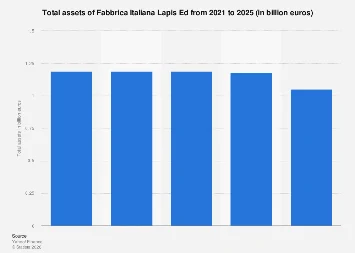
The Italian company known for its heritage in pencil manufacturing, Fabbrica Italiana Lapis Ed, is poised for a significant evolution in its asset structure over the coming years, with projections pointing towards a robust expansion by 2025. While specific figures for total assets are typically reserved for subscribers and require a commercial license for access, the underlying trend suggests a strategic strengthening of the company’s financial foundation. This forward-looking perspective is critical for understanding the company’s operational capacity, investment potential, and overall market resilience in an increasingly competitive global stationery and art supplies sector.
The stationery and art supplies market is a complex ecosystem, influenced by a confluence of consumer trends, technological advancements, and global economic conditions. Fabbrica Italiana Lapis Ed, with its deep roots in traditional craftsmanship, faces the dual challenge of honoring its legacy while adapting to modern demands. The projected increase in total assets is likely a reflection of several key strategic initiatives. These could include investments in advanced manufacturing technologies to enhance efficiency and product quality, expansion of its product portfolio to include new categories or sustainable alternatives, and a concerted effort to bolster its international market presence through new distribution channels or acquisitions.
Global market data indicates a steady, albeit sometimes uneven, growth in the broader writing instruments and art materials market. According to industry reports, the global market for stationery and art supplies was valued in the tens of billions of dollars annually, with a projected compound annual growth rate (CAGR) of approximately 3-5% in the lead-up to 2025. This growth is fueled by a resurgent interest in analog activities, a growing demand for premium and specialized art supplies, and the expanding middle class in emerging economies, particularly in Asia. Fabbrica Italiana Lapis Ed’s asset growth would align with capturing a larger share of this expanding pie.
The composition of these projected assets will be a key indicator of the company’s strategic priorities. A significant portion of any increase in total assets could be allocated to property, plant, and equipment (PPE) as the company modernizes its production facilities. This might involve investing in automated machinery, upgrading energy efficiency systems, and potentially expanding manufacturing footprints to meet increased demand or diversify production locations. Such capital expenditures are crucial for maintaining a competitive edge, reducing per-unit production costs, and ensuring consistent product availability.
Furthermore, investments in research and development (R&D) are likely to be a substantial component of asset growth. In an era where sustainability is paramount, Fabbrica Italiana Lapis Ed may be channeling resources into developing eco-friendly materials, such as pencils made from recycled wood, biodegradable plastics, or plant-based binders. Innovation in product design, such as ergonomic grips, multi-functional writing tools, or specialized lead formulations for different artistic techniques, would also require significant R&D investment. The company’s ability to introduce novel and environmentally conscious products can be a significant differentiator in a market increasingly sensitive to ethical sourcing and production.
Intangible assets are also expected to play an increasingly vital role. This could encompass investments in brand building, intellectual property development (such as patents for new manufacturing processes or unique product designs), and the acquisition of digital assets to enhance its online presence and e-commerce capabilities. In the contemporary business landscape, a strong brand reputation and robust digital infrastructure are as critical as physical assets for market penetration and customer engagement. The company might be investing in digital marketing campaigns, revamping its corporate website, and optimizing its online sales platforms to reach a wider global audience.
The company’s financial strategy to achieve this asset growth will likely involve a combination of retained earnings, debt financing, and potentially equity. A healthy increase in profitability, driven by enhanced sales volumes and improved operational margins, would provide the internal capital necessary for asset expansion. However, depending on the scale of planned investments, the company might also leverage debt financing, carefully managing its debt-to-equity ratio to maintain financial stability. Strategic partnerships or even carefully considered acquisitions could also contribute to the growth of its asset base, allowing for rapid market entry or the integration of complementary technologies and product lines.
Economists and financial analysts closely monitor asset growth as a key indicator of a company’s financial health and its capacity for future expansion. For Fabbrica Italiana Lapis Ed, a substantial increase in total assets by 2025 would signal confidence in its long-term business strategy and its ability to adapt to evolving market dynamics. It would suggest a company that is not only preserving its historical significance but is actively investing in its future, ensuring its continued relevance and competitiveness on the global stage. This proactive approach to asset management is fundamental for any manufacturing entity aiming for sustained success in the 21st century.
The broader economic implications of such asset expansion extend beyond the company itself. Increased investment in manufacturing and R&D can lead to job creation, both directly within the company and indirectly through its supply chain. It can also stimulate innovation within the broader industry, encouraging competitors to invest in similar advancements. Furthermore, a financially strong and growing Fabbrica Italiana Lapis Ed contributes to the economic vitality of its home region in Italy, supporting local economies and fostering a reputation for industrial excellence.
Looking ahead, the success of Fabbrica Italiana Lapis Ed’s asset growth strategy will hinge on its ability to effectively integrate new technologies, adapt to changing consumer preferences for sustainability and digital engagement, and navigate the complexities of international trade and economic fluctuations. The company’s heritage provides a strong foundation, but its future prosperity will be built upon its capacity for strategic investment and its agility in responding to the dynamic global marketplace. The projected increase in total assets is more than just a financial metric; it represents a forward-looking commitment to innovation, sustainability, and enduring market leadership.