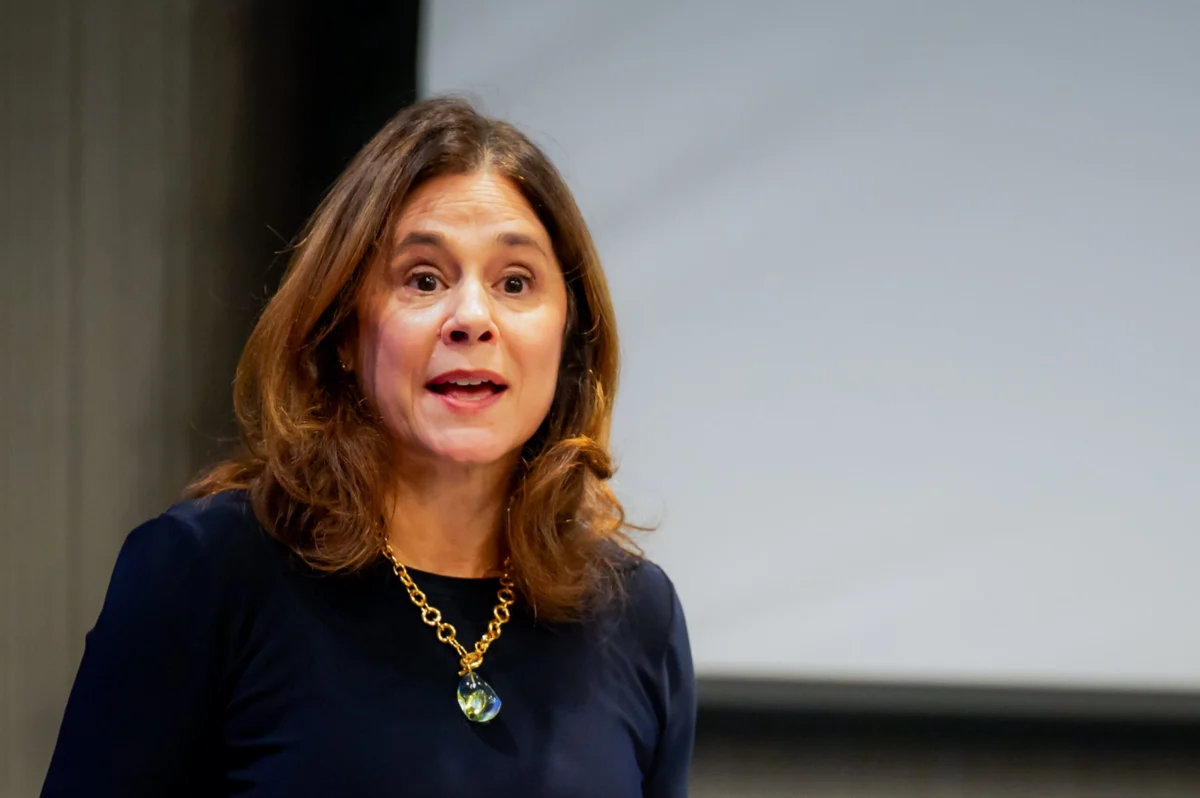
The federal quest to tame persistent price pressures has entered a critical new phase as Lorie Logan, President and CEO of the Federal Reserve Bank of Dallas, issued a forceful call for "modestly" higher interest rates to ensure inflation returns to the central bank’s 2% target. Speaking at a research conference in Houston, Logan argued that while recent data showed a cooling trend in consumer and wholesale prices, the broader battle against inflation remains unfinished. As a voting member of the Federal Open Market Committee (FOMC) this year, Logan’s stance carries significant weight, signaling a hawkish shift that challenges the growing market narrative of a definitive pause in the tightening cycle. Her remarks underscore a fundamental tension within the Federal Reserve: the desire to avoid over-tightening versus the existential risk of allowing high prices to become a permanent fixture of the American economic landscape.
Logan’s intervention comes at a moment of statistical ambiguity. Earlier this week, the Bureau of Labor Statistics reported that the Consumer Price Index (CPI) for June fell by 0.4%, marking the most significant monthly decline since the onset of the pandemic in April 2020. Simultaneously, wholesale prices saw a 0.3% dip. On the surface, these figures suggest that the aggressive rate hikes implemented over the past two years are finally taking hold. However, Logan cautioned against premature celebration. She noted that the annual CPI still stands at 3.5%, while wholesale costs remain elevated at 5.5%—figures that remain stubbornly above the Federal Reserve’s long-term objective. The Dallas Fed chief emphasized that a single month of relief does not constitute a sustainable trend, particularly when much of the recent decline was driven by volatile energy costs and a temporary slump in oil prices amid geopolitical tensions.
The core of Logan’s argument rests on the concept of forward-looking policy. Invoking a classic sporting metaphor, she stated that in monetary policy, one must "skate where the puck is going." In her view, the current trajectory of the economy does not guarantee a return to price stability without further intervention. If the Federal Reserve allows inflation to remain entrenched at 3% or 4%, the eventual cost of bringing it down will be far higher, likely requiring a more aggressive and disruptive series of rate hikes that could trigger a deep recession. By advocating for a "modest" increase now—likely a 25-basis-point adjustment—Logan believes the FOMC can achieve a "soft landing" while fulfilling its dual mandate of maximum employment and stable prices.
The economic impact of prolonged inflation cannot be overstated, particularly for low-to-middle-income households. While high-level metrics like Gross Domestic Product (GDP) growth may appear resilient, the compounding effect of several years of above-target inflation has significantly eroded the purchasing power of the average American. Essential categories such as housing, healthcare, and services have shown remarkable "stickiness," refusing to decline even as supply chain disruptions ease. Logan specifically pointed to core prices excluding housing as a metric that reveals the underlying strength of inflationary pressures. This "super-core" inflation is often driven by wage growth and service-sector demand, areas that are historically less sensitive to initial interest rate adjustments and require sustained policy restriction to cool.
Market participants are closely watching the FOMC’s next moves, with the CME Group’s FedWatch tool indicating that traders are increasingly pricing in a rate hike for the autumn months. While the upcoming July meeting is widely expected to result in a "hold"—with only a 12.3% probability of a hike currently priced in—the sentiment for September and October is shifting. Logan’s comments have added fuel to the fire, suggesting that the "higher for longer" era may actually become the "even higher for longer" era. This shift in expectations has immediate ramifications for the bond market, where yields on the 10-year Treasury note often fluctuate based on the perceived path of the federal funds rate. Higher yields translate to higher borrowing costs for everything from corporate debt to 30-year fixed-rate mortgages, which are already hovering at levels not seen in two decades.
The global context further complicates the Federal Reserve’s decision-making process. The United States is not acting in a vacuum; central banks from the European Central Bank (ECB) to the Bank of England are grappling with similar dilemmas. However, the U.S. dollar’s role as the world’s reserve currency means that American interest rate policy has a disproportionate effect on global capital flows. A further hike by the Fed could strengthen the dollar, making imports cheaper for Americans but exacerbating inflation for emerging markets that must pay for commodities in greenbacks. Additionally, the recent volatility in oil prices, linked to strikes and conflict in the Middle East, serves as a reminder that external shocks can easily derail the Fed’s carefully calibrated plans.
Within the FOMC, Logan’s hawkishness represents one side of a widening divide. Some policymakers argue that the full effects of previous rate hikes have yet to be felt, given the typical 12-to-18-month lag in monetary policy transmission. These "doves" worry that additional hikes could unnecessarily crush the labor market, which has remained surprisingly robust despite the tightening. The unemployment rate remains near historic lows, and job creation has consistently outpaced expectations. Logan, however, views this labor market strength not as a reason to pause, but as a sign that the economy can withstand further "modest restriction." She argued that a slightly higher unemployment rate today is a small price to pay compared to the "severe restriction" that would be required if inflation were to become a permanent psychological fixture for consumers and businesses.
The housing sector remains perhaps the most significant hurdle in the Fed’s path to 2%. Shelter costs make up about one-third of the CPI, and they have been slow to respond to higher rates. A shortage of housing inventory, fueled by years of underbuilding and "locked-in" homeowners who refuse to trade their low-interest mortgages for current rates, has kept prices high. While Logan noted some softening in housing costs in the June report, the structural deficit in the U.S. housing market means that this component of inflation may remain elevated for years. By raising rates further, the Fed risks making the inventory crisis worse by stifling new construction, yet failing to raise rates could allow excess demand to keep driving prices upward.
As the Federal Reserve prepares for its late-July meeting, the debate sparked by Logan will likely dominate internal discussions. The central bank finds itself in a precarious position: it must convince the public and the markets of its resolve to fight inflation without appearing indifferent to the potential for economic contraction. Logan’s call for "modest" action is an attempt to find a middle path—a preemptive strike intended to calibrate the economy’s temperature before it boils over.
Ultimately, the path of interest rates will depend on whether the June dip in inflation is the start of a genuine slide or merely a statistical outlier. If subsequent data reveals that housing and services inflation remain "sticky," Logan’s colleagues on the FOMC may find her hawkish outlook increasingly persuasive. For now, her message to the American public and the financial world is clear: the era of easy money is not returning anytime soon, and the "job" of restoring price stability will be pursued with whatever degree of restriction is necessary, however modest or severe that may prove to be. The eyes of the global economic community remain fixed on the Fed, waiting to see if it will indeed "skate to where the puck is going" or if it will be caught off-guard by an inflation target that remains stubbornly out of reach.